

Enforce Our Earlier Order: Supreme Court Refuses To Entertain Fresh Plea For Registration Of Religious Institutions
The Court advised the petitioner to enforce the existing order or pursue appropriate remedies, including contempt proceedings, rather than filing repetitive petitions.

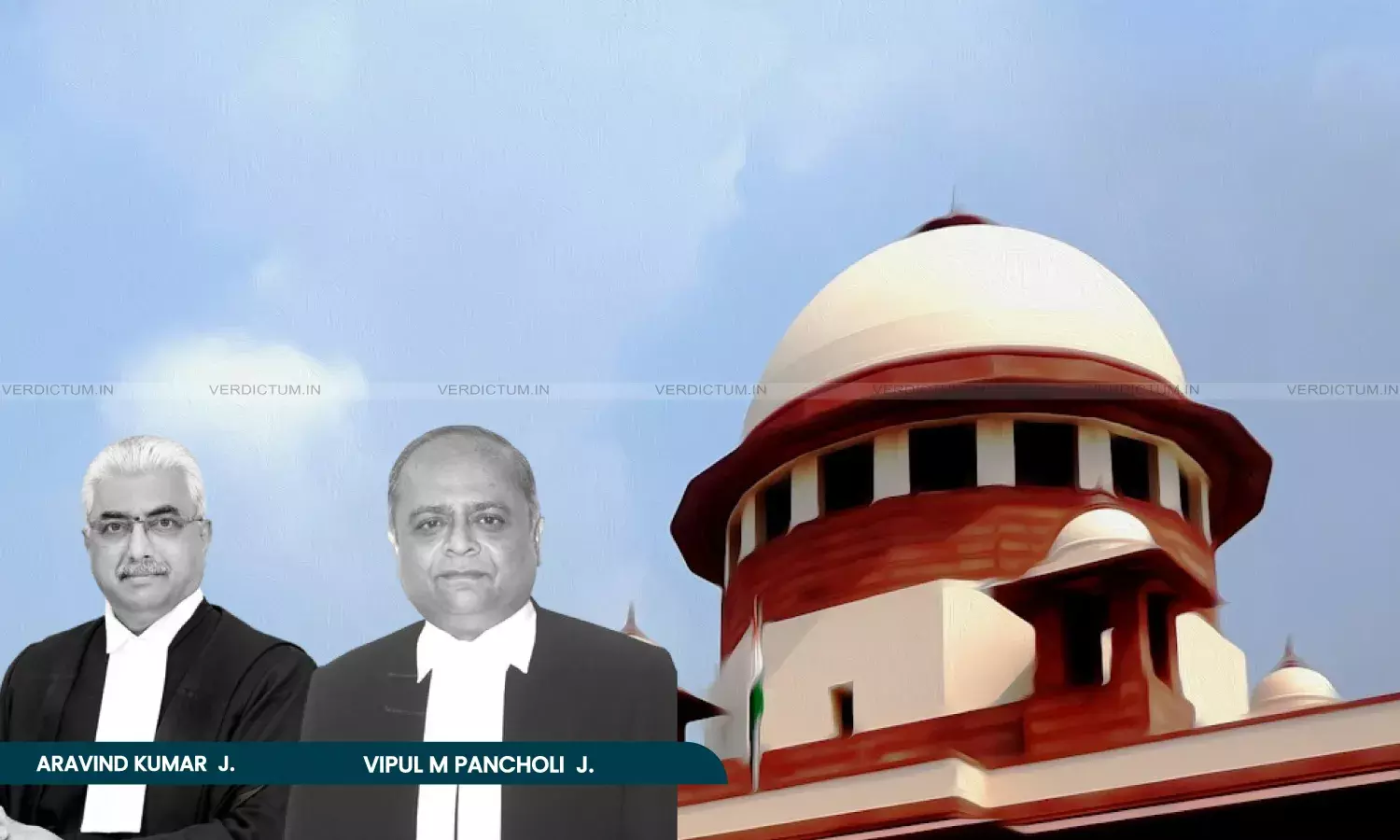
The Supreme Court has refused to entertain the third writ petition filed by advocate Ashwini Kumar Upadhyay seeking directions to the Centre and States to register all institutions imparting secular or religious instruction to children below 14 years of age.
The Court had refused to entertain the previous petition seeking directions for the Centre and States to register all institutions imparting secular or religious instruction to children under 14.
Following the said order, the Petitioner approached the Secretary, Ministry of Education, vide representation dated February 10, 2026. Thereafter, the petitioner instituted a second writ petition before the Court seeking identical reliefs; however, the Court refused to entertain the successive plea but asked the authorities to consider the representation within two months.
The Bench of Justice Aravind Kumar and Justice Vipul M Pancholi dismissed the writ petition as withdrawn.
Advocate Ashwini Kumar Upadhyay appeared in Person and submitted that he approached the authorities on May 11, 2026, but did not receive any response as directed by the Court; hence, he filed another plea.
It was submitted that a similar issue concerning the interpretation of Article 26 and Article 30 of the Constitution of India was raised in the said matter, wherein the Bench had referred the question to a larger bench, which remained pending.
It was contended that the petitioner institution was a minority institution imparting religious instruction and, therefore, the requirement of the Teacher Eligibility Test (TET) ought not to apply to it. He further submitted that under the prior judgment, minority institutions imparting religious instruction were held to be primarily governed by Articles 26 and 30, and prayed that notice be issued, and the present petition be tagged with the pending reference.
Justice Kumar said, "You have already a writ petition where you have got an order for mandamus. Where is the consideration? Suppose we again issue a writ of mandamus. What is that we can do? Issue a writ of mandamus to reconsider the representation. At the most, that is all we can do. We are making it very clear. Each independent... you are exercising your right under this, and this is a matter which require... which may require examination after the consideration of the representation, not before that...Mr. Upadhyay, you have already taken a writ. The writ is in your favor. You enforce that writ. How you do it, we will not give. Only in the capacity of being the member of the Supreme Court Legal Services Committee, we are giving you free advice."
The Bench cautioned counsel against filing successive writ petitions when an order had already been obtained in the petitioner's favor, observing that such a course was not maintainable and advising the petitioner to enforce the existing order or initiate appropriate proceedings, including contempt, if so advised.
Justice Kumar said, "That is why we are telling you, don't spoil a good case when you are... You have already got an order. Enforce it. File contempt, whatever you want."
Upon the Court indicating its disinclination to entertain the matter, learned counsel sought leave of the Court to withdraw the writ petition with liberty to pursue appropriate remedies.
Accepting the request, the Bench dismissed the petition as withdrawn, granting liberty to the petitioner to take appropriate steps in accordance with the law.
The plea, filed by AOR Ashwani Kumar Dubey, submitted that children are the backbone of nation's growth and are also gullible & naive due to their tender age. Hence, the State has heightened responsibility towards them. Secondly, it said that this is an issue of national security, as young kids form the future of the nation, can be brainwashed/manipulated in an unregistered institution. Thirdly, it was submitted that Article 21-A also guarantees quality of education, which can't be ensured in unregistered, unrecognised institutions.
"Fourthly, it is State's obligation to provide a conducive environment to children upto 14 years. Fifthly, neither there are any criteria for appointment of teachers nor there is any audit of syllabus/curriculum in unregistered unrecognised institutions. Sixthly, the safety/security of children is paramount. It is the State's onus to prevent trafficking of children by non-registered non recognised institutions by preventing it at the threshold", it said.
The Petitioner also submitted that Imparting Religious Instruction amounts to ‘Propagating’ Religion and shall be covered under Article 25. Any Institution which imparts such Religious Instruction falls squarely under the ‘Institutions for Religious and Charitable Purposes’ under Article 26. It said that the magnitude of Religious Instruction being imparted or if Secular Education was being imparted, would be no ground to not categorise such an institution under Article 26.
Cause Title: Ashwini Kumar Upadhyay v. Union of India and Ors. [W.P.(C) No. 868/2026]