

Bhojshala Dispute: Supreme Court Directs State To Permit Friday Namaz At Dargah Land Abutting Complex, Clarifies Specific Land Portion
The Court clarified its interim order to permit Friday Namaz on Khasra No. 596 near the Bhojshala complex, rejecting a 1.3 km distant site after arguments on the heckler's veto doctrine.

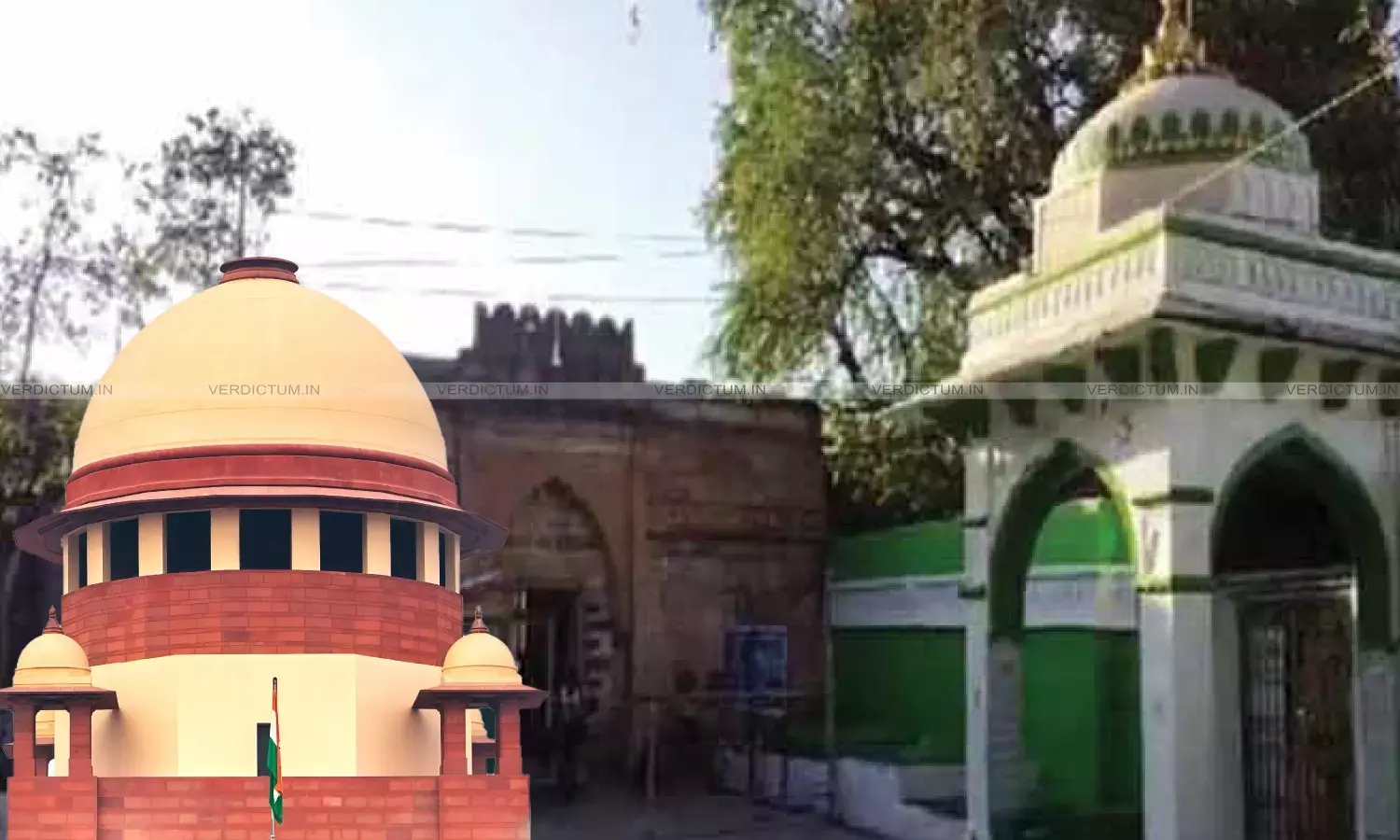
Resolving the persistent deadlock over the location for Friday prayers, the Supreme Court clarified its previous interim directions and ordered the district administration to permit members of the Muslim community to offer Namaz between 1:00 PM and 3:00 PM at a specific site abutting the Bhojshala-Kamal Maula complex.
The Court passed the clarification after being informed that the state authorities had initially allotted an alternate location nearly 1.3 kilometers away.
On July 14, the Court directed that a separate, adjacent open space be provided to the Muslim community to offer Friday Namaz between 1:00 PM and 3:00 PM. The ad-hoc interim measure, passed without prejudice to the rights of either side, came after the petitioners challenged a May 15, 2026, Madhya Pradesh High Court judgment that declared the disputed 11th-century monument a Hindu temple and quashed the long-standing 2003 ASI order allowing bi-weekly shared worship.
The Bench of Chief Justice Surya Kant, Justice Joymalya Bagchi, and Justice V. Mohana ordered, "Our order dated 14 July 2026 is further clarified to the extent that the Muslim community be permitted to offer Namaz on Fridays from 1:00 PM to 3:00 PM at the land bearing Khasra No. 596, which is stated to be Dargah land. From the copy of the Khasra / site plan produced during the course of hearing, it appears that the Khasra number has an independent and separate access road, and therefore, the said site appears to be suitable from the point of view of land ownership. It is adjacent to the subject premises and appears to be suitable from all perspectives. However, this shall not preclude both sides to select any other alternative site on the basis of mutual consent."
Senior Advocate Huzefa Ahmadi appeared for the applicant, while ASG KM Nataraj appeared for the State of Madhya Pradesh
Previously, the Court had asked the State of Madhya Pradesh to identify an alternate adjacent site for Friday Namaz in the Bhojshala-Kamal Maula complex dispute.
Senior Advocate Huzefa Ahmadi submitted that the local administration had initially allotted an alternate site nearly 1.3 kilometers away by road, which was contrary to the Court’s mandate for an adjacent or nearby location.
Presenting site plans and maps, Ahmadi highlighted four adjacent Waqf-owned parcels and pointed out that the district administration’s refusal to allocate them was driven by objections from local groups threatening law and order.
Invoking the "heckler's veto" doctrine from American jurisprudence, Ahmadi urged the Bench not to yield to extra-legal threats or public pressure at the cost of constitutional rights and judicial orders, confirming that the applicants were willing to accept any site designated by the Court from among the proposed adjacent options.
He submitted, "What you are being told is—and I don't want to get into press reports, etc. In fact, I have instructed my client very strictly, don't go to the media. But there are overarching press reports which very clearly say we will not allow them to perform within 300 metres...And that is what the Collector... There is a phrase which is used in American jurisprudence. It's called the "heckler's veto". It is called the heckler's veto that you will create when someone's free speech is thought to be interrupted by a mob and you are being told that now silence the person speaking rather than protecting the person speaking. I also have a right of freedom of expression in terms of my prayer..."
He also added, "Merely because someone threatens a law and order problem, your Lordships will not yield to. So, there is something much larger at stake apart from the fact that it is your Lordships' own order which says "adjacent or near to". So, there are three decisions which I'd like to bring to your Lordships' kind notice to say that the Collector must give any of these three adjacent places."
Urging the Court not to yield to extra-legal resistance or public pressure, Ahmadi reiterated that the applicants were willing to accept any site designated by the Court from among the proposed adjacent options.
Additional Solicitor General K.M. Natraj, representing the State of Madhya Pradesh, maintained that the authorities were primarily concerned with ensuring public peace and avoiding potential law and order disruptions.
He submitted that the administration remained open to facilitating an amicable solution to accommodate the religious rights of the community while ensuring proper security management.
Examining the site plans and maps submitted during the hearing, the Bench noted that one of the proposed sites—identified as Waqf Dargah land and marked in yellow on the plan—possessed an independent and dedicated access road, making it geographically suitable and directly adjacent to the disputed complex.
Consequently, the top court clarified its earlier interim order and directed the state authorities to make all necessary logistical and security arrangements to allow Friday Namaz at the designated site.
The Bench added that the order would not preclude the parties from mutually agreeing to an alternative location in the future.
During the proceedings, the Court also allowed the oral impleadment of the Hindu petitioners, represented by Advocate Vishnu Shankar Jain, to ensure all contesting parties were formally before the court.
On May 15, the Madhya Pradesh High Court ruled that the disputed Bhojshala-Kamal Maula Mosque complex in Dhar district is a temple dedicated to Goddess Saraswati. It simultaneously quashed a decades-old ASI order that had allowed the Muslim community to offer Friday prayers at the site.
Cause Title: Jebran Ansari v. Union of India and Ors. [Diary No.- 33643/2026] and Quazi Moinuddin v. Hindu Front of Justice and Ors. [Diary No. -32281/2026]