

Mere Reporting Of Violent Incident Doesn't Amount To Promoting Enmity Between Groups: Madhya Pradesh HC Quashes FIR Against Journalist
The Court quashed an FIR against a YouTube journalist, holding that general allegations of fear and communal tension cannot sustain prosecution without specific words promoting enmity.

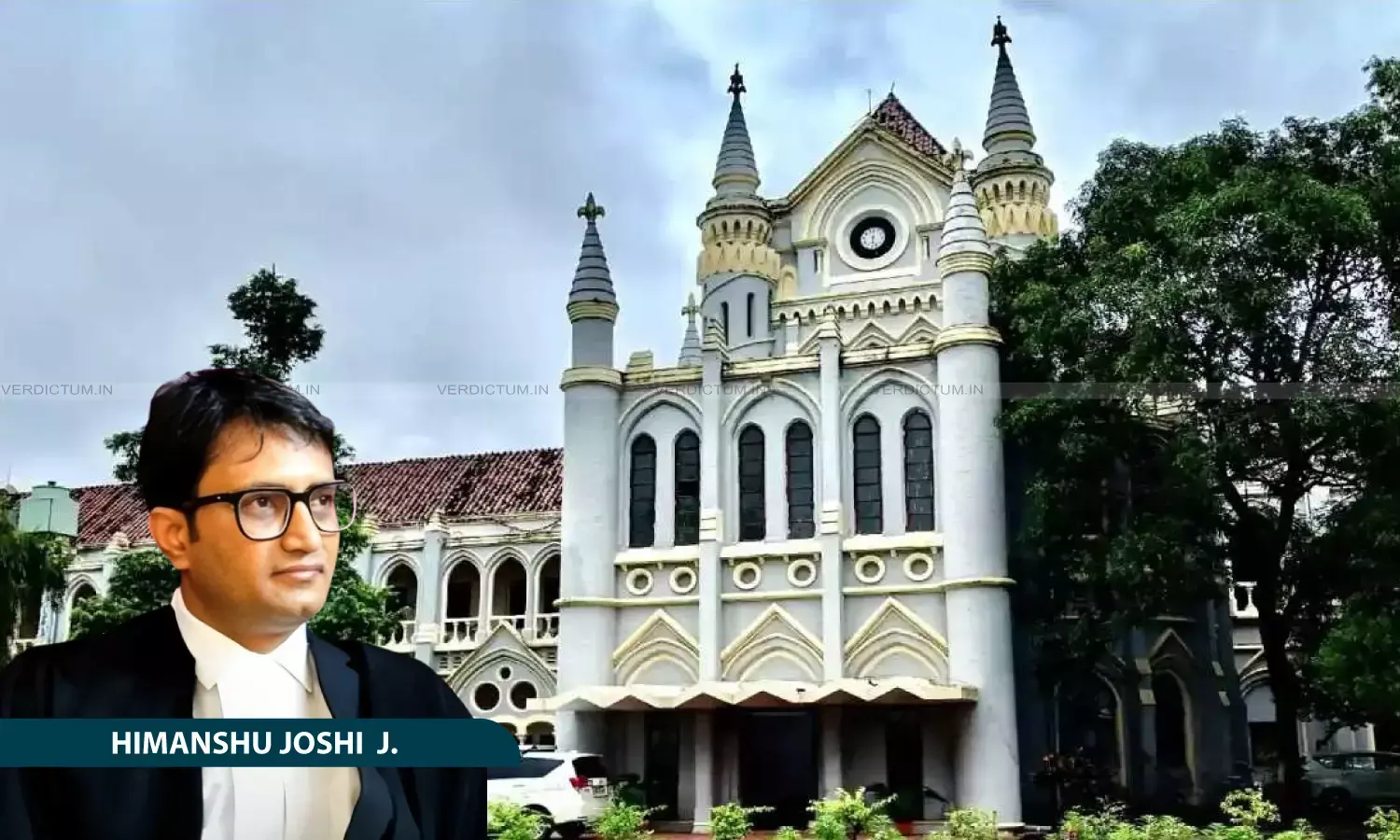
Justice Himanshu Joshi, Madhya Pradesh High Court
The Madhya Pradesh High Court has held that the mere reporting of an incident involving violence does not, by itself, constitute an offence under Section 196(1) of the Bharatiya Nyaya Sanhita, 2023 (BNS), which penalizes acts that promote or attempt to promote enmity between different groups.
The Court observed that the applicant’s status as a journalist does not confer immunity from criminal prosecution where the ingredients of an offence are otherwise made out. Equally, the freedom of speech and expression guaranteed under Article 19(1)(a) of the Constitution cannot be curtailed merely because a report concerns a sensitive public incident.
The Court quashed the FIR registered against a journalist operating a YouTube news channel, who had broadcast a report concerning a violent incident during the Ganesh Visarjan procession at Silwani.
The Bench of Justice Himanshu Joshi observed, “Section 196(1) of the BNS, which corresponds substantially to Section 153A of the Indian Penal Code, penalizes acts that promote or attempt to promote disharmony, enmity, hatred or ill-will between different groups on specified grounds. The mere reporting of an incident involving violence does not, by itself, constitute the offence. The nature and content of the publication, the context in which it was made, and the requisite connection with the promotion or attempted promotion of enmity between groups are material considerations.”
Advocate Sankalp Kochar appeared for the Petitioner, while GA Pramod Pandey appeared for the Respondent-State.
Brief Facts
A petition under Section 528 of the Bharatiya Nagarik Suraksha Sanhita, 2023 (BNSS) was filed seeking quashing of the FIR registered at Police Station Silwani, District Raisen, for the offence punishable under Section 196(1) of the BNS, and all consequential proceedings arising therefrom.
The prosecution case was that during the Ganesh Visarjan procession at Silwani, the applicant, who is a journalist and operates a YouTube news channel, broadcast a report concerning an incident in the town.
The complaint alleged that the manner in which the incident was reported created fear and confusion among members of the Hindu community and had the potential to provoke communal discord. On the basis of the complaint, the FIR was registered against the applicant.
Contentions of the Parties
The applicant contended that he is a journalist by profession, as demonstrated by his UDYAM certificate and the appointment letter issued by DNN News Channel. It was contended that the news report merely reported a violent incident during the Ganesh Visarjan procession in which two persons sustained injuries.
It was further submitted that another FIR had already been registered at the same police station regarding an assault upon Ramashankar Dixit during the procession. It was argued that the report neither promoted enmity between communities nor contained any material indicating an intention to create communal disharmony. Consequently, the essential ingredients of Section 196(1) of the BNS were absent, and continuation of the proceedings would amount to an abuse of the process of law.
The State contended that the allegations concern reporting of an incident in a sensitive communal setting and that the effect and context of the publication require investigation. It was contended that the FIR discloses allegations warranting investigation and that the proceedings ought not to be quashed at the threshold. Respondent No. 2 also opposed the relief sought and supported the registration of the FIR.
Observations/Findings of the Court
The Court referred to Patricia Mukhim v. State of Meghalaya (2021), wherein the Supreme Court, relying upon Bilal Ahmed Kaloo v. State of A.P., (1997), reiterated that mens rea is an essential ingredient of the offence under Section 153A IPC and that the promotion of enmity or ill-will between at least two groups or communities is necessary.
The Court noted, “Mere incitement of the feelings of one community, without reference to another community or group, would not by itself attract the provision. The alleged words and expressions must be assessed in their entirety and in the context in which they were used.”
It was observed that the screenshot of the news report indicated that the report concerned a violent incident at two places during the procession, resulting in injuries to two persons.
It was noted that the registration of another FIR concerning an alleged assault during the same procession lends support to the applicant’s contention that the report related to an actual incident. However, the mere existence of another FIR would not, by itself, conclusively establish the legality or otherwise of the impugned publication.
The Court remarked, “Nevertheless, the allegations forming the basis of the impugned FIR, as placed before this Court, do not identify any specific words, expressions or material in the applicant’s report that promoted or attempted to promote enmity between two communities on any of the grounds contemplated under Section 196(1) of the BNS. The assertions that the report created fear and confusion among members of a particular community and had the potential to provoke discord are general in nature.”
It was further observed that in the absence of specific allegations disclosing the essential ingredients of the offence, the mere possibility of public outrage or communal tension cannot, by itself, justify the continuation of criminal proceedings under the aforesaid provision.
On the applicant being a journalist, the Court noted, “The applicant’s status as a journalist does not confer immunity from criminal prosecution where the ingredients of an offence are otherwise made out. Equally, the freedom of speech and expression guaranteed under Article 19(1)(a) of the Constitution cannot be curtailed merely because a report concerns a sensitive public incident. Any restriction on such expression must be justified in law.”
The Court held that the material placed on record does not disclose a prima facie case under Section 196(1) of the BNS, and continuation of the proceedings on the basis of the allegations as presently framed would amount to an abuse of the process of law.
Accordingly, the Court allowed the petition and quashed the FIR and all consequential proceedings arising therefrom against the applicant.
Cause Title: Uvesh Khan @ Uvesh Reporter v. The State of Madhya Pradesh and Anr. [Neutral Citation: 2026:MPHC-JBP:86748]
Appearances:
Petitioner: Advocate Sankalp Kochar
Respondents: GA Pramod Pandey, Advocate Raman Choubey