Major Woman Free To Live With Person Of Her Choice; Can't Be Compelled To Reside With Mother: Madhya Pradesh High Court In Habeas Corpus Plea
The Court held that once a major individual is found to be residing of her own free will and is not under illegal restraint, a Constitutional Court cannot direct that her custody be handed over to her parents merely because her choice aggrieves them.
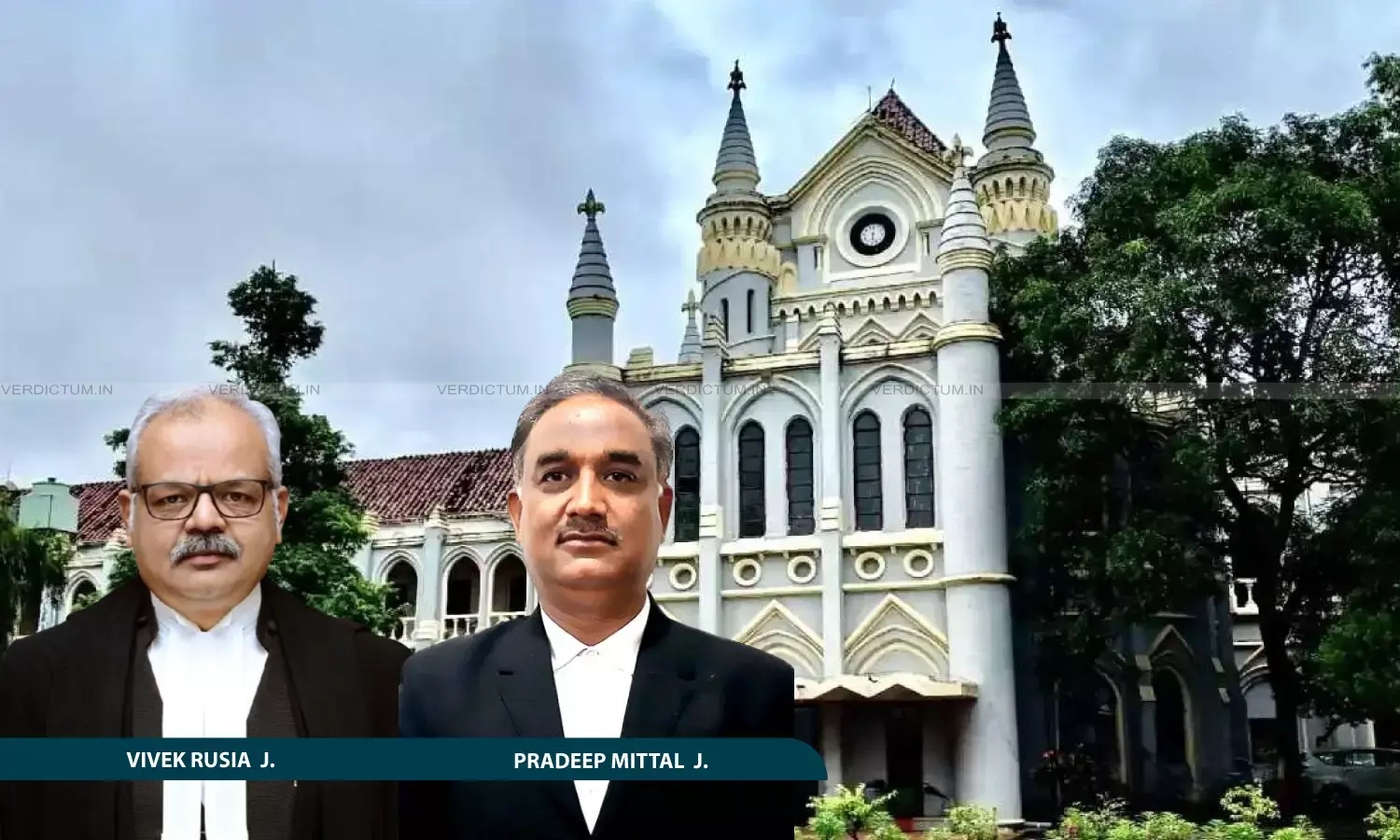
The Madhya Pradesh High Court has set at liberty a major woman who told the Court that she wished to live with the person of her choice, holding that once a major individual is found to be acting of her own free will and is not under illegal restraint, her custody cannot be handed over to her parents through a habeas corpus petition merely because they are aggrieved by her choice.
The Court was hearing a habeas corpus petition filed by a mother seeking production of her daughter before the Court and criminal action against the person with whom the daughter wished to reside.
A Bench of Acting Chief Justice Vivek Rusia and Justice Pradeep Mittal observed: “It is by now well settled that once a person attains the age of majority, she is entitled to live wherever she wishes and with whomsoever she wishes, and the writ of Habeas Corpus is maintainable only where it is shown that the corpus is under illegal or unlawful detention or custody. Once it emerges from the interaction with the corpus that a major individual is residing at a place of her own free will and is not under any illegal restraint, no direction can be issued by a Constitutional Court to hand over her custody to any other person, including her parents, merely because such person may be aggrieved by her choice.”
Advocate Yogesh Singh Baghel appeared for the petitioner, while Government Advocate S.S. Chouhan appeared for the State.
Background
The petitioner approached the High Court under Article 226 of the Constitution seeking a writ like habeas corpus, with a prayer that the police be directed to trace and produce her daughter before the Court. She also sought criminal action against the person with whom her daughter was stated to be residing.
The Court had earlier directed the State to produce the daughter before it. In compliance with the order, she was produced before the High Court by the concerned police officer.
The Bench interacted with the daughter in Court in the absence of the police and the parties to ascertain her free will. During the interaction, she stated that she was a major and wished to live with the person of her choice out of her own free will and volition. She also stated that she was not willing to go with her parents and that no coercion or undue influence had been exercised upon her.
Court’s Observations
The High Court held that habeas corpus jurisdiction can be invoked only where the person concerned is shown to be under illegal or unlawful detention or custody.
The Court observed that once the interaction with the person produced before the Court shows that a major individual is residing at a place of her own free will and is not under illegal restraint, the Court cannot direct that her custody be handed over to another person, including her parents.
The Bench relied on Soni Gerry v. Gerry Douglas (2018), where the Supreme Court had dealt with a similar situation involving a major daughter who had clearly expressed her intention to live independently of her parents.
The Court quoted the Supreme Court’s observation in Soni Gerry (2018): “It needs no special emphasis to state that attaining the age of majority in an individual's life has its own significance. She/he is entitled to make her/his choice. The Courts cannot, as long as the choice remains, assume the role of parens patriae. The daughter is entitled to enjoy her freedom as the law permits and the Court should not assume the role of a super guardian being moved by any kind of sentiment of the mother or the egotism of the father. We say so without any reservation.”
Applying the said principle, the High Court held that the daughter had been produced before the Court and had voluntarily and unhesitatingly expressed her wish to live with the person of her choice. The Court noted that she had attained majority and was not shown to be under illegal custody or detention.
The Bench held: “In such circumstances, this Court, exercising jurisdiction under Article 226 of the Constitution, cannot issue any direction contrary to her expressed free will, nor can it compel her to reside with the petitioner against her wishes.”
The Court therefore held that no further direction was warranted in the petition.
Conclusion
The High Court set the daughter at liberty and held that she would be free to go wherever she wished of her own accord. The Court further directed that there should be no hindrance or interference from the petitioner or any other person.
With these observations, the Court disposed of the writ petition.
Cause Title: Urmila Jharia v. The State of Madhya Pradesh And Others (Neutral Citation: 2026:MPHC-JBP:48504)