

Nikahnama Can’t Prove Title Without Genealogy: Madhya Pradesh High Court Upholds Dismissal Of Suit By Plaintiff Claiming Descent From Nawab Of Bhopal
The Court found that the documents sought to be produced at the appellate stage under Order XLI Rule 27 CPC did not advance the plaintiff’s title claim, particularly when the pleadings failed to establish the asserted family link to the alleged original grantee.
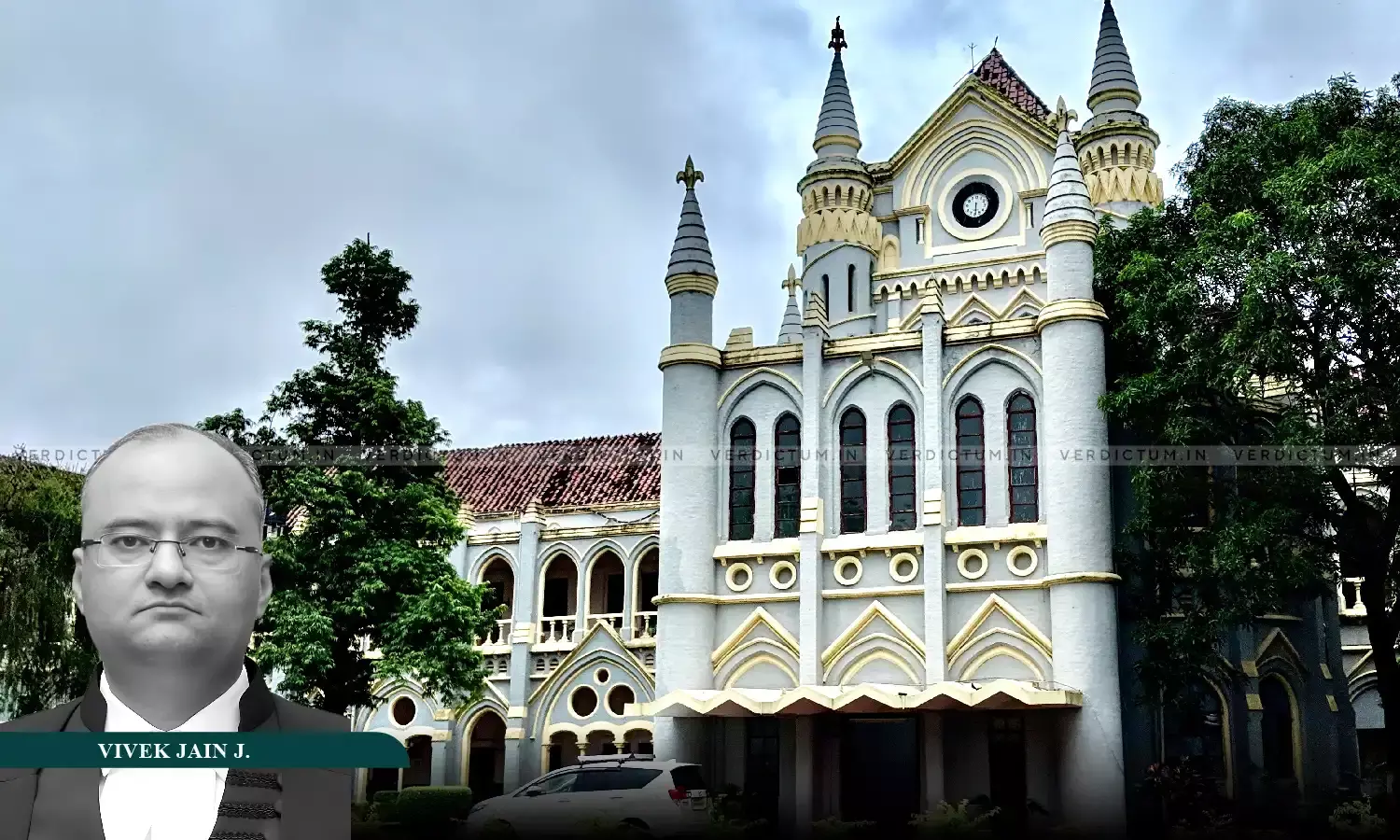
Justice Vivek Jain, Madhya Pradesh High Court
The Madhya Pradesh High Court has upheld the dismissal of a title suit filed by a plaintiff claiming descent from the family of the Nawab of Bhopal, holding that a Nikahnama could not establish title to the suit property in the absence of a specific pleaded genealogy connecting Badre Alam with Mehar Parwar Sultan alias Kokobia.
The Court was hearing a first appeal under Section 96 of the Code of Civil Procedure against the dismissal of a suit for declaration of title, permanent injunction and recovery of possession over land situated at Idgah Hills, near Kaiser Bungalow, Bhopal, where the plaintiff alleged that the State’s Public Works Department had encroached upon part of the property.
A Bench of Justice Vivek Jain, while observing that “The plaintiff, as already noted above, has been taking inconsistent stands, held: “So far as the Nikahnama is concerned, it may at the most indicate that the original plaintiff was the daughter-in-law of one Badre Alam. However, in absence of any specific pleading of relationship of Badre Alam with Mehar Parwar Sultan alias Kokobia, nothing can be deduced on the basis of said document and it is not a fit case to remand the matter back to the trial Court only on the strength of such documents filed along with application under Order 41 Rule 27 CPC.”
Advocate Ankit Saxena appeared for the appellant, while Government Advocate Aditya Choubey appeared for the respondents/State.
Background
The plaintiff claimed ownership and possession over the suit property on the basis of an oral Hiba allegedly made in her favour by her mother-in-law. During evidence, she traced the source of title to Badre Alam, said to be the son of Mehar Parwar Sultan alias Kokobia, who was described as the elder sister of Shahbano Memuna Sultan, wife of Nawab Hamidullah Khan, the Ex-Ruler of Bhopal State.
The appellant argued that documents relating to the Bhopal State merger agreement, a Nikahnama and an Urdu document concerning grant of land to Mehar Parwar Sultan were material documents which could not earlier be produced. On that basis, applications under Order XLI Rule 27 CPC were pressed for taking additional documents on record and remanding the matter to the trial court.
The State opposed the appeal, contending that both the source of title and the genealogy were unclear. It argued that the pleadings did not specifically state that Badre Alam was the son of Mehar Parwar Sultan, and that even if the relied-upon grant documents were accepted at face value, they would at best show a residential licence and not title.
Court’s Observations
The Court noted that the plaint did not disclose the source of title of Badre Alam or his relationship with the erstwhile ruler’s family. It found that the case developed during evidence was not supported by the original pleadings.
The Court observed: “She did not state any source of title of Badre Alam and no any relationship of Badre Alam with the erstwhile Ruler of Bhopal or any relative of Ruler of Bhopal was pleaded in the plaint.”
The Court further noted: “In the plaint there is no genealogy of Badre Alam to project his relationship to the then Ruler of Bhopal. The genealogy is absent in plaint, but in the application for amendment in plaint filed before this Court on 30.08.2001, a genealogy has been mentioned.”
Examining the genealogy later sought to be introduced, the Court found that it did not clearly show whether Badre Alam descended from Shahbano Memuna Sultan or Mehar Parwar Sultan. The Court also recorded that a synopsis filed during arguments showed Badre Alam as the son of Shahbano Memuna Sultan, while a later substituted synopsis showed him as the son of Mehar Parwar Sultan.
The Court stated: “From this genealogy, it appears that the plaintiff now claims to be direct descendant of Nawab Hamidullah Khan, the Ex-Ruler of Bhopal, though no clear assertion is made anywhere else in the amendment.”
On the substituted synopsis, the Court remarked: “The attempt by the appellant in first filing one synopsis of the case and arguing on the basis of that synopsis and after the case is reserved for judgment, then deleting that synopsis and filing another synopsis, changing their stand only shows the malicious intent of the appellant/plaintiff and nothing else.”
The Court held that additional documents could not cure the absence of foundational pleadings. The alleged grant document concerning Mehar Parwar Sultan did not assist the plaintiff without a pleaded link between her family and Mehar Parwar Sultan.
The Court observed: “The plaintiffs had relied on document Ex.P-29 which seems to be a grant for residential purposes made to one Mehar Parwar Sultan. However, in the absence of pleading anything in clear terms regarding relation of the father-in-law of the plaintiff with Mehar Parwar Sultan, nothing turns on the basis of this document.”
It added that even if the document was taken at face value, it could at best be treated as a licence to reside in the premises, not a title document.
The merger agreement, according to the Court, also did not advance the plaintiff’s case because it merely indicated that a bungalow occupied by Kokobia was private property of the ruler, while no definite relationship with Kokobia had been pleaded.
The Court also rejected the amendment application, noting that the plaintiff had initially described the suit land as being near Kaiser Bungalow, while the amendment sought to project the suit property as including Kaiser Bungalow itself.
The Court held: “Therefore, the entire case is being attempted to be changed. Earlier, as per plaint, the suit land was projected to be a land separate from Kaiser Bungalow, and towards South of that Bungalow. Now only to connect the documents filed alongwith applications under Order 41 Rule 27 CPC, the suit description and identity of the suit property is being sought to be modified to be part of Kaiser Bungalow.”
Before parting with the matter, the Court directed the Registrar (I.T.) to ensure that any document once uploaded in the “reference” tab of the digital file cannot be deleted by a party or counsel except with specific permission of the Court.
Conclusion
The High Court dismissed the appeal, confirmed the trial court’s judgment and decree dismissing the suit, rejected the applications for additional documents and amendment of plaint, and issued an administrative direction concerning deletion of uploaded documents from the digital file.
Cause Title: Sarwat Jahan Begum v. The State of Madhya Pradesh
Appearances
Appellant: Ankit Saxena, Advocate
Respondents/State: Aditya Choubey, Government Advocate, with K.K. Gautam, Panel Lawyer
Click here to read/download Judgment