

Disciplinary Authority Cannot Direct Inquiry Officer To Submit Fresh Report On Same Evidence: Madhya Pradesh High Court
The Court held that while a Disciplinary Authority may order a fresh or de novo inquiry for cogent reasons, directing an Inquiry Officer to submit a fresh report on the same set of evidence is impermissible in law and undermines the independence of the inquiry process.
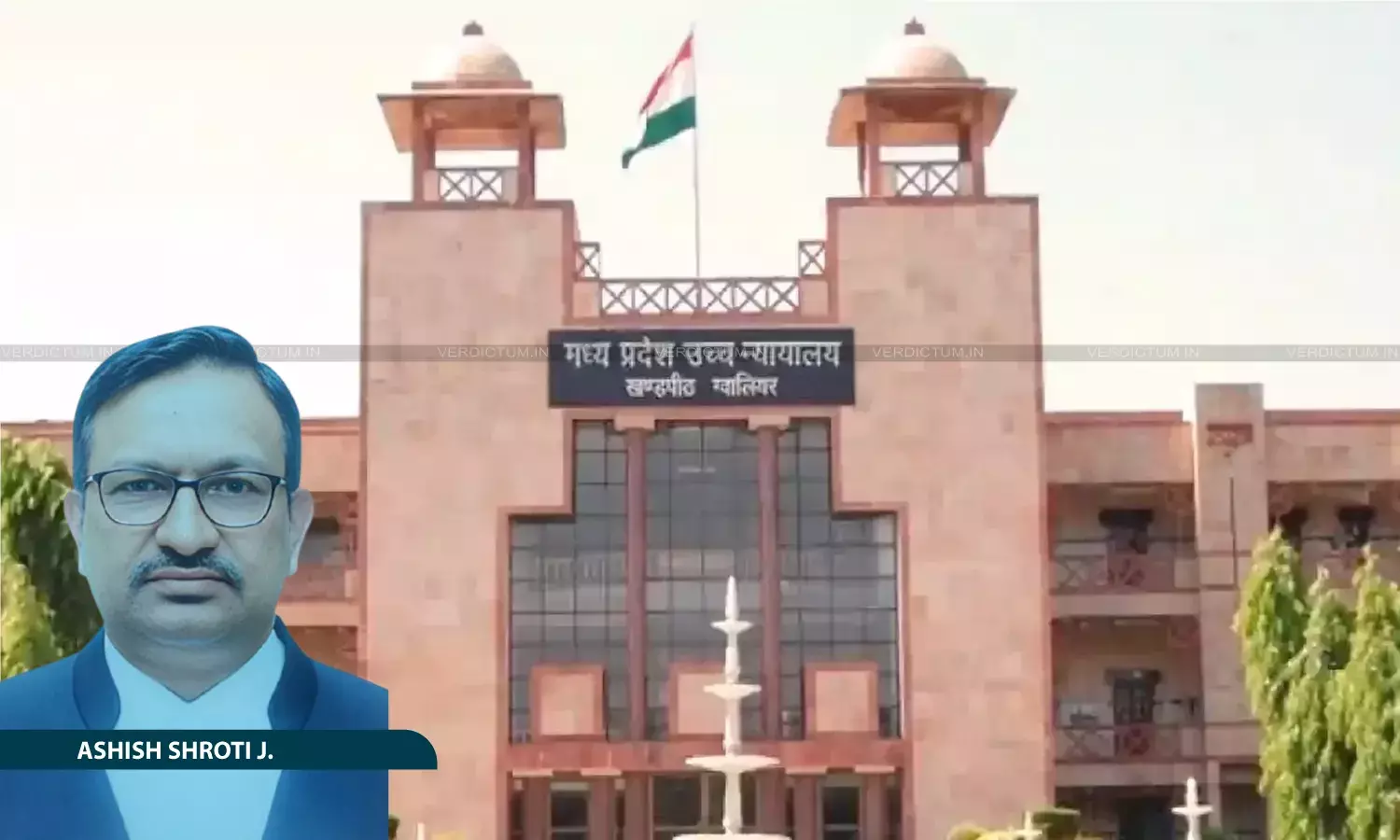
The Madhya Pradesh High Court held that an Inquiry Officer in a departmental proceeding acts as an impartial and independent adjudicator and cannot be directed by superior authorities to submit a fresh inquiry report based on the same evidence already examined.
The Court observed that though the Disciplinary Authority may remit the matter for a fresh or de novo inquiry for recorded reasons, it cannot compel the Inquiry Officer to alter findings without any further inquiry.
The Court was hearing a writ petition filed by a Scale-II Officer of Madhya Pradesh Gramin Bank challenging the punishment of compulsory retirement imposed upon him following a departmental inquiry relating to alleged irregularities in the sanction and disbursement of loans and suspicious financial transactions in his personal accounts.
A Bench of Justice Ashish Shroti, while stating that “the role of an Inquiry Officer in a disciplinary inquiry is very important and he is expected to act as an impartial and independent adjudicator and is not supposed to act upon the dictates of higher authorities”, further held that “the direction for denovo enquiry, however, can be given only for cogent reasons to be recorded by Disciplinary Authority, … directing the Inquiry Officer to submit a fresh report on the basis of the same set of evidence is impermissible and unacceptable in law”.
Advocate Chetan Kanungo appeared for the petitioner. Advocate D.S. Chauhan appeared for the respondents.
Background
The petitioner was working as a Scale-II Officer and Branch Manager at Morar Branch of Madhya Pradesh Gramin Bank when certain irregularities were allegedly noticed in the sanctioning and disbursement of loans.
Following a preliminary investigation conducted by officers of the Bank, a charge sheet containing 14 charges was issued against the petitioner. A departmental inquiry was thereafter initiated, and an Inquiry Officer was appointed to conduct the proceedings.
After completion of the inquiry, the Inquiry Officer submitted his report to the Disciplinary Authority. The petitioner contended that the report was not accepted by the authorities, and the Inquiry Officer was subsequently directed to conduct a de novo inquiry and submit a fresh report.
The petitioner argued that no fresh inquiry was actually conducted and that a second report was submitted on the basis of the same evidence, allegedly under pressure from superior authorities. It was further contended that such a procedure vitiated the inquiry as the Inquiry Officer was expected to function independently and not under the dictates of the management.
The Bank opposed the petition, contending that the inquiry was conducted in accordance with law and that serious irregularities and suspicious financial transactions had been established against the petitioner.
Court’s Observation
The Court examined the legal position governing departmental inquiries and reiterated that an Inquiry Officer performs quasi-judicial functions and must remain unbiased and independent throughout the proceedings.
Relying upon State of Uttar Pradesh v. Saroj Kumar Sinha (2010), the Court observed that departmental inquiries cannot be conducted as casual exercises and that principles of natural justice require fairness and impartiality.
The Court noted that the Bank itself had admitted in its pleadings that after submission of the first inquiry report, the Inquiry Officer was directed to conduct a de novo inquiry because the report was “not found to be rational.”
The Court found that the respondents had failed to explain the circumstances under which the matter was remitted to the Inquiry Officer or whether any fresh inquiry or additional evidence had been recorded thereafter.
It was observed that the Disciplinary Authority, upon receipt of an inquiry report, has only limited courses open to it. The Court stated that the authority may either accept the report, disagree with the findings by assigning reasons, or remit the matter for a fresh inquiry for cogent reasons.
The Court specifically held that “The direction for de-novo enquiry, however, can be given only for cogent reasons to be recorded by Disciplinary Authority.” It further observed that the respondents had not disclosed any justification for calling for a fresh report from the Inquiry Officer on the same material already examined.
The Court therefore concluded that the manner in which the inquiry proceedings were conducted could not be said to be fair and that the subsequent inquiry report stood vitiated. At the same time, the Court separately examined Charge No.13 relating to substantial suspicious transactions in the petitioner’s savings and overdraft accounts.
The Court noted that several deposits and transfers in the petitioner’s accounts were beyond his disclosed salary income and had not been satisfactorily explained with supporting documents. It was observed that amounts allegedly deposited for customers’ insurance purposes and transfers routed through personal accounts remained unsupported by documentary material.
Referring to Boloram Bordoloi v. Lakhimi Gaolia Bank (2021) and U.P. SRTC v. Hoti Lal (2003), the Court reiterated that bank officers deal with public funds and are required to maintain the highest standards of integrity and trustworthiness.
The Court observed, “Being a senior officer of the Bank, the petitioner was expected to understand the meaning of routing of funds, other than his salary, from his personal accounts.” It held that even though the inquiry report stood vitiated on procedural grounds, the material relating to the charge independently justified the punishment imposed upon the petitioner.
Conclusion
The High Court held that directing an Inquiry Officer to submit a fresh report on the same set of evidence without conducting any further inquiry is legally impermissible and contrary to the requirement of fairness in disciplinary proceedings.
However, upon examining the material relating to suspicious financial transactions in the petitioner’s accounts, the Court held that Charge No.13 independently justified the punishment of compulsory retirement.
Accordingly, the Court upheld the punishment order and the appellate order, dismissing the writ petition.
Cause Title: Sanjay Bansal v. Madhya Pradesh Gramin Bank & Ors.
