“Can’t Be Treated Arbitrary Merely Because Of Demanding Work Schedules”: Madhya Pradesh High Court Rejects Challenge To TB Screening Policy
The Court held that operational targets prescribed for radiographers under the TB Mukt Bharat Abhiyan formed part of an administrative mechanism intended to implement a national welfare policy, and courts must exercise restraint in interfering with public health policies framed under the National Health Mission.
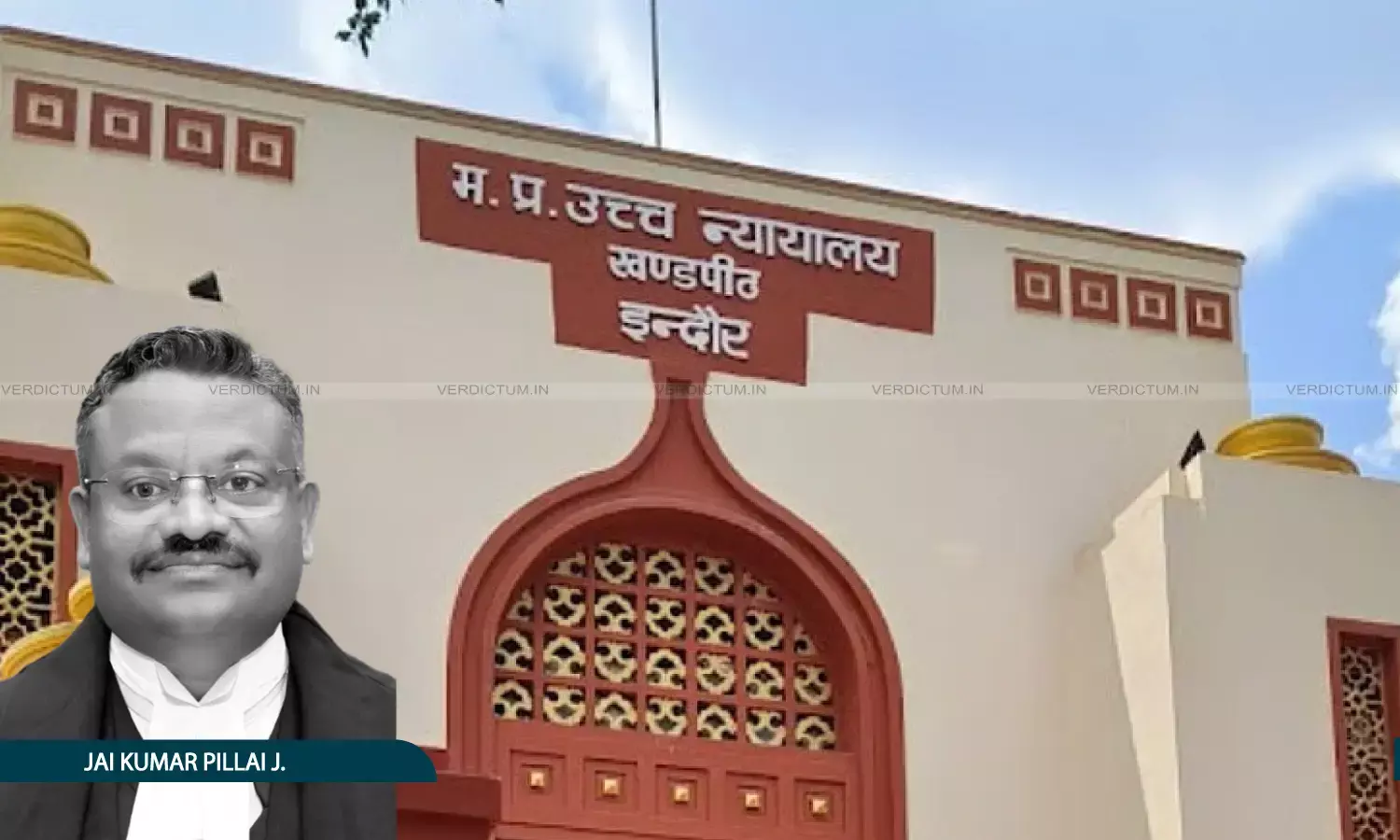
The Madhya Pradesh High Court has dismissed a writ petition challenging guidelines and circulars issued under the TB Mukt Bharat Abhiyan prescribing operational targets for radiographers using ultraportable handheld X-ray devices for community-based tuberculosis screening camps.
The Court held that the prescription of daily operational targets, including 100-150 X-rays per day in field camps, constituted an administrative mechanism designed to implement a welfare policy for the eradication of tuberculosis and could not be categorised as arbitrary merely because the work schedules were demanding.
The Court was hearing a writ petition challenging the guidelines titled “Installation and Operational Guidance on Ultraportable Handheld X-Ray Device (HHXray) for Tuberculosis Screening in the Community” issued by the Central TB Division, Ministry of Health and Family Welfare, Government of India in August 2023, along with consequential circulars issued by the National Health Mission and district-level authorities in Madhya Pradesh.
A Bench of Justice Jai Kumar Pillai observed: “…the impugned order dated 10.11.2025, along with the consequential district-level circulars, is an administrative order issued strictly to implement the said welfare policy. Such administrative mechanisms, including the prescription of operational targets (such as 100-150 X-rays per day) in community camps, are essential administrative tools to achieve the objectives of the TB Mukt Bharat Abhiyan and cannot be categorised as arbitrary merely because they impose demanding work schedules.”
The Court further observed: “It is a trite law that courts must exercise profound restraint when invited to review state policies pertaining to public health initiatives. This Court has no occasion to interfere in the welfare policy meticulously developed by health experts and the executive under the National Health Mission.”
Advocate Prathviraj Singh Parmar appeared for the petitioner. Advocate Romesh Dave appeared for the Union of India. Kushagra Singh, Deputy Government Advocate, appeared for the State authorities.
Background
The petitioner association comprised qualified government radiographers and X-ray technicians employed as permanent, regular and contractual employees across government health facilities in Madhya Pradesh. According to the petition, the members of the association were formally trained in the operation of X-ray equipment, radiation protection and occupational safety.
The Government of India launched the TB Mukt Bharat Abhiyan to eliminate tuberculosis by 2025. In furtherance of the programme, ultraportable handheld X-ray devices known as HHX-ray devices were procured and deployed across States under the National Tuberculosis Elimination Programme for community-based active case finding.
The Central TB Division issued operational guidelines in August 2023. The petitioner challenged portions of these guidelines, particularly the statement that radiation hazards from HHX-ray devices were “almost zero/negligible as per the claim of the company” and that radiation exposure was “1/10th from HHX-ray compared to conventional digital X-ray.”
Pursuant to these guidelines, the Mission Director of National Health Mission, Madhya Pradesh, issued a circular dated 10.11.2025 directing immediate operationalisation of the handheld X-ray devices for tuberculosis screening. Thereafter, district-level circulars were issued by Chief Medical and Health Officers prescribing daily operational targets of 100-150 X-rays per radiographer in community camps.
The petitioner association contended that radiographers were required to transport handheld devices to villages and operate them in temporary camp locations such as Panchayat Bhawans, school rooms and Anganwadis without lead-lined walls or shielding infrastructure. The petitioner further alleged that radiographers were provided only partial lead aprons, were not supplied with Thermoluminescent Dosimeter (TLD) badges and were exposed to unsafe radiation conditions.
The petitioner also questioned the radiation allowance payable to radiographers in Madhya Pradesh and contended that while radiographers in other States received allowances between ₹1,500 and ₹2,500 per month, radiographers in Madhya Pradesh received only ₹50 per month.
Reliance was additionally placed upon World Health Organisation literature to contend that indiscriminate chest X-ray screening of asymptomatic populations was not recommended and imposed an unnecessary radiation burden upon the public.
On the other hand, the respondents contended that the impugned policy constituted a welfare policy framed under the National Health Mission for the eradication of tuberculosis and involved issues of public health and national interest. The respondents argued that no statutory or service rule prohibited the assignment of field duties or the prescription of numerical targets for radiographers.
Court’s Observation
The High Court observed at the outset that the jurisdiction under Article 226 of the Constitution constituted an extraordinary and equitable jurisdiction and that judicial review in matters relating to executive policy, particularly public health policy, remained highly circumscribed.
The Court observed: “The foundational issue presented before this Court is whether the petitioner’s grievance, which is related to the policy developed under the National Health Mission for the eradication of tuberculosis embodied in the policy dated 10.11.2025, warrants judicial intervention.”
The Bench noted that the policy in question was admittedly a welfare policy designed for the eradication of tuberculosis in the broader public interest.
The Court reiterated that courts must exercise restraint while reviewing public health policies framed by experts and executive authorities. The Court observed: “The domain of framing and executing health screening targets rests exclusively with the administrative authorities.”
Referring specifically to the challenge against operational targets prescribed under district circulars, the Court held that administrative mechanisms prescribing numerical targets for screening could not by themselves be termed arbitrary.
The Court observed: “Such administrative mechanisms, including the prescription of operational targets (such as 100-150 X-rays per day) in community camps, are essential administrative tools to achieve the objectives of the TB Mukt Bharat Abhiyan.”
The High Court thereafter examined the petitioner’s concerns relating to radiation exposure, absence of TLD badges and inadequate shielding arrangements.
The Court observed that no manifest material had been placed on record conclusively establishing actual prejudice or demonstrable harm caused to the petitioners. The Court further held that informal experiments conducted by the association regarding penetration of X-rays through lead aprons could not substitute formal administrative or scientific findings.
The Court observed: “The subjective apprehensions or informal experiments conducted by an association cannot substitute for formal administrative findings, and thus, no actionable prejudice is manifest on the record before this Court.”
The Bench additionally examined the argument relating to service conditions and held that no service rule had been pointed out restricting State authorities from assigning field duties or prescribing operational targets for radiographers.
The Court held that in the absence of any demonstrated statutory violation or violation of service conditions, no writ of mandamus could be issued restraining implementation of the impugned orders.
Conclusion
The Madhya Pradesh High Court held that the challenge mounted by the petitioner lacked legal foundation and that no relief could be granted under Article 226 of the Constitution to stall or modify a national public health welfare policy and its administrative implementation.
Accordingly, the writ petition was dismissed as being devoid of merit. Pending applications were also disposed of without any order as to costs.
Cause Title: Pragatisheel Radiographers Sangh Madhya Pradesh v. Union of India & Ors. (Neutral Citation: 2026:MPHC-IND:15164)