Unverified AI-Drafted Pleadings With Fictitious Case Law Border On Misleading Court: Madhya Pradesh High Court
The Court also quashed a police officer’s summary dismissal because the State had produced neither written reasons nor objective material showing that a departmental inquiry was not reasonably practicable.
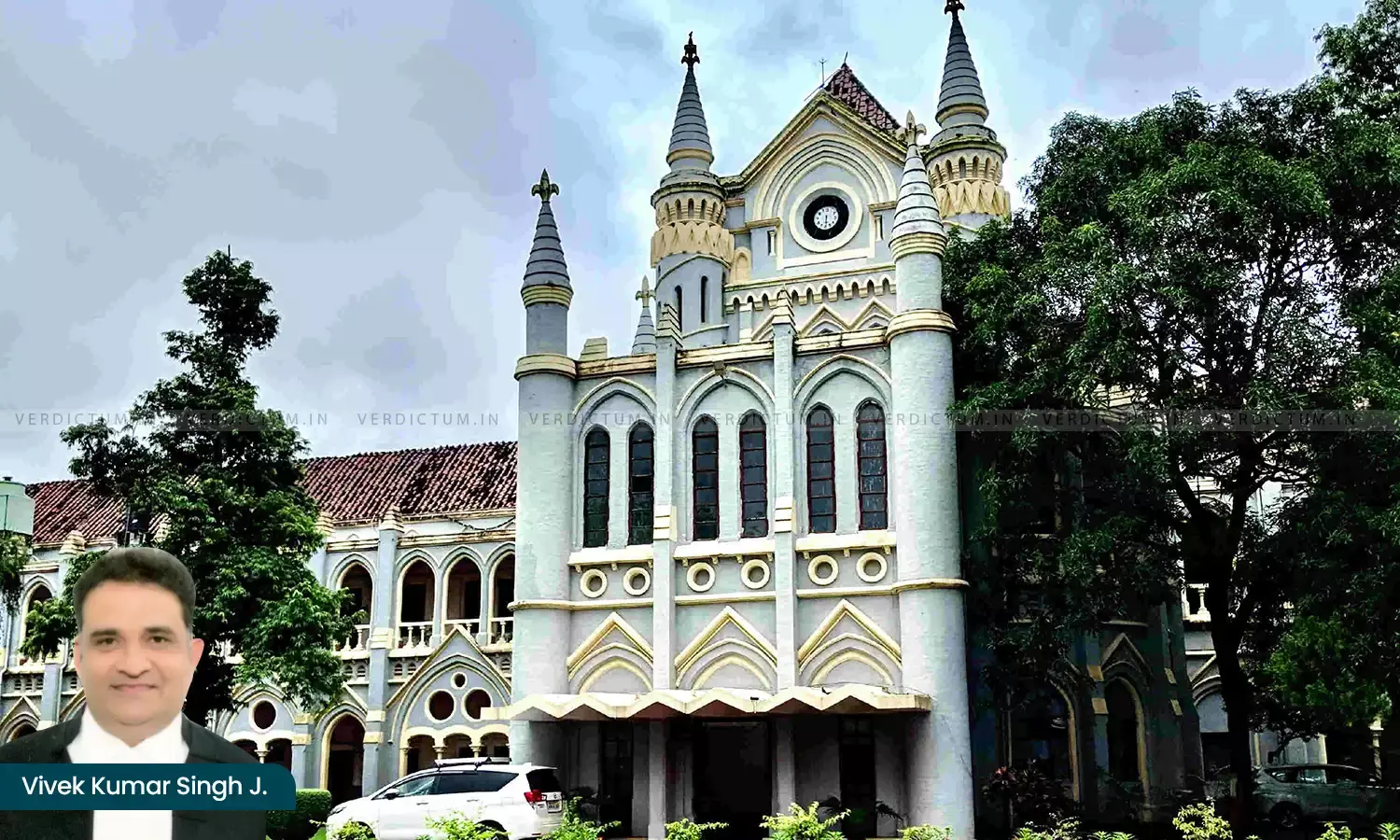
The Madhya Pradesh High Court cautioned the State against filing pleadings drafted with Artificial Intelligence tools without verifying the cited authorities, after the State's return relied on a non-existent Supreme Court judgment paired with an unrelated citation.
The Court said that inserting fictitious case law without basic verification wastes judicial time and borders on actively misleading a constitutional court.
The Court was hearing a police officer’s writ petition challenging his summary dismissal under Article 311(2)(b) of the Constitution and the rejection of his departmental appeal. The dismissal followed a complaint alleging objectionable conduct towards a woman worker and was ordered without a show-cause notice, charge-sheet or departmental inquiry.
A Bench of Justice Vivek Kumar Singh observed: “It is glaringly apparent that the respondents have blindly resorted to the use of Artificial Intelligence tools to draft their pleadings, resulting in the incorporation of a fabricated case name cross-wired with an unrelated citation. Pleadings filed before a Constitutional Court are solemn documents. The casual insertion of fictitious case laws without undertaking the basic professional duty of cross-checking the citations not only wastes precious judicial time but also borders on actively misleading the Court.”
Advocate Nityanand Mishra appeared for the petitioner, while Government Advocate Swati Aseem George represented the State.
Background
The petitioner was serving as an Acting Sub-Inspector in the Special Branch when a woman worker lodged a complaint alleging indecent or objectionable behaviour while he was on duty. He was suspended immediately and summarily dismissed the following day under Article 311(2)(b) of the Constitution and the Madhya Pradesh Police Regulations.
The dismissal was ordered without a show-cause notice, charge-sheet, preliminary inquiry or regular departmental inquiry. The officer’s departmental appeal was also rejected.
Before the High Court, the petitioner contended that the disciplinary authority had not recorded why an inquiry was not reasonably practicable and had violated Article 311(2) of the Constitution, the principles of natural justice and the Madhya Pradesh Civil Services (Classification, Control and Appeal) Rules, 1966.
The State defended the decision by referring to the sensitive nature of the complaint, possible further distress to the complainant, public outrage, the need to preserve trust and discipline in the police force and the possibility of witness intimidation. It also relied on a purported Supreme Court decision titled State of Andhra Pradesh v. S.S. Mohammad Nisar, cited as (2008) 5 SCC 230, to contend that evidence could not be reappreciated under Article 226 of the Constitution.
The High Court found that no judgment bearing that title existed. The citation instead corresponded to Sidhartha Vashisht @ Manu Sharma v. State (NCT of Delhi), which concerned the suspension of sentence in a criminal appeal.
Court’s Observations
Written Reasons Were A Constitutional Requirement
The Court noted that dismissal is a major penalty that ordinarily requires a regular departmental inquiry under the applicable service rules. Article 311(2)(b) of the Constitution and the corresponding rule permit departure from that procedure only when the disciplinary authority records in writing why holding an inquiry is not reasonably practicable.
Referring to the Constitution Bench ruling in Union of India v. Tulsiram Patel (1985), the Court reproduced the following principle: “This is a constitutional obligation and if such reason is not recorded in writing, the order dispensing with the inquiry and the order of penalty following thereupon would both be void and unconstitutional.”
The reasons must precede the penalty and cannot merely repeat the constitutional language. The Court also referred to subsequent Supreme Court decisions holding that the authority’s satisfaction must be supported by independent and objective material and remains open to judicial review.
No Contemporaneous Reasons Or Objective Material Produced
The dismissal order merely stated that a proper inquiry was not reasonably possible and that reasons had been maintained separately. It did not identify why the regular procedure could not be followed.
During the proceedings, the High Court specifically directed the State to produce the separate document in which those reasons were allegedly recorded. The judgment noted: “Despite the specific direction of this Court, no contemporaneous record or separate note of reasons supported by objective material has been produced by the respondents.”
The Court therefore found that the constitutional requirement had not been satisfied.
Sensitive Allegation Required Prompt Inquiry, Not Denial Of Due Process
The Court rejected the State’s post-facto grounds for dispensing with the inquiry. There was no material showing that the petitioner had threatened or intimidated the complainant or any witness, or that violence or insubordination prevented witnesses from testifying.
It observed: “Furthermore, the alleged gravity or sensitive nature of the misconduct is a ground to hold a prompt inquiry in accordance with law, not a license to dispense with constitutional due process.”
The officer had already been suspended and attached to another unit. The Court found no impediment to serving a charge-sheet and conducting a regular inquiry under the service rules.
State Cautioned Over Fictitious AI-Generated Citation
The Court found that the State’s return had cross-wired a fabricated case name with the citation of an unrelated criminal decision. It attributed the error to the respondents’ unverified use of Artificial Intelligence tools in drafting the pleading.
The Court cautioned: “The respondents and the State machinery are strictly cautioned against such reckless practices.”
It further stated: “The office of the Advocate General is expected to ensure that all legal propositions and citations are meticulously verified by the drafting counsel before they are sworn on affidavit and placed on the record of this Court.”
Reinstatement Did Not Decide Merits Of Allegation
The Court held that the reasons advanced for invoking Article 311(2)(b) of the Constitution were legally unsustainable. It nevertheless preserved the competent authority’s liberty to initiate a regular departmental inquiry after providing the petitioner with a reasonable opportunity of hearing.
The judgment clarified: “It is made clear that this Court has not expressed any opinion on the merits of the allegations levelled against the petitioner.”
Conclusion
The High Court quashed the summary dismissal and the appellate order and directed the petitioner’s immediate reinstatement. The competent authority was permitted to initiate and conduct a regular departmental inquiry under the Madhya Pradesh Civil Services (Classification, Control and Appeal) Rules, 1966.
Payment of back wages and other consequential benefits for the intervening period was made subject to the final outcome of any such inquiry. The writ petition was allowed and disposed of without costs.
The Court directed that a copy of the order be transmitted to the Principal Secretary of the State Law Department and the Advocate General of Madhya Pradesh.
Cause Title: Piyush Mani Tiwari v. State of Madhya Pradesh and Others (Neutral Citation: 2026:MPHC-JBP:91141)