

Administrative Action With Predetermined Mind Is Malice In Law: Madhya Pradesh High Court Quashes PWD Reshuffle Issued Within 3 Hours Of Show Cause Notice
The Court on the doctrine of 'malice in law', set aside an administrative reshuffle that stripped a senior official of his additional charge to illegally accommodate a junior officer facing severe corruption inquiries.

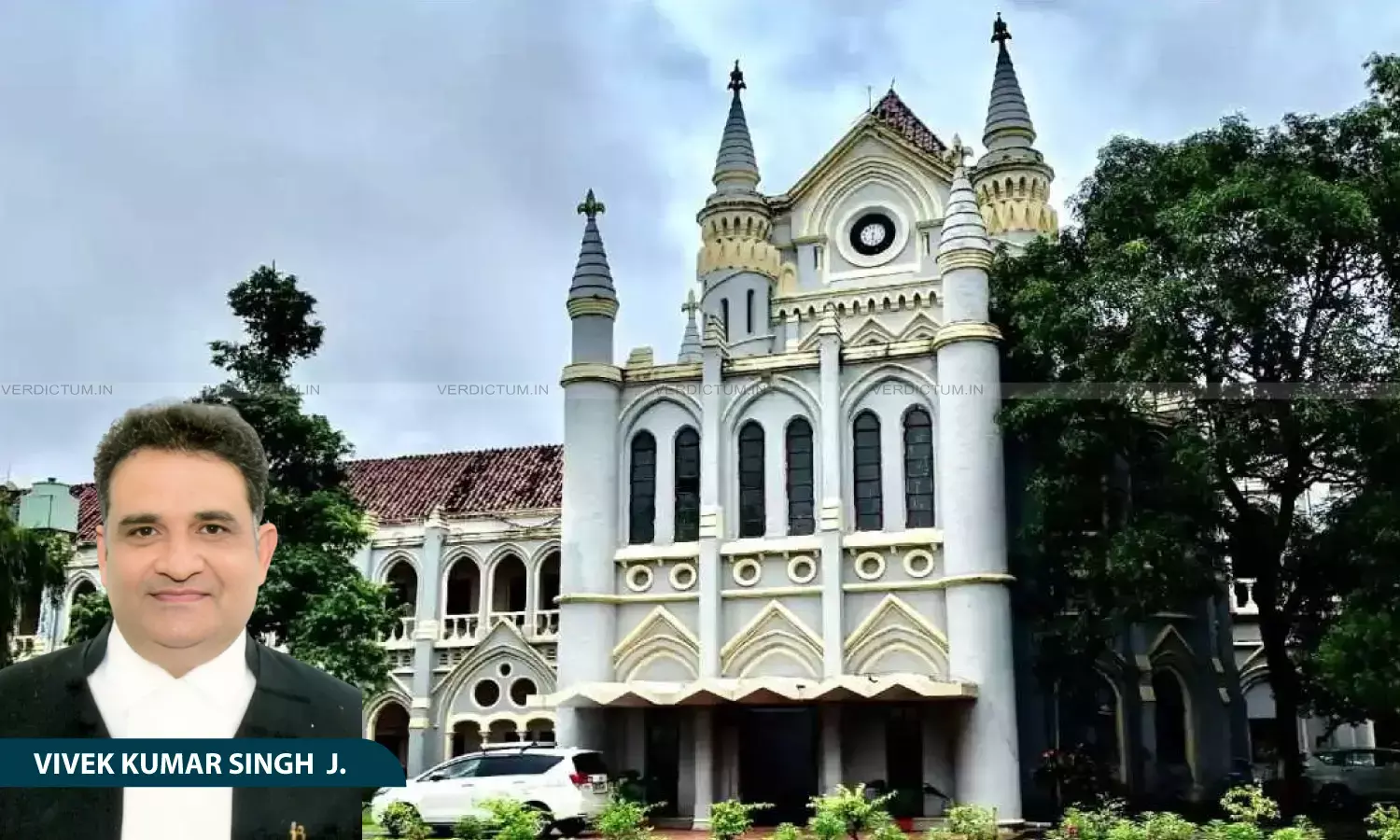
The Madhya Pradesh High Court, has quashed and set aside a state Public Works Department (PWD) order stripping a senior official of his additional charge, noting that ‘malice in law’ is unequivocally demonstrated when an administrative action is taken with a predetermined mindset.
The Court held that while the State Government retains administrative flexibility to make temporary or officiating arrangements in public service, such power constitutes a colorable exercise of power when deployed to bypass statutory eligibility conditions or accommodate junior, tainted officers who fall completely outside the zone of consideration for regular promotion. The Bench heavily reprimanded the Principal Secretary of the PWD for filing a generic reply designed to shield a corrupt junior officer instead of submitting a mandated personal affidavit, noting that such arbitrary actions reflect poorly on an authority of this stature and are not expected from a model employer.
Further, condemned the State's abrupt decision to divest the senior officer of his additional charge within a mere three hours of issuing a show-cause notice, describing the timeline as indicative of a predetermined mind acting in blatant violation of natural justice. The Court further noted that transferring the charge to a delinquent junior officer facing serious disciplinary inquiries, including structural negligence involving a bridge collapse and financial embezzlement exceeding ₹2.4 in a 1,000-bed hospital project, shocks the conscience and amounts to "malice in law".
Justice Vivek Kumar Singh while referring to Somesh Tiwari v. Union of India, (2009) 2 SCC 592, observed, “…Malice in law is demonstrated when an administrative action is taken with a predetermined mindset. It is true that an employee does not possess an indefeasible right to hold an additional or temporary charge but at the same time, the administration is prohibited from using this administrative power as an excuse to act unfairly, arbitrarily, capriciously or in a malafide manner. For the reasons mentioned hereinabove, this Court does not hold the sanctity of the impugned order to be correct and as per law and hence, the same is quashed and set aside”.
“This Court feels compelled to point out the catastrophic administrative consequences of such arbitrary practices. Handing over the charge of a highly sensitive and superior post like that of a Chief Engineer to a junior officer entirely bypassing the rank of Superintending Engineer disrupts the hierarchical discipline of the department. The same will lead to severe resentment among senior, eligible officers. More alarmingly, placing a junior officer in a position of immense financial and administrative power far beyond their substantive rank and entitlement may create grounds for nepotism, favouritism and rampant corruption and such officer may lack independent discipline in taking decisions”, the Bench further observed.
Senior Advocate Sanjay K Agarwal appeared for the petitioner and Prashant Singh, Advocate General, Swapnil Ganguly, Deputy Advocate General and Harpreet Singh Ruprah, Additional Advocate General appeared for the respondents.
In the matter, the petitioner, P.C. Verma, a Superintending Engineer serving as In-Charge Chief Engineer, challenged an order dated April 29, 2026, issued by the Principal Secretary, PWD.
Through the impugned order, the additional charge of Chief Engineer, PWD, Bridge Zone, Bhopal was abruptly withdrawn from the petitioner and handed over to respondent No. 4, who already held the charge of Chief Engineer, PWD, Bhopal Zone in an additional capacity.
The withdrawal was executed within three hours of a digitally signed show-cause notice leveling tender evaluation irregularities against the petitioner. The petitioner approached the High Court asserting that respondent No. 4 was a highly tainted junior executive engineer facing serious charge-sheets for financial irregularities and the collapse of a submersible bridge over the Wainganga River.
The Court had previously issued an interim directive on May 7, 2026, calling for a personal affidavit from the Principal Secretary, PWD, to explain the departmental modalities and compliance with the State’s binding Circular dated July 22, 2004, which strictly prohibits assigning higher charges to tainted officials. Rather than filing the mandated personal affidavit, the Principal Secretary submitted a generic departmental reply defending the co-respondents, which the Court heavily deprecated as an unprecedented attempt by a model employer to shield a delinquent employee.
Interpreting Rule 6 of the Madhya Pradesh PWD Engineer-In-Chief and Chief Engineers Recruitment and Conditions of Service Rules, 1983, the Court observed that while the rule strictly governs regular promotions, administrative propriety dictates that temporary arrangements must closely align with the statutory zone of consideration to prevent backdoor entries of unqualified personnel.
“The decision to assign second additional charge to respondent No. 4 shocks the conscience of this Court. It is an admitted fact on record that there exists instructions for preparing draft charge sheets against respondent No. 4 for his active involvement in the collapse of a bridge at Seoni. By handing over such additional charge and posting respondent No. 4 in the very office responsible for processing the disciplinary proceedings, the State has effectively permitted a delinquent officer to oversee his own prosecution….”, the Bench noted.
Allowing the writ petition, the Court quashed and set aside the impugned order dated April 29, 2026. It directed the Principal Secretary, PWD, to assign the additional charge of Chief Engineer, Bridge Zone, Bhopal, to an eligible officer with an unblemished service record who legitimately falls within the zone of consideration under the 1983 Rules.
The Court further directed that the petitioner be posted out of the Bhopal Bridge Zone as In-Charge Chief Engineer pending the final consideration of his show-cause notice. Additionally, the State was ordered to expeditiously finalize all pending disciplinary proceedings against respondent No. 4 through an independent authority, keeping him completely away from the Bhopal Zone during the interim to ensure the integrity of the prosecution.
“It is made clear that this Court has not made any adverse remark against the Principal Secretary, PWD but is merely warned not to act in a manner that is detrimental to the interest of public administration”, the Bench noted, towards the end of the judgment.
Cause Title: P.C. Verma v. The State of Madhya Pradesh and Others (W.P. No. 16652 of 2026)
Appearances:
Petitioner: Sanjay K Agarwal, Senior Advocate with Sarthak Nema, Advocate.
Respondents: Prashant Singh, Advocate General with Swapnil Ganguly, Deputy Advocate General, Rahul Diwaker, Advocate, Harpreet Singh Ruprah, Additional Advocate General, Akash Malpani, Advocate.