Compassionate Appointment Can’t Be Arbitrarily Rejected On Ground Of Deceased Employee’s Unsatisfactory Service Record: Madhya Pradesh High Court
The Court held that rejection of a compassionate appointment on grounds not forming part of the governing policy is arbitrary, and authorities cannot import extraneous criteria to defeat claims of dependents facing financial distress.
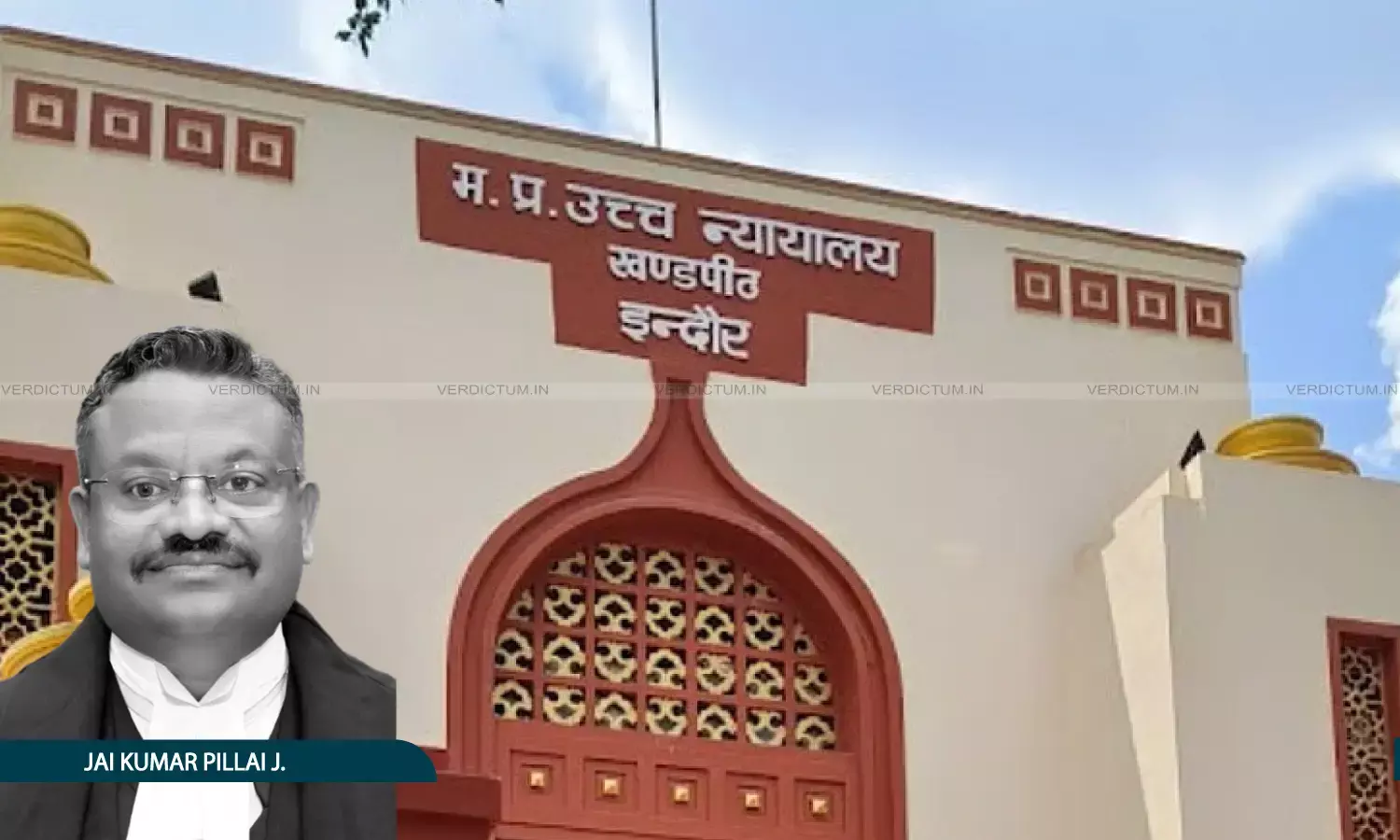
The Madhya Pradesh High Court has held that a compassionate appointment cannot be denied on the ground of “unsatisfactory service record” of the deceased employee when such a criterion is not contemplated under the applicable policy, reiterating that authorities must strictly adhere to the scheme governing such appointments.
The Court was hearing a writ petition under Article 226 challenging the rejection of a claim for compassionate appointment by Union Bank of India following the death of the petitioner’s father while in service.
A Bench of Justice Jai Kumar Pillai observed: “A meticulous scrutiny of the aforementioned rejection order clearly reveals that it does not contain or cite any specific clause of the applicable policy which mandates that a 'service record' can be a valid ground for rejection, … The respondents have completely failed to demonstrate how this alien criterion was imported into the decision compassionate appointment scheme does not contemplate any such exclusionary provision.”
“This Court is utterly surprised as to how the alleged unsatisfactory service record of the petitioner's father can suddenly be weaponised as a ground for the outright compassionate appointment claim … The authorities have totally bypassed the very essence and strict text of their own compassionate appointment policy, … The petitioner had applied promptly, and the family’s acute destitution is undisputed on record, yet the claim was mercilessly defeated on wholly extraneous ground”, the Bench added.
Advocate N.P. Choudhary appeared for the petitioner.
Background
The petitioner approached the High Court seeking the quashing of the order passed by the respondent Bank rejecting his claim for compassionate appointment.
The petitioner’s father, a regular employee of the Bank working as a ‘Daftary’, had died in harness on 07.08.2016 after rendering over 22 years of continuous service. The petitioner, being the sole dependent, applied for a compassionate appointment under the scheme introduced by the Bank.
It was the case of the petitioner that following the death of his father, the family was left in acute financial distress, with multiple dependents and no source of income. The application for appointment was promptly submitted and recommended by the local authorities.
However, after a delay of nearly two years, the claim was rejected on the grounds of the “unsatisfactory service record” of the deceased employee.
The petitioner contended that such a ground was wholly extraneous and not contemplated under the applicable compassionate appointment scheme, and therefore, the rejection was arbitrary and unsustainable.
Court’s Observation
At the outset, the Court noted that the respondents had failed to file any reply despite service of notice, and the matter proceeded ex parte. The Court observed that such conduct, coupled with the delay in decision-making, reflected a lack of seriousness in dealing with claims arising under a benevolent scheme.
The Court then examined the governing principles relating to compassionate appointment, relying upon the Supreme Court’s decision in State of West Bengal v. Debabrata Tiwari (2023), which reiterates that such appointments are an exception to the general rule of recruitment and are intended to provide immediate relief to families in financial distress.
Referring to settled jurisprudence, the Court observed that compassionate appointment is not a vested right but a welfare measure designed to mitigate sudden hardship, and therefore claims must be considered promptly and strictly in accordance with the scheme.
Turning to the impugned rejection order, the Court reproduced its contents and found that the sole ground for rejection was the alleged “unsatisfactory service record” of the deceased employee.
Upon scrutiny, the Court found that the rejection order did not cite any provision of the applicable policy that permitted such a ground. In this regard, the Court observed that “the compassionate appointment scheme does not contemplate any such exclusionary provision.”
The Court held that administrative authorities are bound to act within the four corners of the governing policy and cannot introduce new criteria not contemplated therein. It emphasised that “importing alien or unwritten criteria… defeats the very objective of the welfare measure.”
Critically examining the reasoning adopted by the respondents, the Court held that the alleged service record of the deceased employee could not be used to deny compassionate appointment, particularly when no disciplinary proceedings or major penalties were shown on record.
The Court further noted that the petitioner had applied promptly and that the financial distress of the family was undisputed. In such circumstances, rejection of the claim on extraneous grounds was held to be arbitrary and contrary to the object of the scheme.
The Court also deprecated the mechanical and non-speaking nature of the rejection order, observing that “such mechanical and apathetic rejections… are demonstrably arbitrary, legally perverse.”
The Court emphasised that authorities are duty-bound to pass reasoned and speaking orders, supported by policy provisions, and warned against the arbitrary exercise of power in matters affecting vulnerable individuals.
Conclusion
The Court held that the impugned rejection order was arbitrary and unsustainable in law, having been based on a ground not contemplated under the applicable policy.
Accordingly, the writ petition was allowed, the rejection order dated 30.01.2018 was quashed, and the respondents were directed to reconsider the petitioner’s claim for compassionate appointment afresh, strictly in accordance with the prevailing policy, within a period of 60 days.
The Court also imposed costs of ₹50,000 on the respondents for the hardship caused to the petitioner.
Cause Title: Nikhil Kol v. Union Bank of India & Ors. (Neutral Citation: 2026:MPHC-JBP:32557)