Owner Or Manager Not Automatically Criminally Liable: Madhya Pradesh High Court Grants Bail In Fireworks Factory Explosion Case
The Court granted bail to two appellants accused in an alleged illegal-fireworks-factory explosion that killed 12 workers and injured 19, while leaving their individual responsibility and the evidentiary value of the prosecution material for determination at trial.
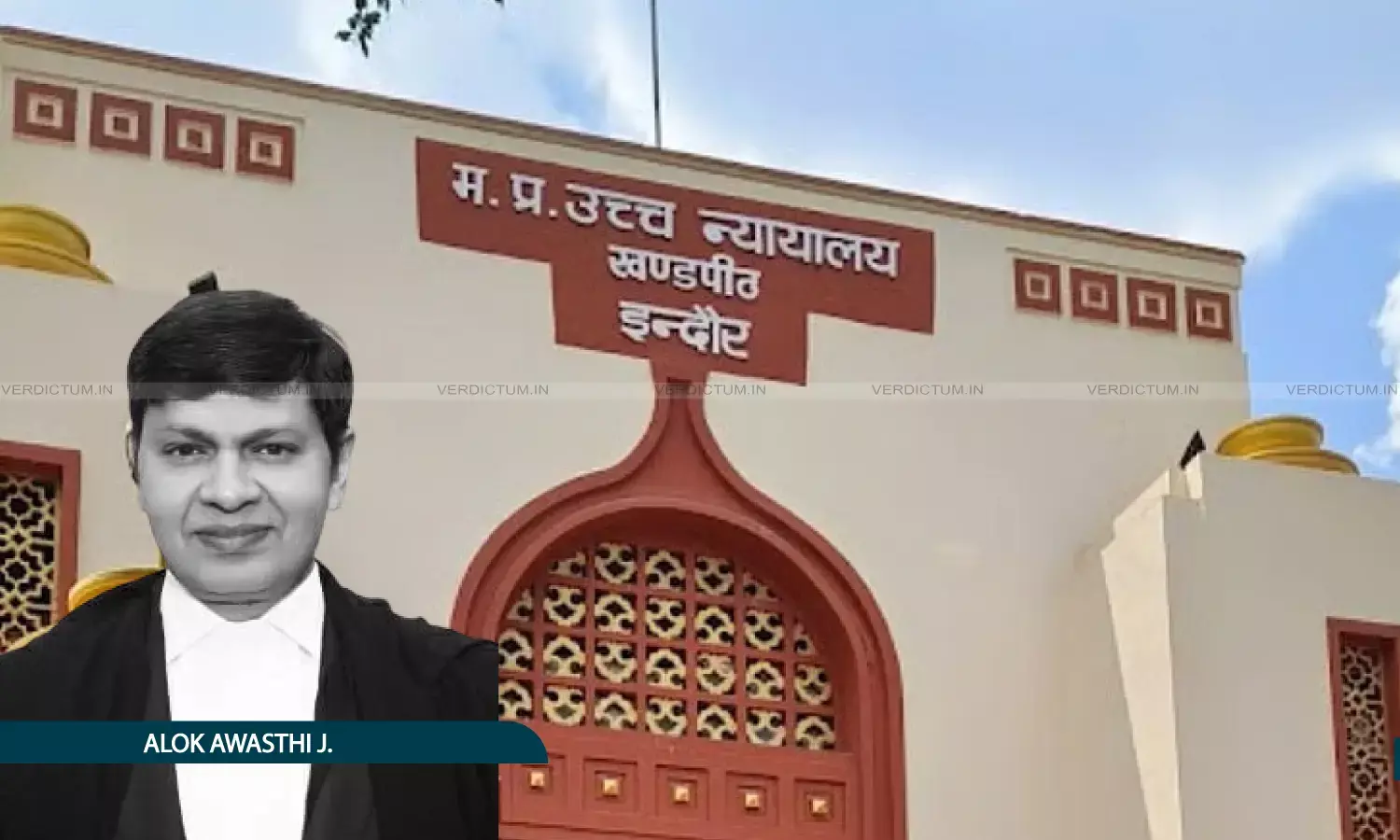
The Madhya Pradesh High Court has held that designation as an owner, financier, manager or partner of a fireworks factory cannot, in every circumstance, automatically establish criminal culpability.
Granting bail to two appellants accused in a factory explosion, the Court said that the prosecution would have to establish each appellant’s individual responsibility according to the ingredients of the alleged offences.
The Court was hearing connected appeals under Section 14-A(2) of the Scheduled Castes and the Scheduled Tribes (Prevention of Atrocities) Act, 1989, against the rejection of applications for bail. The appellants faced offences under the Bharatiya Nyaya Sanhita, 2023, the Explosive Substances Act, 1908, the Explosives Act, 1884, the SC/ST Act, the Arms Act, 1959, child-labour legislation and the Juvenile Justice (Care and Protection of Children) Act, 2015.
A Bench of Justice Alok Awasthi observed: “Mere designation as owner/financer or manager/partner/owner cannot, in every circumstance, automatically establish criminal culpability. The prosecution will have to establish the individual responsibility of each appellant in accordance with the ingredients of the offence alleged. At the same time, this Court is not recording any finding that the appellants were free from responsibility or that the prosecution allegations are unfounded”.
Senior Counsel Vishal Baheti appeared for the appellants. Government Advocate Aditya Garg represented the State.
Background
According to the prosecution, a massive explosion occurred in an illegal fireworks factory where approximately 70 to 75 labourers were filling fireworks with gunpowder and chemicals inside tin-roofed sheds. Twelve workers died and 19 sustained serious injuries.
The prosecution alleged that the unit operated without proper fire-safety measures and required clearances, violated licence conditions and stored explosives and chemicals beyond permissible limits. It attributed financing, partnership, substantial fund transfers and the supply of chemicals and fireworks materials to the appellants through business entities associated with them.
The appellants denied any direct involvement in manufacturing or handling explosive substances. They submitted that they were not present at the factory during the incident, did not supervise the manufacturing process or labourers and had committed no overt act causing the explosion. They argued that financial or commercial transactions could not, without the necessary knowledge and intention, establish the alleged offences.
The State opposed bail, describing the appellants as the financial backbone of an organised illegal explosives-manufacturing operation. It relied on the alleged financial dealings, supply of materials, recoveries and the possibility of influencing vulnerable witnesses.
Court’s Observations
Gravity Could Not Be The Sole Bail Consideration
The Court acknowledged the magnitude of the tragedy and the suffering caused to the workers’ families. It nevertheless held that the seriousness of the occurrence could not alone justify keeping the appellants in custody throughout the trial.
The Court observed: “The question before this Court is limited to whether, having regard to the material collected during investigation and the surrounding circumstances, further detention of the appellants are necessary.”
Referring to State of Rajasthan v. Balchand @ Baliay (1977) and Kumer Singh v. State of Rajasthan (2021), the Court noted that bail remained the rule and detention the exception, subject to factors including the accusation, evidence, punishment, witness intimidation and surrounding circumstances.
Individual Responsibility Required Evidence At Trial
The Court recognised that owners and persons managing industrial establishments involving hazardous materials were expected to exercise due care and comply with statutory safeguards. Whether a particular breach was attributable to either appellant and causally connected with the explosion, however, required evidence.
The Court said: “Nevertheless, the question as to whether the appellants committed the offences alleged against them, whether there was a breach of any particular statutory requirement, whether such breach was attributable to either appellant and whether the alleged breach has a causal connection with the explosion are matters which require examination on the basis of the evidence during trial.”
The Court also observed that the case diary disclosed no documentary evidence indicating that a minor had been engaged in manufacturing fireworks. It left the remaining offences and the legal consequences of the alleged safety violations to be determined in accordance with law.
Evidence Had Been Secured
The Court noted that the investigation had concluded and the charge sheet had been filed. The factory premises, records, explosive materials, licensing documents, technical reports and other physical evidence were already with the investigating agency.
The Court held: “Their further custodial interrogation is not required. Their continued incarceration, in the absence of any demonstrated investigative requirement, cannot be justified merely on the basis of seriousness of the allegations.”
It found that the physical circumstances of the explosion could not be altered after the incident and that conditions could address the prosecution’s concerns.
Bail Did Not Permit Resumption Of Explosives Activity
The Court stressed that the allegations involved public safety and an industrial establishment handling explosive materials.
The Court observed: “This Court is also conscious of the fact that the allegations concern an industrial establishment dealing with explosive materials and involve questions of public safety.”
It clarified that bail was not permission to resume manufacturing, storing or handling explosives and that the appellants remained subject to statutory restrictions and directions issued by the competent authorities.
The Court also directed the trial court to assess the evidence independently without being influenced by the bail order. The observations were confined exclusively to bail and did not express an opinion on the merits of the prosecution.
Conclusion
The High Court allowed the appeals, set aside the orders rejecting bail and directed the appellants’ release on personal bonds of ₹10 lakh each with separate solvent sureties for the same amount.
They were prohibited from leaving India without permission, influencing witnesses or undertaking explosives-related activity at the concerned premises unless specifically authorised and compliant with applicable law. They were also required to cooperate with the trial, avoid unnecessary adjournments and refrain from criminal activity. A breach of the conditions would permit cancellation of bail.
Cause Title: Mukesh Vij v. State of Madhya Pradesh and Another & Anil Malviya v. State of Madhya Pradesh and Another (Neutral Citation: 2026:MPHC-IND:31069)
Appearances
Appellants: Vishal Baheti, Senior Counsel, assisted by Aditya Singh and Kinjal Shrivastava, Advocates
State: Aditya Garg, Government Advocate