

Agreement to Sell Does Not Convey Title; Suit for Bare Injunction Restraining Vendor From Selling Property To Others Not Maintainable: Madhya Pradesh High Court
The Court set aside concurrent decrees after 36 years; non-executant of a sale deed need not pay ad valorem court fee for declaration that it is void.

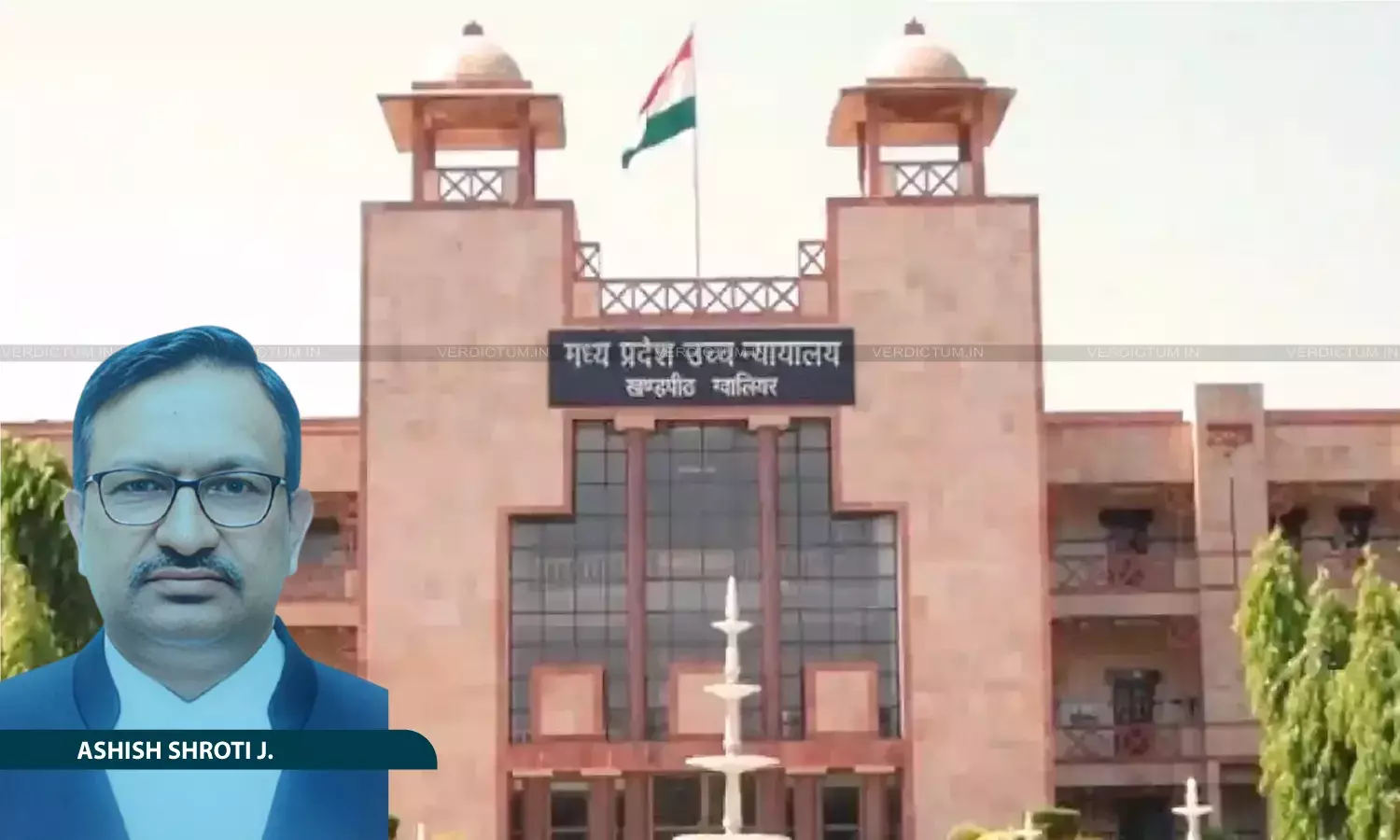
The Madhya Pradesh High Court, Gwalior Bench held that a registered agreement to sell does not convey title to the intending purchaser. The Court held that a plaintiff who does not claim specific performance cannot obtain a declaration or permanent injunction restraining the vendor from selling the property to others.
The Court also held that a plaintiff who is not a party to a sale deed is not required to pay ad valorem court fee for seeking a declaration that the deed is null and void. It observed, however, that this answer was inconsequential in view of its finding on the first question.
A Bench of Justice Ashish Shroti observed, “…in absence of any relief for specific performance of agreement to sell, there is no chance of plaintiff's acquiring title over the suit property. Further, without having title over the property, the plaintiff was not entitled to a decree of permanent injunction also. Thus, the declaration sought by the plaintiff only to the effect that the defendant shall not alienate his property to anyone else and the permanent injunction to restrain him from alienating the property, was not permissible in law. No decree therefore could have been granted by the Courts below”.
Advocate Avadhesh Parashar appeared for the appellants and Rajendra Jain, Government Advocate appeared for the respondent.
The plaintiff sued on July 13, 1990 on the strength of a registered agreement dated December 27, 1989, under which the first defendant agreed to sell about 0.158 hectare of land for Rs 33,000. Rs 5,200 was paid as advance and possession was said to be handed over. The sale deed was to be executed once the vendor’s name was mutated over a deceased relative’s share. The plaintiff sought a declaration that the vendor could not sell to anyone else and an injunction against alienation. After the vendor sold the land to the fourth defendant on October 10, 1991, the plaintiff amended the plaint to challenge that sale.
The Civil Judge Class-I, Gohad decreed the suit on January 18, 2001. The Additional District Judge, Gohad affirmed on September 28, 2001. The purchaser appealed, and on August 18, 2008 the High Court framed two substantial questions of law. They concerned the decrees granted on the basis of the agreement to sell, and the ad valorem court fee on the declaration against the sale deed.
The Court found that the plaintiff asserted title solely on the agreement, which only recorded an intention to sell. Referring to Suraj Lamp & Industries (P) Ld. Tr. Dir v. State Of Haryana & Anr. (2012)1 SCC 656, Indian Overseas Bank v. M.A.S. Subramanian & Ors. and Correspondence, RBANMS Educational Institution v. B. Gunashekar & another 2025 SCC Online SC 793, it held that under Section 54 of the Transfer of Property Act, 1882 an agreement of sale creates no interest in the property. Section 53-A offers protection only against the transferor.
The Court held that, absent a prayer for specific performance, there was no chance of the plaintiff acquiring title, and without title he could not obtain a permanent injunction. On the court fee, it relied on Suhrid Singh @ Sardool Singh v. Randhir Singh & Ors. (2010)12 SCC 112. It then set aside both decrees, dismissed the suit and allowed the appeal, and directed the plaintiff to bear the costs.
Cause Title: Kiledar Singh (Deceased) through LRs v. Anil Kumar & Ors. (Neutral Citation: 2026:MPHC-GWL:32136)
Appearances:
Appellants: Avadhesh Parashar, Advocate.
Respondent: Rajendra Jain, Government Advocate.