

Mere Cash Award ₹5,000 For Preventing Mass Disaster, Out-Of-Turn Promotions For Medals In Typing: Madhya Pradesh High Court Criticizes State Govt.
The Bench said that a writ court is empowered to direct out-of-turn promotion to correct gross injustice where screening committee arbitrarily degraded SHO’s life-threatening rescue mission over 200-foot gorge to 'routine duty'.

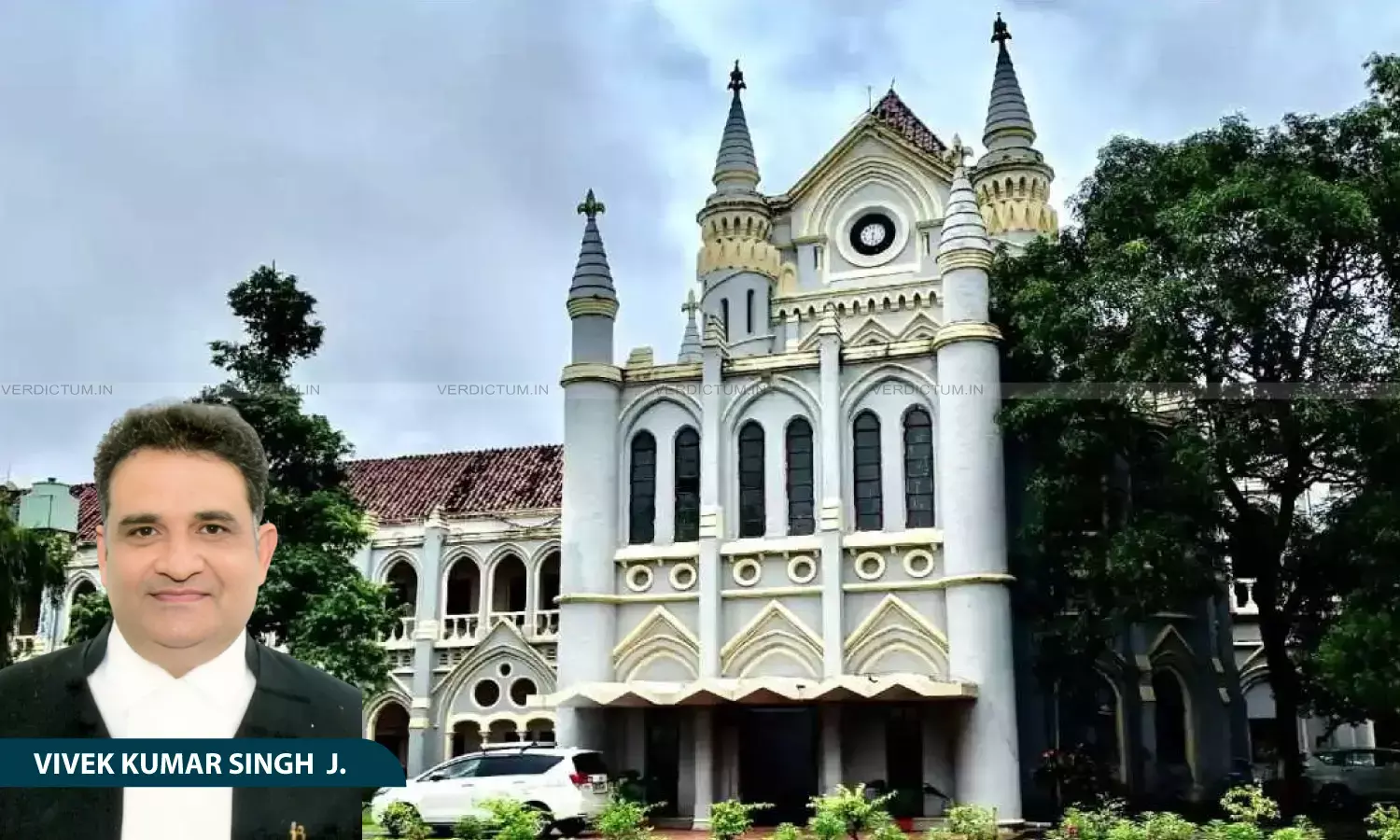
The Madhya Pradesh High Court criticised the State authorities for denying out-of-turn promotion to a then Sub-Inspector who risked his life by hanging over a 200-foot gorge at Bharughat, around 25 Km from Indore, to prevent a possible mass disaster. The Court questioned the State’s decision to deny him promotion while granting similar benefits to personnel for securing medals in typing and computer awareness competitions. The Bench termed the State’s approach “deeply irrational and arbitrary”, observing that an act of extraordinary courage could not be reduced to a mere “routine duty”.
To put a quietus to the twenty-year-old litigation, the Court quashed the impugned order dated December 28, 2012, and directly commanded the respondents to grant the petitioner a notional out-of-turn promotion to the post of Inspector retrospectively from February 10, 2005, with consequential seniority and notional salary fixation for future increments, while excluding any back-wages.
The Court further noted that while the scope of judicial review over subjective administrative selections is inherently limited, however, a writ court is fully empowered to directly mandate an out-of-turn promotion with retrospective effect when the screening committee's rejection is found to be palpably perverse.
Justice Vivek Kumar Singh observed, “The record reveals that out-of-turn promotions were granted to police officers for securing medals in typing and computer awareness. While this Court does not sit in judgment over those specific grants, it finds it deeply irrational and arbitrary that the administration sets the threshold for exceptional merit at winning a typing competition yet completely dismisses an act of hanging over a 200-foot gorge to prevent a mass disaster as a routine duty”.
“…the Superintendent of Police, Deputy Inspector General of Police and Inspector General of Police who were well versed with the topography of Bharughat and evaluated the petitioner’s performance on the ground unanimously recommended him for promotion. The screening committee’s decision to bypass this ground level assessment to merely award a cash reward of Rs. 5,000/- while terming the act as routine creates the exact type of glaring discrepancy and resultant injustice that the Hon’ble Supreme Court observed and reached to a conclusion that judicial interference is required”, the Bench further noted.
Advocate Praveen Dubey appeared for the petitioner and Advocate Shradha Tiwari appeared for the respondent.
The Bench further, categorically observed, “Furthermore, the satisfaction required under Regulation 70-A cannot be arbitrary. In the present case, the Superintendent of Police, the Deputy Inspector General of Police as well as the Inspector General of Police who were aware of the ground realities of the rescue unanimously recommended for out-of-turn promotion. The screening committee overturned these concurrent recommendations without recording any cogent, objective or legally sustainable reasons, relying solely on the flawed premise of ‘routine duty’”.
The dispute arose from a 2004 rescue operation at Bharughat, where a loaded truck fell into a 200-foot gorge and remained suspended from a tree. The petitioner, then SHO of Police Station Simrol, descended into the gorge using a rope after crane operators refused, rescued the driver and helper, and prevented a possible disaster.
Despite recommendations from senior police officers for out-of-turn promotion under Regulation 70-A of the Madhya Pradesh Police Regulations, the department granted only a ₹5,000 reward, treating the act as routine duty. After an earlier rejection was set aside by the High Court, the petitioner again challenged the fresh denial before the Court.
Adopting a strict legal position on administrative perversity, the Court reasoned that the respondents could not approbate and reprobate by acknowledging the petitioner’s extraordinary bravery through a cash reward while simultaneously branding the exact same act as routine duty to deny statutory promotional benefits.
“Having examined the statutory intent behind Regulation 70-A, it is manifestly clear that the screening committee utterly failed to apply the correct legal parameters to the petitioner’s case. Dismissing the brave act of petitioner as just a regular part of the job completely overlooks the extreme danger involved. A routine police officer’s response to such an incident would have been strictly confined to securing the perimeter, managing traffic and requisitioning specialized disaster response teams or professional equipment. The very fact that professional crane operators refused to descend into the gorge highlights the extreme danger involved…”, the Bench said.
“…The petitioner went beyond the call of duty and took a life-threatening decision and by suspending himself on a mere rope in darkness over 200 feet to secure an overloaded truck and saving it from falling is an act of extraordinary bravery. Had the petitioner not intervened with such sheer presence of mind and courage, the truck would have inevitably plunged onto the active lower side of the road triggering a catastrophic mass disaster taking human life. Such a selfless, high-risk intervention flawlessly satisfies the threshold of conspicuous gallantry and exceptional merit contemplated under Regulation 70-A”, the Bench further noted.
Cause Title: Indramani Patel v. The State of Madhya Pradesh and Others (WP-9716-2017)
Appearances:
Petitioner: Praveen Dubey and Sarthak Nema, Advocates.
Respondent: Shradha Tiwari, Panel Lawyer.