

Claim Of Being Deaf & Dumb Cannot Shield Accused Who Understands Consequences Of Act: Madhya Pradesh HC Remands POCSO Case For Fresh Examination U/S 313 CrPC
The Court noted that the accused had previously been convicted in 2014 for raping a 14-year-old disabled girl, in a trial where he was duly examined under Section 313 CrPC without ever raising any plea of being deaf or dumb.

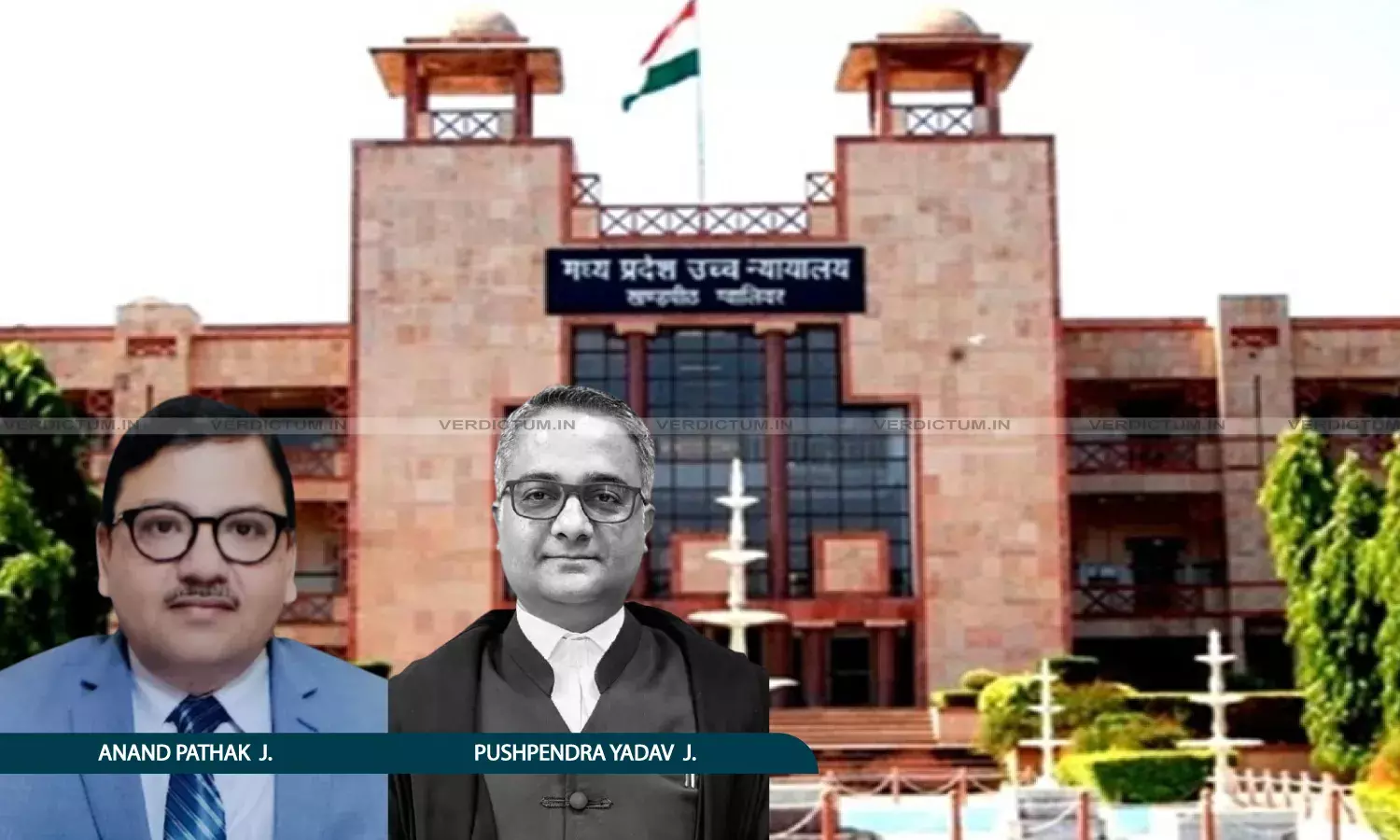
The Madhya Pradesh High Court, dealing with a criminal reference under Section 318 CrPC, has held that once an accused is shown to know the nature and consequences of his act, his plea that he cannot understand court proceedings on account of being deaf and dumb loses its sheen, and that an accused cannot be permitted to escape the wrath of criminal proceedings by cleverly representing himself as a person incapable of understanding the case against him.
The Court set aside the trial court's reference and directed that the accused be properly examined under Section 313 CrPC, if necessary in writing, before judgment is pronounced afresh.
A Division Bench comprising Justice Anand Pathak and Justice Pushpendra Yadav observed, “The accused knew the nature and consequences of the act very well. Once an accused knows the consequences of the act, then his plea that he does not understand the proceedings loses its sheen”.
“…The allegations are serious in nature, and an accused in such circumstances cannot escape the wrath of the proceedings by cleverly managing to represent himself as deaf and dumb or as a person who cannot understand the proceedings held against him. A cautious approach is required. Victim's rights are also required to be seen”, the Bench further observed.
Deependra Singh Kushwaha, Additional Advocate General appeared for the appellant and Senior Advocate R.K. Sharma appeared as Amicus Curiae.
In the present matter, the respondent was convicted by the Special Judge (POCSO), Gwalior, for offences including aggravated penetrative sexual assault on a seven-year-old child under Section 376(AB) IPC and Section 6 of the POCSO Act.
At the stage of his examination under Section 313 CrPC, the accused, through gestures, indicated he could neither hear nor speak. Medical examination followed, including referral to AIIMS Bhopal, where the medical board found his condition consistent with severe to profound hearing loss but specifically recorded his behaviour as "Malingering", pretending to be ill to escape conviction, noting he was capable of understanding consequences and instructing counsel, but was uncooperative during hearing aid trials.
Thereafter, sign language experts also found him unable to understand sign language but not of unsound mind. The trial court, relying on Section 318 CrPC, proceeded to convict without recording his statement under Section 313 and referred the matter to the High Court.
The Court uncovered a critical fact that had not come before the trial court: the respondent had previously been convicted in 2014 for raping a fourteen-year-old disabled girl, in a trial where he was duly examined under Section 313 CrPC without ever raising any plea of being deaf or dumb.
The Court noted that he had signed his name in Hindi on multiple case documents including the arrest memo, consent forms and order sheets in the present case, and that prosecution witnesses including the victim herself testified he could speak, though he stammered. It held this non-disclosure of his previous conviction itself cast serious doubt on his conduct and credibility.
“Nowhere the defence alleged either in previous trial or in this trial that the respondent/accused is not able to understand the proceedings of the court as on one hand he had defended one trial without any plea & in this case, the respondent/accused was reluctant to use the hearing aid and didn’t respond to the questions asked by the trial court nor cooperated with the medical examiners team for auditory purposes, which raises serious reservations against the conduct of the respondent/accused”, the Bench observed.
“In view of the above facts and circumstances of the case, it appears that prima facie this is a case where the mandatory provision of Section 313 CrPC is not being complied with by recording the accused statement, and if needed, the accused examination be made in writing as per Section 313(5) of CrPC, which was inserted by the 2009 Amendment Act in accordance with law; otherwise, it will prejudice the cause of the accused and accused would try to get advantage of it”, the Court said.
Accordingly, the trial court's judgment was set aside to the limited extent of ensuring the accused is examined under Section 313 CrPC, with directions to complete the exercise within four months, after which the trial court may proceed to pronounce judgment if the accused continues to be uncooperative despite sufficient opportunity.
Cause Title: In Reference Of: State Of Madhya Pradesh v. Kalyan Raikwar, Criminal Reference No. 01 of 2024
Appearances:
Appellant: Deependra Singh Kushwaha, Additional Advocate General, R.K. Sharma, Senior Advocate, with V.D. Sharma and Bhavya Sharma, Advocates appeared as amicis curiae.