

Mere Dismissal From Service Pursuant To Departmental Enquiry Can’t Result In Automatic Forfeiture Of Gratuity: Madhya Pradesh High Court
The appeal before the Madhya Pradesh High Court was filed against the order whereby the Bank was directed to pay the gratuity amount to the writ petitioner.

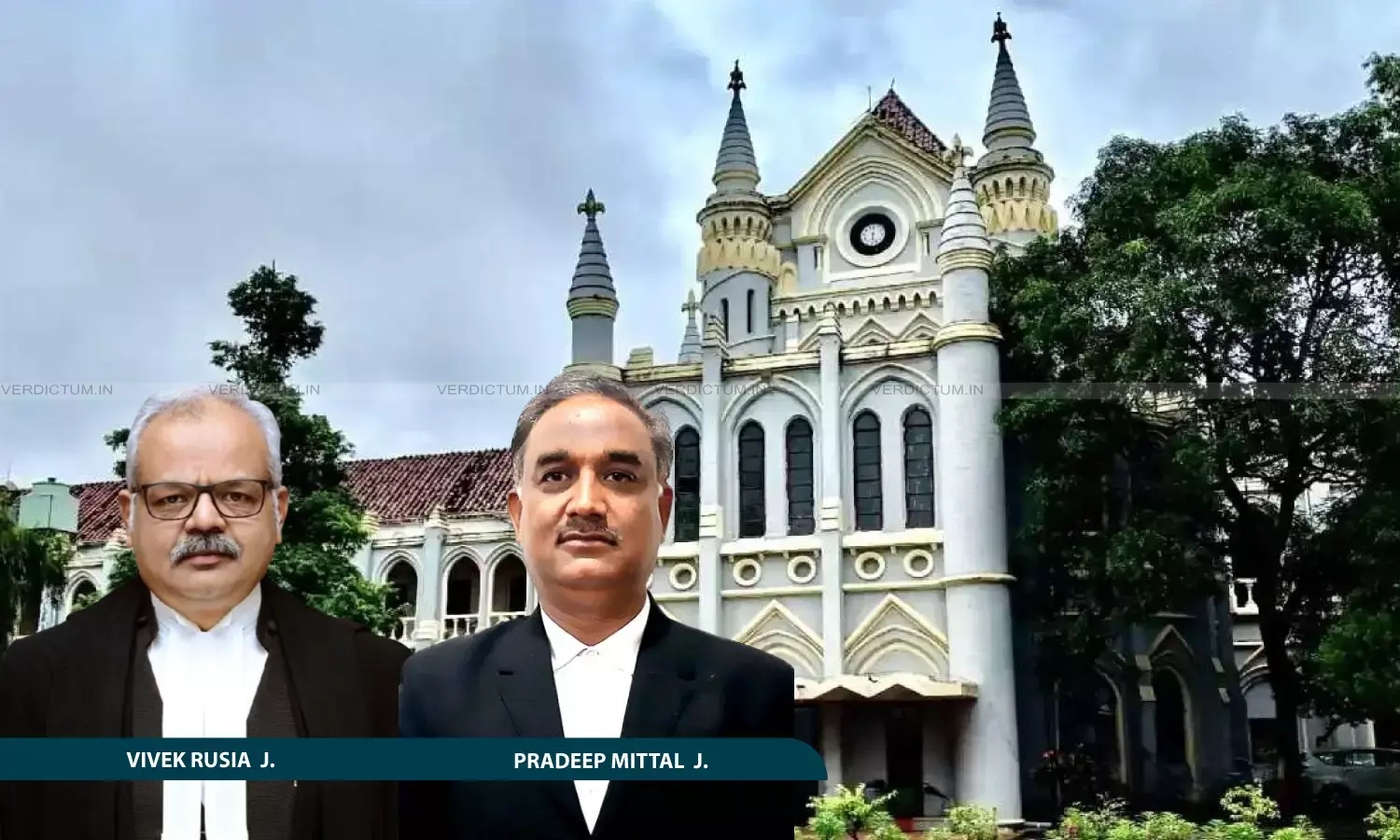
While dismissing an appeal filed by a Bank, the Madhya Pradesh High Court has held that mere dismissal from service pursuant to a departmental enquiry cannot, by itself, result in automatic forfeiture of gratuity unless the statutory conditions prescribed under the Payment of Gratuity Act are strictly satisfied.
The appeal before the High Court was filed against the order of the Single Judge whereby the Bank was directed to pay the gratuity amount to the writ petitioner.
The Division Bench of Justice Vivek Rusia and Justice Pradeep Mittal stated, “Likewise, the requirements of Section 4(6)(b)(ii) are also not fulfilled, as no criminal prosecution was initiated and no conviction for an offence involving moral turpitude was ever recorded against the deceased employee by any competent criminal court. Mere dismissal from service pursuant to a departmental enquiry cannot, by itself, result in automatic forfeiture of gratuity unless the statutory conditions prescribed under the Act are strictly satisfied.”
Advocate Rajesh Maindiretta represented the Appellant, while Advocate PK Bajpai represented the Respondent.
Factual Background
The respondent/writ petitioner is the widow of a dismissed officer of the respondent Bank. She claimed gratuity that was payable to her deceased husband. The deceased husband of the petitioner, who was serving as a bank officer, was subjected to departmental proceedings pursuant to a charge sheet alleging that he failed to open the bank branch on July 30, 2016, despite being in charge and had committed defalcation of Rs 1 lakh from the branch cash chest on July 29, 2016. Upon both charges being proved in the departmental enquiry, he was dismissed from service. He expired on November 19, 2017.
Thereafter, the respondent/writ petitioner sought release of gratuity, but the same was rejected by the bank on the ground that gratuity was not payable in cases of dismissal under Section 4(6)(b) of the Payment of Gratuity Act, read with Clause 72(e) of the Bank’s Service Regulations. The respondent/writ petitioner thereafter filed a petition pursuant to which the bank reconsidered the matter and passed a fresh order again rejecting the claim for gratuity on the ground that, being an officer dismissed for misconduct, the deceased employee attracted forfeiture of gratuity under Clause 72(2) of the Service Regulations, and the proviso thereto was held inapplicable. Thereafter, the writ petitioner filed a petition, which was allowed.
Reasoning
The Bench took note of the fact that the gratuity of the deceased employee had been withheld by the appellant-Bank solely based on Clause 72 of the Central Madhya Pradesh Gramin Bank (Officers and Employees) Service Regulations, 2010. The Bench explained that the entitlement and forfeiture of gratuity are governed by the provisions of the Payment of Gratuity Act, 1972, which is a beneficial welfare legislation having an overriding effect by virtue of Section 14 thereof.
Referring to Section 4(6), which enumerates the limited circumstances in which gratuity may be wholly or partially forfeited, the Bench stated that the appellants failed to establish that the conditions contemplated under Section 4(6) were satisfied. Although allegations of defalcation were levelled against the deceased employee in the departmental proceedings, the Bench noted that the alleged amount had already been deposited and no pecuniary loss ultimately remained caused to the Bank. Therefore, the Bench held that the forfeiture under Section 4(6)(a), which permits forfeiture only to the extent of actual loss caused to the employer, was not attracted.
The Bench found that the requirements of Section 4(6)(b)(ii) were also not fulfilled, as no criminal prosecution was initiated and no conviction for an offence involving moral turpitude was ever recorded against the deceased employee by any competent criminal court. “A conjoint reading of Clauses 72(1), 72(2)(e), and Section 14 of the Payment of Gratuity Act, 1972 makes it clear that an officer, like an employee, is entitled to gratuity upon completion of qualifying service, and such statutory right cannot be forfeited except in accordance with the provisions of the Act, which prevail over any inconsistent regulation”, it added.
The High Court was of the view that the Single Judge had rightly appreciated the legal and factual aspects of the matter and correctly held that the respondent/writ petitioner was entitled to receive the gratuity amount payable to her deceased husband. “The findings recorded by the learned Single Judge are based on proper interpretation of the statutory provisions and settled principles of law and do not suffer from any perversity, illegality, or jurisdictional error requiring interference by this Court in exercise of appellate jurisdiction”, the Bench held while dismissing the appeal.
Cause Title: Central Madhya Pradesh Gramin Bank v. Babita Mor (Neutral Citation: 2026:MPHC-JBP:38002)
Appearance
Appellant: Advocates Rajesh Maindiretta, Udit Maindiretta
Respondent: Advocate PK Bajpai