

Sarpanch Owes Public Duty To Facilitate Education: Madhya Pradesh HC Directs Gram Panchayat To Rectify Infrastructural Deficiencies Of Sole Village School
The Court said that rather than ordering the closure of a school lacking basic amenities, a constructive approach must be adopted in public interest litigations to protect the academic future of local children.

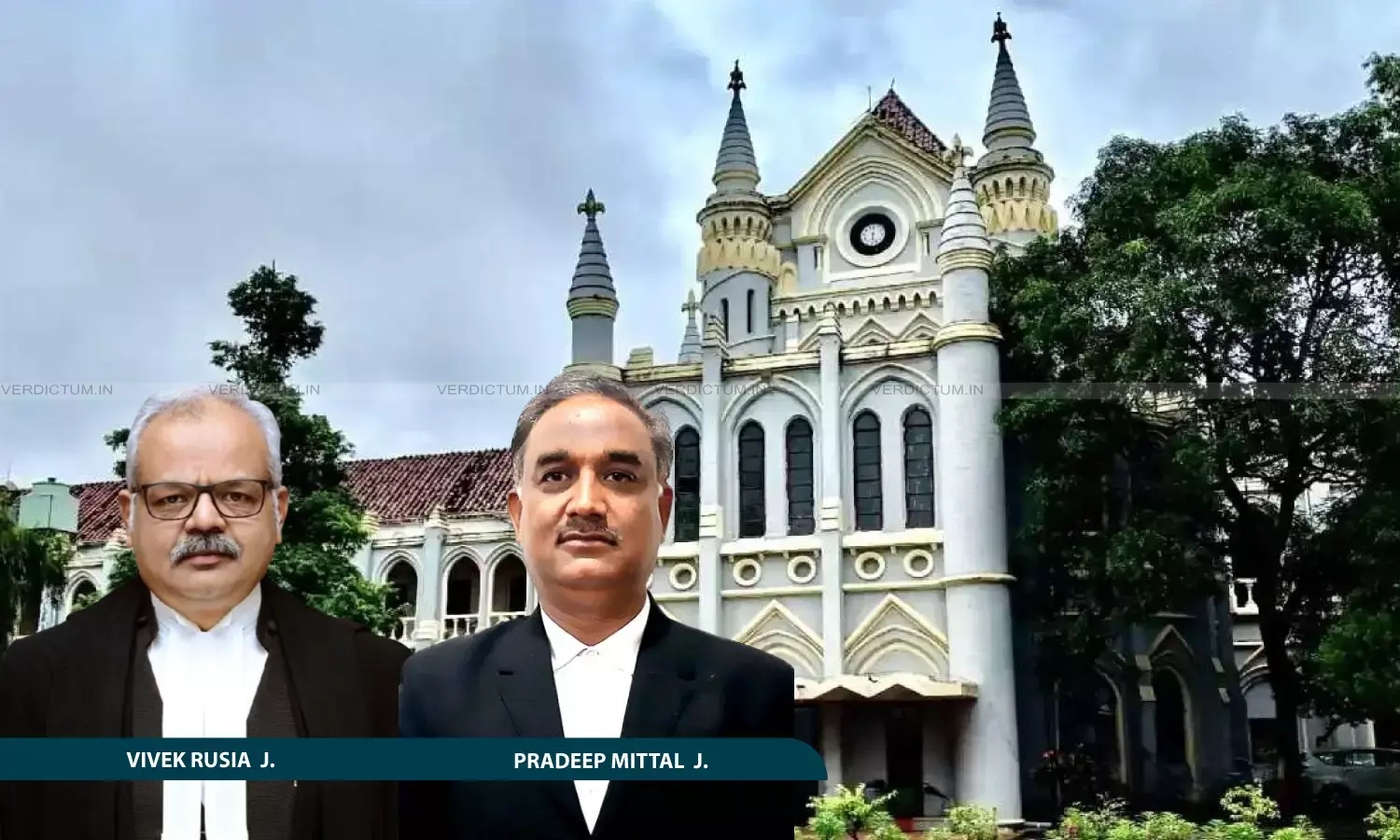
The Madhya Pradesh High Court has held that Sarpanch and Up-Sarpanch of the Gram Panchayat owe a public duty to facilitate education and ensure better civic amenities for the villagers and their children.
Observing that the private institution under scrutiny was the only operational school within the locality, the High Court emphasized that shutting it down or cancelling its recognition would directly jeopardize the students' academic prospects, directing instead that the Gram Panchayat convene a General Body Meeting to systematically eliminate the deficiencies through community cooperation.
The Division Bench of Acting Chief Justice Vivek Rusia and Justice Pradeep Mittal said, "The petitioners, being the Sarpanch and Up-Sarpanch of Gram Panchayat Kotari, Janpad Panchayat Manpur, owe a public duty to facilitate education and ensure better civic amenities for the villagers and their children. Let the Gram Panchayat take up this matter in its General Body Meeting and pass a resolution delineating how these deficiencies can be mitigated and removed with the active assistance and cooperation of the local villagers."
Advocate Munendra Singh appeared for the Petitioners, while Deputy Advocate General Vivek Sharma appeared for the Respondents.
Brief Facts
The petitioners, acting as social activists and holding the positions of Sarpanch and Up-Sarpanch of Gram Panchayat Kotari, preferred a Public Interest Litigation seeking directions against a private school operating under the name of "Devarsi High School". It was stated that the school lacked basic infrastructural facilities, adequate seating arrangements, safe drinking water, electricity, separate toilets, and appropriate teaching staff.
On representations being made, an enquiry was conducted by the Block Education Officer, which revealed that the school building was unsafe, dilapidated, and lacked proper blackboards, a playground, or parking space. The recognition of the school was subsequently placed under suspension due to a non-response to the explanation notice issued to the school principal. It was an admitted position that the private institution was the only school operating within the Gram Panchayat, and no alternative Government school was available in the locality.
Contentions of the Parties
The petitioners contended that the private school was functioning in total disregard of safety standards and basic educational norms, thereby endangering the health and future of the students. It was further urged that the school building was unsafe and structurally compromised, and due to the absence of basic amenities like permanent toilets, female students were put in an embarrassing and insecure position. It was prayed that the recognition granted to the school be cancelled and the enrolled students be accommodated in other recognized schools.
The State maintained that appropriate administrative actions, including conducting spot inspections and suspending the school's recognition for non-compliance, were already initiated based on the complaints received.
Observations and Findings of the Court
The High Court observed that the petitioners, being elected representatives (Sarpanch and Up-Sarpanch) of the Gram Panchayat, owed a public duty to facilitate education and ensure proper civic amenities for the villagers and their children.
The Court found that since the institution under scrutiny was the only operational school in the entire Gram Panchayat, any immediate closure or withdrawal of recognition would directly jeopardize the academic future of the local children.
The Bench observed that a constructive approach must be adopted while dealing with Public Interest Litigations. Rather than shutting down the institution, the Court found it imperative that constructive and coordinated efforts be made by all stakeholders to systematically eliminate the highlighted deficiencies.
"Since this is the only school operational within the Gram Panchayat and there is no alternative Government school available, closing down the institution would directly jeopardise the academic future of the local children. Therefore, instead of shutting down or withdrawing the recognition of the private school, constructive and coordinated efforts must be made by all stakeholders to systematically eliminate the highlighted deficiencies in the public interest. There should be a constructive approach while dealing with PIL by the High Court, and while doing so, even the petitioner can be directed to do certain activities in public interest, which they claim to have done in the past", the Court said.
Accordingly, the Court directed the Gram Panchayat to deliberate upon the matter in its General Body Meeting and pass a resolution to mitigate and remove the infrastructural deficiencies with the active cooperation of the local villagers.
The petitioners were also directed to file a compliance report along with affidavits, and the petition was disposed of with copies marked to the Collector, District Education Officer, and Chief Executive Officer of the Janpad Panchayat for necessary compliance.
Cause Title: Manggi Bai Kole And Ors. v. The State Of Madhya Pradesh And Ors. [Neutral Citation:2026:MPHC-JBP:43331]
Appearances:
Petitioners: Advocates Munendra Singh and Vineeta Soni
Respondents: Deputy Advocate General Vivek Sharma