

Parties Can't Blow Hot And Cold: Madhya Pradesh High Court Appoints Arbitrator Though Arbitration Clause Says Parties 'May' Refer Dispute
The Court held that the extensive use of mandatory terms regarding seat and jurisdiction inside a dispute resolution clause overrides the word 'may', thereby warranting the appointment of a sole arbitrator.

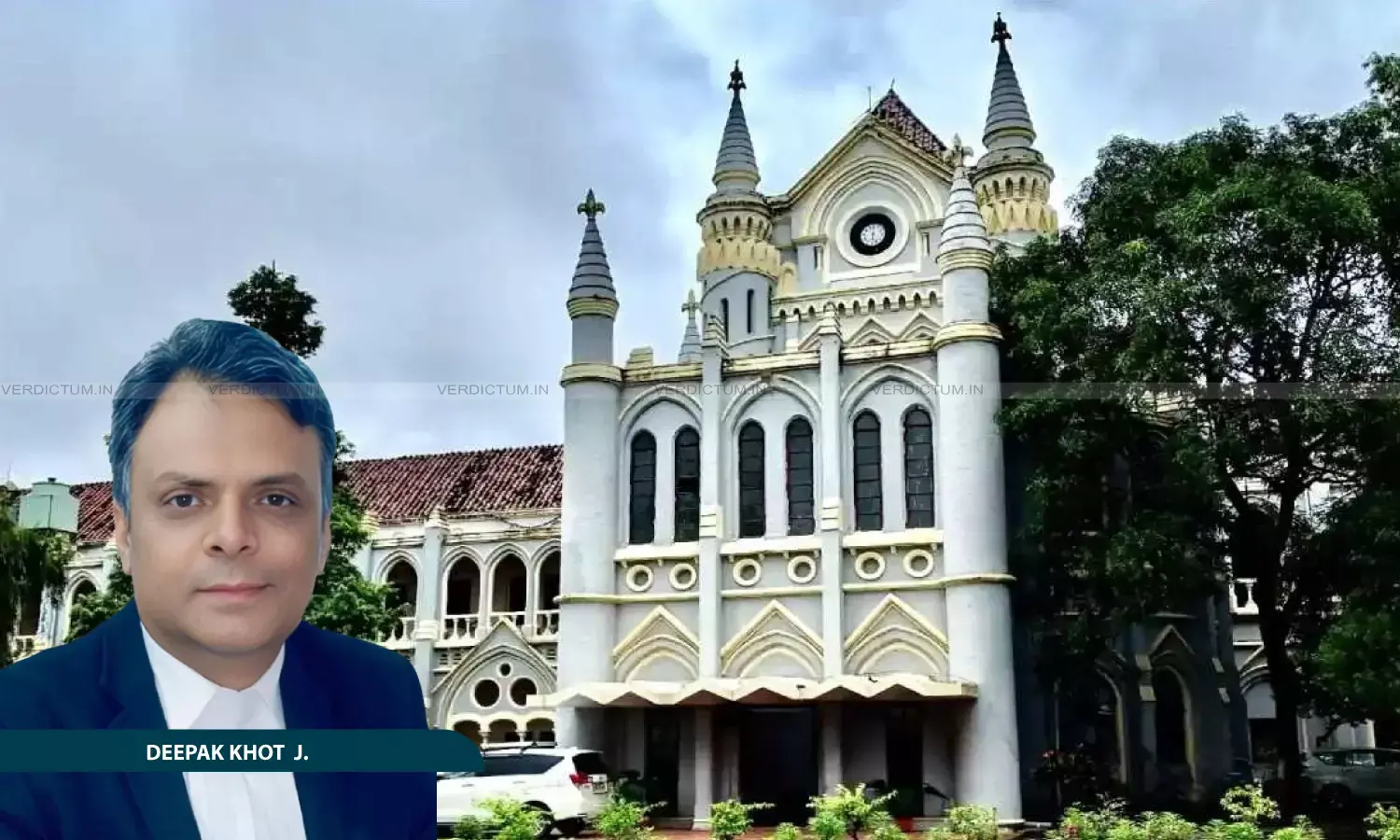
The Madhya Pradesh High Court has observed that parties to the arbitration cannot blow hot and cold according to their whims and wishes when it comes to the appointment of the arbitrator to resolve the dispute.
The Court, while allowing an application under Section Section 11(6) of the Arbitration and Conciliation Act, 1996, observed that even if a clause employs the word "may" concerning the initial reference of a dispute, the concurrent and extensive use of the mandatory term "shall" regarding the governing law, language, and territorial jurisdiction over the arbitral proceedings unequivocally establishes a binding obligation to arbitrate.
The Bench of Justice Deepak Khot observed, "From perusal of both the orders wherein non-applicants are party, it is found that the non-applicant in other cases have fairly conceded to the prayer of arbitration and in fact taken objection in the writ petition to avail the remedy of arbitration. Therefore, in the considered opinion of this Court, the non- applicant cannot blow hot and cold according to their whims and wishes when it comes to the appointment of the arbitrator to resolve the dispute between the parties. As in the present case the dispute is admitted, the non-applicant themselves have categorically replied the notice of arbitration by saying that still there are negotiations going on, therefore, it is appropriate that the parties should be relegated to the arbitration to resolve their dispute."
Advocate Astha Nagori appeared for the Applicant, while Advocate Arjun Bajpai appeared for the Respondent.
Brief Facts
The applicant moved an application before the High Court under Section 11(6) of the Arbitration and Conciliation Act, 1996, seeking the appointment of a sole arbitrator. A dispute arose between the parties out of a shareholding agreement when the non-applicant sought to exit from the said agreement. The primary friction revolved around the valuation of shares to be purchased by the remaining parties. Despite the applicant's attempts to amicably settle the matter through negotiation and a subsequent formal notice invoking the arbitration clause, the non-applicant resisted the reference on the ground that the dispute resolution mechanism was optional. Left with no alternative, the applicant approached the Court for judicial intervention.
Contentions of the Parties
The Applicant urged that a valid and binding arbitration agreement existed between the parties, and the dispute regarding share valuation fell squarely within its scope. It was submitted that in previous litigations involving the same non-applicant under an identical agreement, the non-applicant had either conceded to arbitration or raised preliminary objections against writ petitions by asserting the availability of an alternative remedy through arbitration. It was argued that the non-applicant could not be permitted to blow hot and cold by changing its stance according to its convenience.
Per contra, the non-applicant fiercely opposed the maintainability of the application, contending that the dispute resolution clause was merely directory and not mandatory. Much emphasis was laid on the usage of the word "may" within the arbitration clause to argue that it afforded discretion rather than a binding obligation to refer disputes to a private tribunal. It was submitted that the paramount consideration under Section 11(6) of the Act is the consensus and current willingness of the parties to arbitrate, which was conspicuously absent as the non-applicant was not willing to opt for arbitration Counsel relied upon settled legal propositions to argue that the mere use of the word "arbitration" does not constitute a binding agreement if it contemplates a fresh or future consent of the parties.
Observations of the Court
The High Court observed that there was an undisputed, live dispute between the parties concerning the valuation and payment of shareholding, which arose out of a valid written agreement containing an arbitration clause.
Evaluating the construction of the clause, the Court noted that while the word "may" was used for referring the dispute, the rest of the clause extensively employed the mandatory term "shall" regarding the applicability of Indian laws, the choice of language, and the territorial jurisdiction of the courts.
"From bare perusal of the arbitration clause in the agreement, it is found that in all the other lines of the paragraph the word 'shall' has been used, which gives an impression to the parties that if the parties opt for an arbitration then the Act of 1996 shall be applicable as well as the territorial jurisdiction of the Bhopal Court or the seat of the arbitration shall be at Bhopal that goes to show that in entirety the non-applicants had intended to write the said clause in the agreement to resolve their dispute through arbitration in case dispute arises. Therefore, in the considered opinion of this Court, the dispute arose between the parties is arbitrable and should be resolved through arbitration as per the terms of the agreement", the Court observed.
The Court held that reading the contract in its entirety clearly manifested the true intention of the parties to conclusively resolve their future disputes through the mechanism of arbitration.
Taking strong exception to the non-applicant’s conduct, the Court observed that the non-applicant could not be allowed to adopt contradictory stances by invoking the arbitration clause as an alternative remedy in other litigations while denying its binding nature in the present case.
Relying on the principles enunciated by the Supreme Court, the Court concluded that the optional phrasing did not negate the existence of the arbitration agreement.
Consequently, the High Court allowed the application and appointed a former High Court Judge as the sole arbitrator to adjudicate the disputes.
Cause Title: M/s JVS Food Pvt. Ltd. v. MP State Agro Industries Development Corporation Ltd. [Neutral Citation: 2026:MPHC-JBP:42122]
Appearances:
Applicant: Advocate Astha Nagori
Respondent: Advocate Arjun Bajpai