

Madhya Pradesh HC Directs Bank To Unlock Borrower’s House After His Plea Before DRT Was Not Heard For Want Of Presiding Officer
The High Court held that a litigant cannot be made to suffer merely because Forum created by law is temporarily vacant.

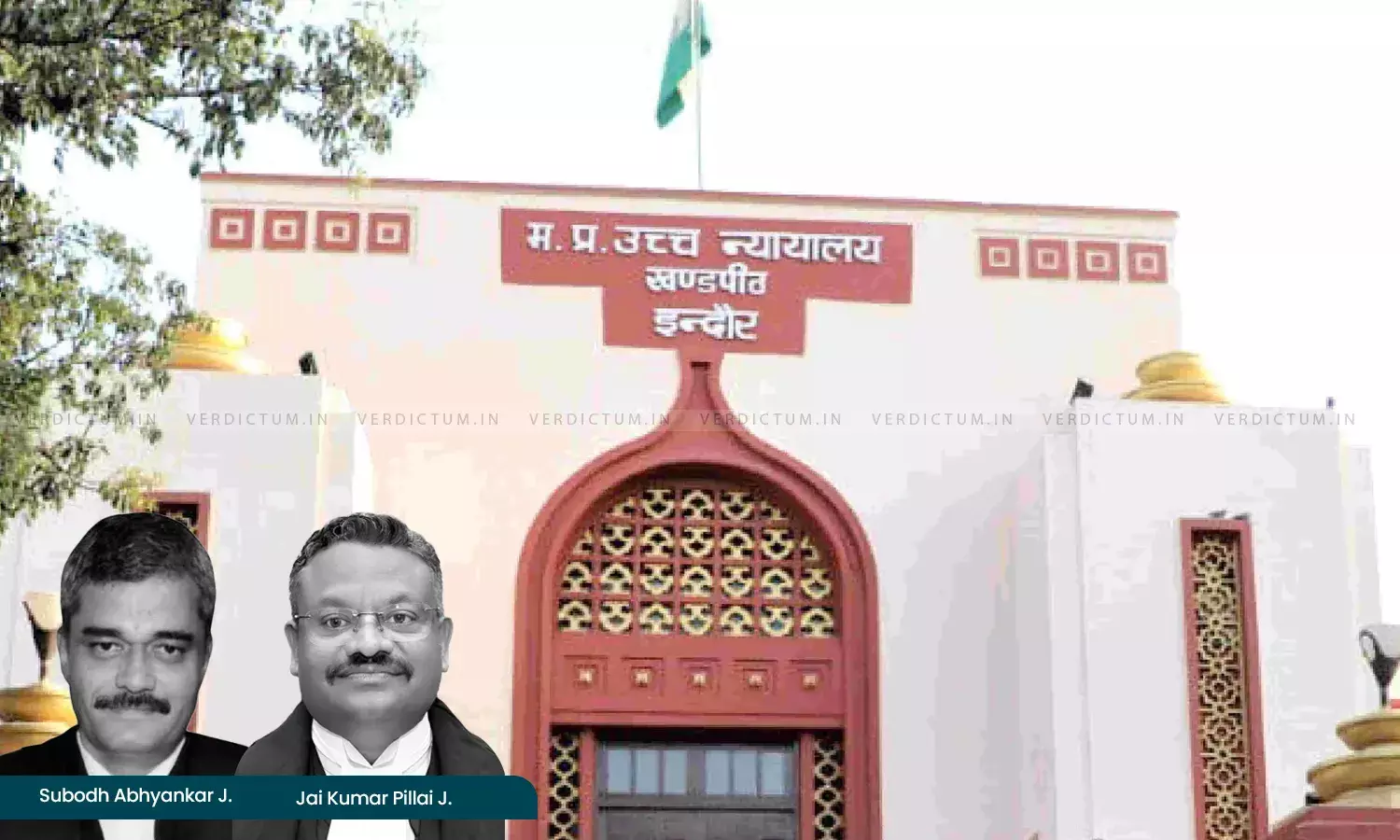
Justice Subodh Abhyankar, Justice Jai Kumar Pillai, Madhya Pradesh High Court
The Madhya Pradesh High Court has held that a litigant cannot be made to suffer merely because the forum created by law is temporarily vacant, while granting interim protection to a borrower whose application before the Debt Recovery Tribunal (DRT), Jabalpur, remained unheard as the post of Presiding Officer was vacant.
The Court directed the bank to immediately open the lock of the borrower’s residence and hand over possession to him till the DRT passes a final order. The protection is subject to an undertaking that he will hand back vacant possession if the Tribunal declines interim relief.
The Court set aside the order of the Single Judge who had dismissed the borrower’s writ petition. It clarified that the order was passed in the exceptional circumstances of the case, as the borrower’s wife had died during cancer treatment, and shall not be taken as a precedent.
The Division Bench of Justice Subodh Abhyankar and Justice Jai Kumar Pillai observed, “In the present case, the Tribunal has done nothing, and the application for interim relief remains pending without any fault of the appellant. A litigant cannot be made to suffer merely because the Forum created by law is temporarily vacant.”
Advocate Anil Kumar Namdev appeared for the Appellant, while Advocate Rohit Saboo appeared for the respondent Bank and Government Advocate Amit Bhatia represented the State.
Brief Facts
The appellant, who runs a transport business, took a housing loan of ₹13,61,902 from IIFL Housing Finance Limited in 2017. He paid the instalments regularly until 2020, when his business suffered heavily due to the Covid-19 lockdown, leading to defaults. During this period, his wife suffered from cancer and passed away in February 2024, and he himself suffered a heart attack in October 2024.
The bank initiated proceedings under the SARFAESI Act, 2002, and the Chief Judicial Magistrate, Indore passed an ex parte order in December 2025 directing the bank to take possession of the residential property. The appellant claimed he never received the demand notice. In April 2026, while he was out of station for his daughter’s marriage, the bank locked his residence.
On his first writ petition, the High Court directed him to deposit ten per cent of the dues and directed the DRT, Jabalpur to hear his application for interim relief, with no coercive action in the meantime. He deposited ₹1,16,000 and filed a securitisation application before the DRT. However, since the post of Presiding Officer was vacant, the case was not heard on multiple dates.
His second writ petition seeking interim relief was dismissed by the Single Judge in August 2026, against which the present writ appeal was filed.
Contentions of the Parties
The appellant contended that the bank obtained the order from the Chief Judicial Magistrate without serving proper notice or giving him a hearing, in violation of natural justice. It was submitted that the outstanding instalment amount was only ₹2,60,712, that he was ready to settle the account, and that despite depositing ₹1,16,000 as directed, he remained deprived of his only residence while the DRT was non-functional.
The bank contended that it had followed the procedure under the SARFAESI Act and issued demand notices by registered post, and that the appellant’s failure to clear his dues entitled it to take physical possession. It argued that the appellant was a defaulter and that the bank had the legal right to recover public money by auctioning the mortgaged property.
Observations/Findings of the Court
The Court noted that it was an admitted position that the appellant had deposited the required amount, but the DRT could not take up the matter as there was no Presiding Officer.
Faulting the Single Judge, the Court observed, “The learned Single Judge failed to appreciate that the appellant was rendered completely helpless due to the non-availability of the Presiding Officer.” It added that the exceptional medical history of the appellant’s family was also not given due weightage while declining equitable relief.
Holding that the appellant deserved protection till the final order of the Tribunal, the Court directed the bank to immediately unlock the premises and hand over possession to him. This was subject to the appellant filing a written undertaking before the Registry within three working days that, if the Tribunal declines interim relief, the protection would automatically stand vacated and he would hand back vacant possession to the bank without delay.
Accordingly, the Court set aside the Single Judge’s order and allowed the appeal. It expected the DRT to decide the pending interim applications strictly in accordance with law as soon as it becomes functional, without being influenced by the Court’s observations.
Cause Title: Vinod Dwivedi v. Principal Secretary & Ors. [Neutral Citation: 2026:MPHC-IND:28903]
Appearances:
Appellant: Advocate Anil Kumar Namdev.
Respondents: Government Advocate Amit Bhatia and Advocate Rohit Saboo.