

Patna High Court: Participation In Strike Can’t Automatically Justify Termination Of Service Particularly In Absence Of Illegality Or Misconduct
The Patna High Court reiterated that even daily wage employees are entitled to protection against arbitrary State action and they are certainly entitled to equal treatment and fairness in disengagement.
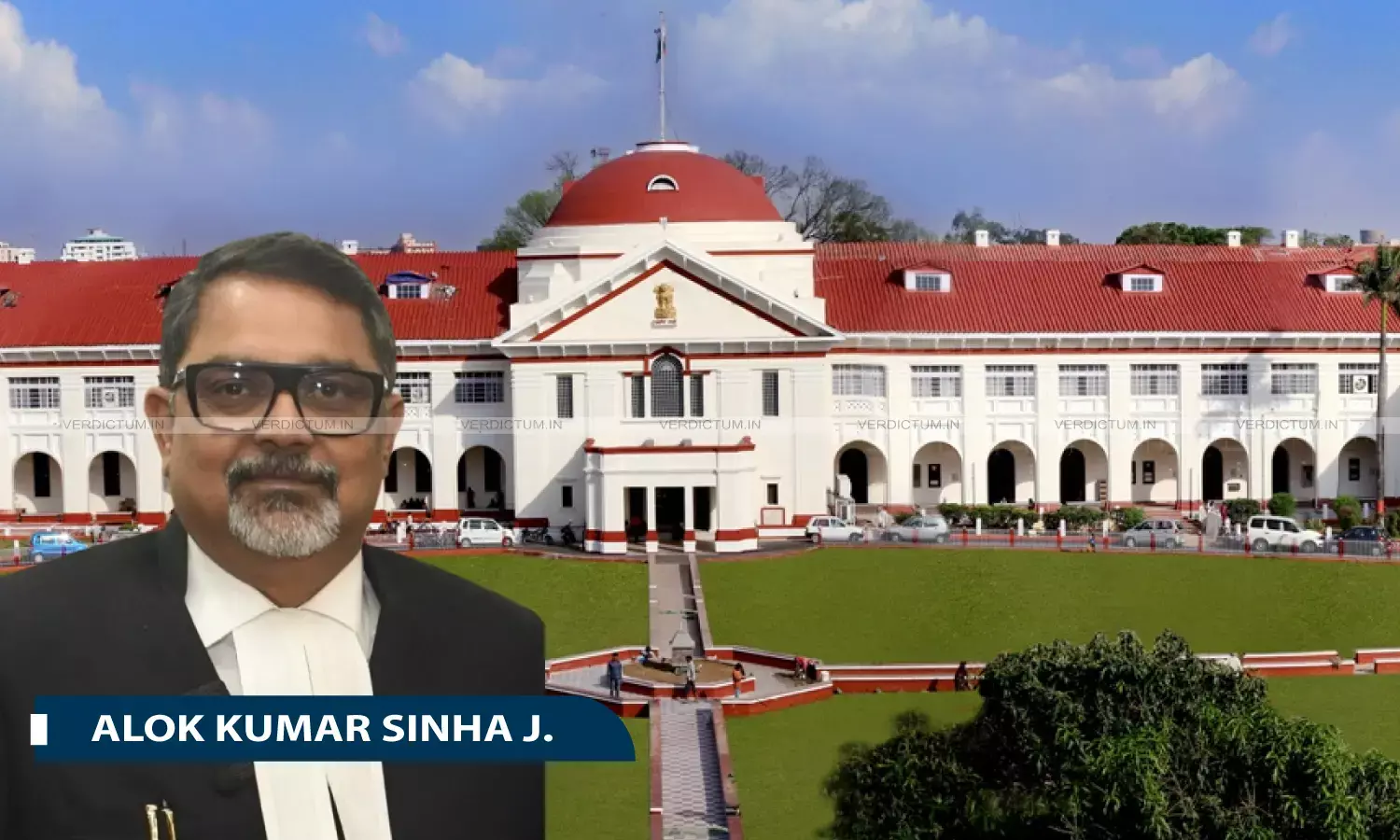
Justice Alok Kumar Sinha, Patna High Court
The Patna High Court held that the participation in a strike, by itself, cannot automatically justify termination of service, particularly in the absence of any finding of illegality of the strike or misconduct attributable to an employee.
The Court held thus in a batch of Writ Petitions seeking to quash the office order, by which the employees’ services were terminated for participating in the strike of the employees union.
A Single Bench of Justice Alok Kumar Sinha observed, “Even otherwise, participation in a strike, by itself, cannot automatically justify termination of service, particularly in the absence of any finding of illegality of the strike or misconduct attributable to the petitioners. If the respondents intended to treat the alleged absence as misconduct or abandonment of service, the same could not have been presumed unilaterally. A proper domestic enquiry should have been held giving opportunity to the petitioners to defend themselves.”
The Bench said that the action of the employer in terminating the employees immediately after the settlement, while relying on the strike period as the sole basis, renders the decision punitive in substance, though clothed as a disengagement of a daily wager and such an approach is impermissible in law.
Advocate Sidharth Prasad represented the Petitioners, while Senior Advocate Mrigank Mauli represented the Respondents.
Factual Background
The Petitioners in this case, prayed for the issuance of a Writ of Certiorari for quashing the office order issued on the direction of the Principal, Magadh Mahila College, Patna University, Patna, under the signature of Head Clerk of the College, whereby and whereunder the Petitioners’ services were terminated in purported compliance of alleged telephonic instructions of the Vice Chancellor, for having participated in the strike of the employees union during the period 10.08.2015 to 09.09.2015.
Submissions
The counsel for the Petitioners submitted that the impugned order is ex facie arbitrary, without jurisdiction, stigmatic in nature and violative of Articles 14, 16, and 21 of the Constitution of India, inasmuch as the same has been issued in complete disregard of the binding agreement, duly approved by the Vice Chancellor, which categorically stipulated that there shall be no victimization of any employee for participation in the said strike period. It was further submitted that while the strike was called off pursuant to the said settlement and all employees were required to be treated uniformly, the Petitioners alone have been singled out for hostile discrimination, whereas other similarly situated ad-hoc/daily wage employees, including those junior to the Petitioners, have been allowed to continue in service.
Court’s Observations
The High Court in view of the facts and circumstances of the case, noted, “… the availability of a remedy under the Industrial Disputes Act, 1947, cannot be said to be an equally efficacious remedy in the facts of the present case, where the petitioner seeks judicial review of administrative action on constitutional and legal grounds. In such circumstances, relegating the petitioner to an alternative forum would amount to denial of effective and immediate relief.”
The Court was of the view that any employee whether daily wager or casual employee or permanent employee, if he is removed for having participated in strike, it tantamounts to alleging misconduct against the employee which necessarily requires that the employee should have been visited with show cause followed by charge-sheet and proper domestic enquiry.
“No such procedure has been carried out in the present case which emerges as an admitted position. In such view of the matter, Annexure-18 dated 10.09.2015 being stigmatic order not preceded by issuance of show cause or charge-sheet or holding of enquiry becomes totally illegal. Such an allegation necessarily required a proper enquiry and adherence to the principles of natural justice. The impugned termination, having been effected without issuance of any charge sheet, without affording an opportunity of hearing, and without any enquiry, is thus procedurally infirm”, it added.
The Court held that the impugned termination, being founded on the Petitioners’ alleged non reporting of duty during the strike period, stands vitiated in view of the settlement approved, and is otherwise unsustainable for want of procedural fairness and legal justification.
“Further, the assertion that the disengagement was effected on the basis of alleged telephonic instructions, without any formal written order of the competent authority, only reinforces the illegality of the action. Termination of service, particularly one having civil consequences, must emanate from a competent authority through a lawful and reasoned order”, it said.
The Court remarked that an oral or telephonic instruction has no legal sanctity and cannot cure the statutory mandate imposed by Section 25-F and accordingly, even assuming that the impugned order is a termination simpliciter and non-stigmatic, the same amounts to retrenchment under Section 2(oo) of the Industrial Disputes Act, 1947, and having been effected without complying with Section 25-F, the impugned termination is illegal, void ab initio, and unsustainable in the eyes of law.
“It is trite that even daily wage employees are entitled to protection against arbitrary State action and they are certainly entitled to equal treatment and fairness in disengagement. The impugned action, viewed in light of the continued engagement of juniors and similarly situated persons, therefore cannot be sustained. Further, the respondents have not placed on record any reasons, much less recorded reasons, justifying departure from the statutory norm of last-come-first-go. In the absence of such recorded justification, the selective retrenchment of the petitioner, while retaining juniors, is in direct contravention of Section 25-G of the Industrial Disputes Act. It is well settled that compliance with Section 25-G is not an empty formality but a substantive safeguard intended to prevent arbitrary and discriminatory retrenchment. Any retrenchment effected in violation of the said provision is rendered legally unsustainable”, it reiterated.
The Court further held that the discontinuation of the Petitioners, in disregard of the principle of last-come-first-go, while retaining similarly situated and junior daily wage employees, is arbitrary, discriminatory, and violative of Articles 14 and 16 of the Constitution of India.
“… the respondents’ reliance on the State Government’s embargo on appointments and outsourcing policy, as pleaded in their counter affidavits, does not legally justify or sustain the impugned disengagement of the petitioners, inasmuch as the same is not shown to be a consequence of abolition of post or actual outsourcing of work”, it added.
The Court observed that executive instructions cannot operate retrospectively so as to defeat accrued rights or legitimate expectations arising from an earlier valid decision.
“Once the petitioners were found eligible and recommended for absorption by a competent committee in 2003, the respondent University could not indefinitely postpone or deny implementation by subsequently invoking policy decisions, particularly when those very policies were not applied uniformly and were relaxed or bypassed in favour of other employees”, it also said.
Conclusion
Moreover, the Court reiterated that prolonged engagement against sanctioned posts, coupled with a fair selection process and absence of any fault on the part of the employees, creates a strong equitable claim for regularisation.
“Upon an anxious consideration of the rival submissions advanced on behalf of the petitioners and the respondents, the pleadings on record, the documentary evidence placed before this Court, and the findings recorded on the issues framed hereinabove, this Court is of the considered view that the action of the respondent–University in denying regularisation to the petitioners cannot be sustained in law”, it concluded.
Accordingly, the High Court allowed the Writ Petitions, quashed the termination order, and directed the University to reinstate the Petitioners to their respective posts.
Cause Title- Madhwi Jha & Ors. v. The Patna University & Ors. (Case Number: Civil Writ Jurisdiction Case No.18289 of 2015)
Appearance:
Petitioners: Advocates Sidharth Prasad, Om Prakash Kumar, Sunit Kumar, Swetang Sinha, Shashank Shekhar, and Shantam Kriti.
Respondents: Senior Advocate Mrigank Mauli, Advocates Digvijay Singh, Manish Dhari Singh, Kalpana, Sidharth Prasad, and Om Prakash Kumar.
