

Forced Unnatural Sex By Husband Amounts To Cruelty U/S 498A IPC But Not Rape U/S 375 IPC: Madhya Pradesh High Court
The High Court has held that while forced unnatural sexual acts by a husband upon his wife constitute cruelty punishable under Section 498A of the Indian Penal Code, 1860, such acts cannot be prosecuted as rape under Section 376 of the Code in view of the express marital exception contained in Section 375.
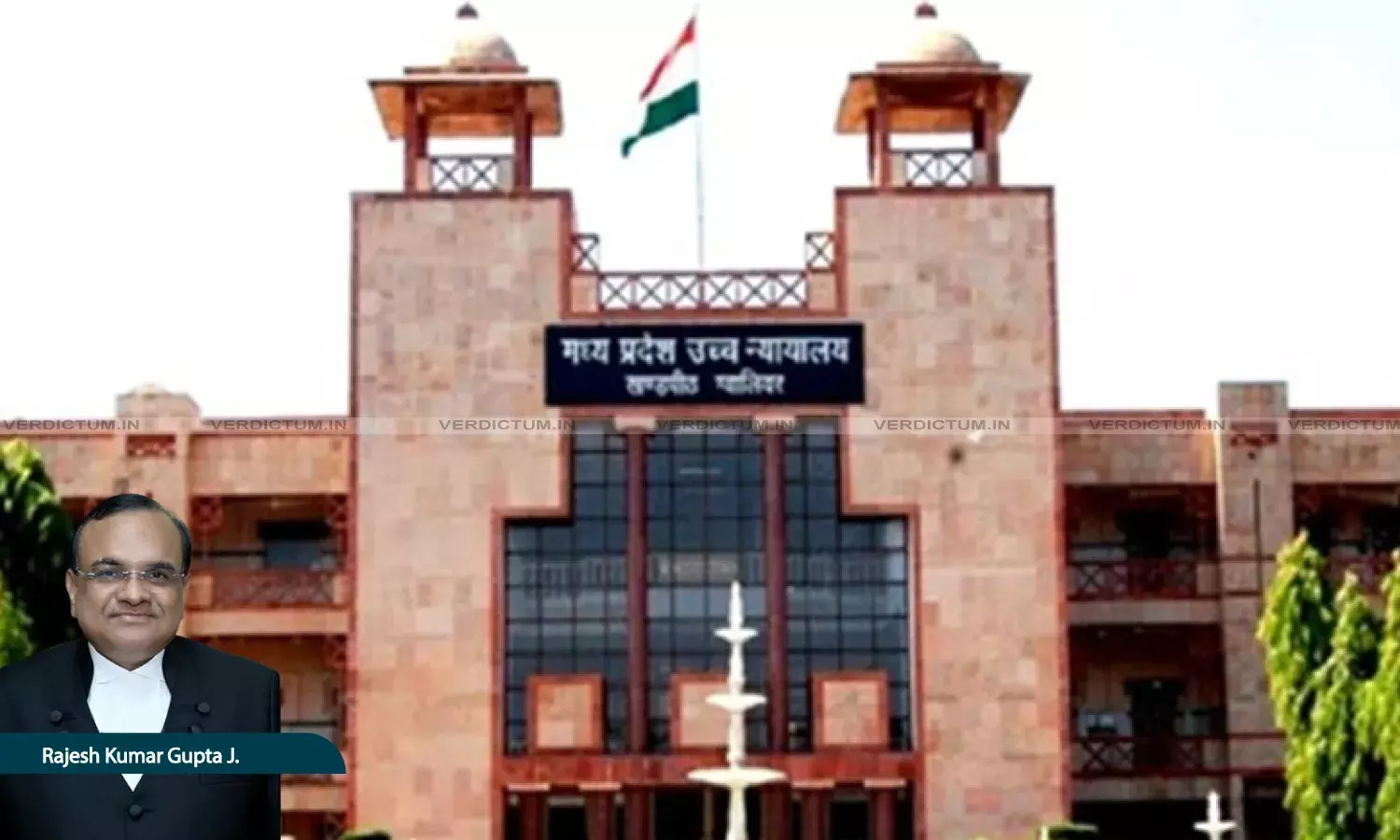
Justice Rajesh Kumar Gupta, Madhya Pradesh High Court
The Madhya Pradesh High Court held that forced unnatural sex by a husband on his wife amounts to cruelty under Section 498A of the Indian Penal Code, 1860, but cannot be prosecuted as rape under Section 376 of the Code owing to the statutory marital exception under Section 375.
The Court was hearing a petition under Section 482 of the Code of Criminal Procedure, 1973, seeking quashing of an FIR, charge sheet, and cognisance order in respect of offences alleged under Sections 498A, 376(2)(n), 377, 323 and 294 of the Indian Penal Code, 1860.
A Bench of Justice Rajesh Kumar Gupta, while examining the scope of the marital rape exception and the interplay between Sections 375 and 377 of the Penal Code, observed that “forced unnatural sex by a husband on his wife amounts to cruelty under Section 498A IPC, but cannot be prosecuted as rape under Section 376 IPC as the marital rape concept is not recognised under current law because of the express marital exception in Section 375.”
The petitioner was represented by Advocate Harshit Sharma, while the respondents were represented by Public Prosecutor Satendra Singh Sikarwar.
Background
The petitioner-husband and the second respondent were married in June 2022. Disputes arose between the parties after marriage, leading to allegations of physical violence and cruelty. The wife lodged a complaint alleging, inter alia, forced sexual relations and commission of unnatural acts against her will during the subsistence of the marriage.
An FIR came to be registered for offences under Sections 498A, 376(2)(n), 377, 323 and 294 of the Indian Penal Code, 1860, and a charge sheet was filed, pursuant to which cognisance was taken by the trial court.
The petitioner approached the High Court seeking quashing of the criminal proceedings, contending that the allegations of rape and unnatural offences were barred by the marital exception under Section 375 of the Penal Code, and that the prosecution was a counterblast to matrimonial proceedings initiated earlier.
Court’s Observation
The High Court first examined the statutory scheme governing the offence of rape under Section 375 of the Indian Penal Code, 1860, noting that Exception 2 expressly provides that sexual intercourse or sexual acts by a man with his own wife, the wife not being under eighteen years of age, do not constitute rape.
It was observed that since Section 376 penalises rape as defined under Section 375, no offence under Section 376 can be made out where the marital exception applies. The Court relied upon the decision of the Supreme Court in Kuldeep Singh v. State of Punjab, wherein it was held that consensual sexual intercourse between legally married spouses falls within the exception to Section 375.
The Court then examined the applicability of Section 377 of the Penal Code in the context of matrimonial relationships. Referring to the Constitution Bench decision in Navtej Singh Johar v. Union of India, the Court noted that consensual sexual acts between adults no longer attract criminal liability under Section 377.
The Court held that in a heterosexual marital relationship, where sexual acts fall within the ambit of Section 375 and are shielded by the marital exception, invocation of Section 377 would result in repugnancy, as the same conduct cannot be simultaneously exempted under Section 375 and criminalised under Section 377.
However, the Court drew a clear distinction between criminal liability for rape and the offence of cruelty. It held that forced unnatural sexual acts by a husband upon his wife, even if insulated from prosecution under Section 376, nonetheless amount to cruelty within the meaning of Section 498A of the Penal Code.
The Court observed that cruelty under Section 498A is not confined to dowry-related conduct and includes acts that cause grave physical or mental harm to a woman during marriage. It therefore held that allegations of forced unnatural sex could validly constitute cruelty, though not rape, under the existing statutory framework.
The Court further noted that medical evidence collected during the investigation did not support the allegations of unnatural sexual offences, and that no definite opinion had been recorded by the examining doctor regarding such acts.
Applying the principles laid down by the Supreme Court in State of Haryana v. Bhajan Lal, the Court concluded that continuation of proceedings under Sections 376(2)(n) and 377 of the Penal Code would amount to abuse of the process of law.
At the same time, the Court clarified that the offences alleged under Sections 498A, 323, and 294 of the Penal Code involved disputed questions of fact and were required to be examined during trial, and therefore could not be quashed at the threshold.
Conclusion
The High Court partly allowed the petition and quashed the proceedings insofar as they related to offences under Sections 376(2)(n) and 377 of the Indian Penal Code, 1860.
The Court, however, declined to interfere with the prosecution in respect of offences under Sections 498A, 323 and 294 of the Penal Code, holding that the same were required to be adjudicated during trial. The petition was accordingly disposed of.
Cause Title: Shubham Mangal v. State of Madhya Pradesh And Others (Neutral Citation: 2026:MPHC-GWL:621)
Appearances
Petitioner: Harshit Sharma, Advocate
Respondents: Satendra Singh Sikarwar, Public Prosecutor, Yogesh Singhal, Advocate
