

Married Daughter Not Excluded From Entitlement To Ex-Gratia & Leave Encashment If She Is Sole Legal Heir: Madhya Pradesh High Court
The Madhya Pradesh High Court was considering a petition filed by the petitioner challenging the orders whereby she was denied payment of ex gratia and leave encashment.

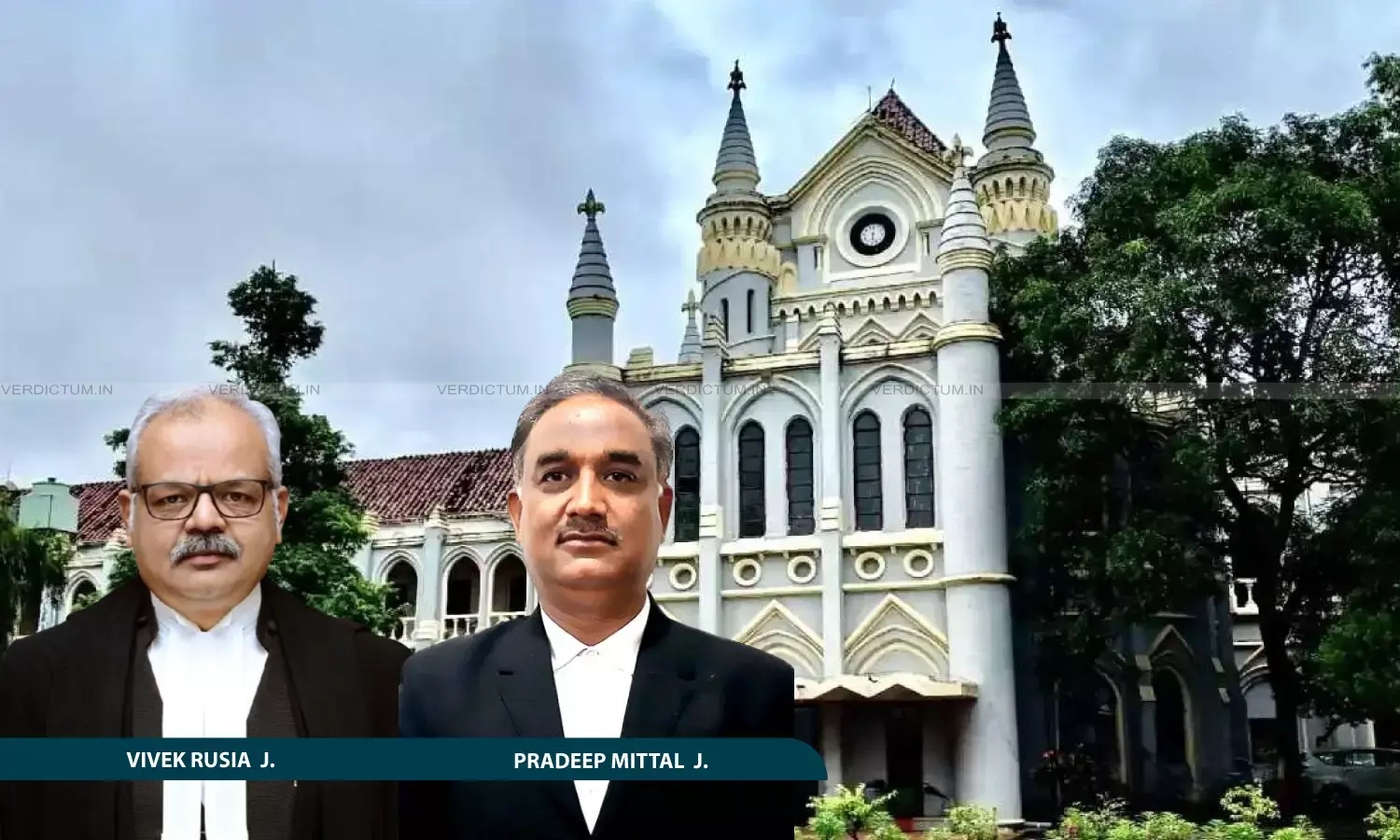
While directing payment of leave encashment or ex gratia amount to a sole married daughter of a deceased employee, the Madhya Pradesh High Court has held that the married daughter is not excluded from entitlement to such benefits if she is the only legal heir.
The High Court was considering a petition filed by the petitioner challenging the orders of the respondents, whereby the petitioner was denied payment of ex gratia and leave encashment.
Referring to the Madhya Pradesh Government No. 2355-IV-R-II-72 dated November 14, 1972, the Division Bench of Justice Vivek Rusia and Justice Pradeep Mittal held, “The above rule is made to resolve the controversy between the legal heirs of the deceased, meaning thereby if the deceased is having more than one son/daughter, then the eldest son is only eligible to get exgratia. Secondly, if the eldest daughter is married, then she ousts the son to get the ex-gratia. Thirdly, on this point, the notification is silent as to if there are no heirs other than a married daughter, then who will receive the ex-gratia. Meaning thereby, the married daughter is not excluded if she is the only legal heir of the deceased.”
“We are the considered opinion that the ex-gratia and leave encashment of the deceased employee ought to be paid his legal heirs without differential that she is married or not”, it added.
Advocate Durgesh Kumar Singrore represented the Petitioner, while Advocate Shobhitaditya represented the Respondent.
Factual Background
The father of the petitioner was working as a Driver at the District Court, Narsinghpur, under the administrative control of the High Court. During the course of his service, he expired on May 9, 2024. During his lifetime, he had nominated the petitioner in his service record in 2016. Earlier, his wife, Vimla Namdev, had been nominated; however, she predeceased him. Consequently, he changed the nomination and recorded the petitioner as a nominee in the official service record.
After the death of her father, the petitioner submitted applications seeking settlement of the retirement and service benefits, including GPF, leave encashment, ex gratia, and other admissible dues. The respondents sanctioned and released the GPF amount in favour of the petitioner, acknowledging her as the recorded nominee. The amount under the Karmchari Group Insurance Scheme was also released. However, the claim of the petitioner for ex gratia and leave encashment was rejected by the respondents vide the impugned orders solely on the ground that a married daughter is not entitled to receive such benefits.
Reasoning
The Bench referred to the judgment of the High Court in Meenakshi Dubey v. M.P. PoorvaKshetra Vidyut Vitran Co. Ltd., wherein it has been held that a clause to the extent it deprives a married daughter from consideration for compassionate appointment, hits Art. 14, 16 and 39(a) of the Constitution. Reference was also made to the judgment in Bhaskar Ramchandra Joshi v. State of M.P. (2013), wherein it has been held that the retirement dues are also recognised as property under Article 300-A of the Constitution.
The Bench also held that the right to get the aforesaid benefits is a constitutional right and gratuity or retirement dues can be withheld or reduced only as per provision made under M.P. Civil Services (Pension) Rules, 1976. The Bench explained that this notification does not debar the married daughter.
“Ex gratia is not a legally mandatory payment like gratuity, it is discretionary, based on employer policy. The purpose of ex gratia is to provide immediate financial relief to the family of the deceased employee. Ex gratia payments upon an employee's death are voluntary, compassionate lump-sum payments made by employers to beneficiaries. In our opinion, ex gratia paid to the employee after his death immediately, probably on the same day, shows that the amount is for performing the funeral ceremony of the employee, hence, it cannot be denied on the ground that the married daughter cannot claim it”, the order read.
Thus, holding that the ex gratia and leave encashment of the deceased employee should be paid to his legal heirs without differentiating whether she is married or not, the Bench allowed the writ petition. “...respondent is directed that the leave encashment or ex gratia amount be paid to the petitioner within 60 days from the date of receipt of copy of the order”, it added.
Cause Title: Rasanna Namdev (Soni) v. The High Court of Madhya Pradesh (Neutral Citation: 2026:MPHC-JBP:14293)