

Aadhaar, Voter ID Not Conclusive Proof Of Date Of Birth In Service Matters: Madhya Pradesh High Court
The petitioner was terminated after the appellate authority reinstated the retired worker in 2020 on a belated date-of-birth claim.
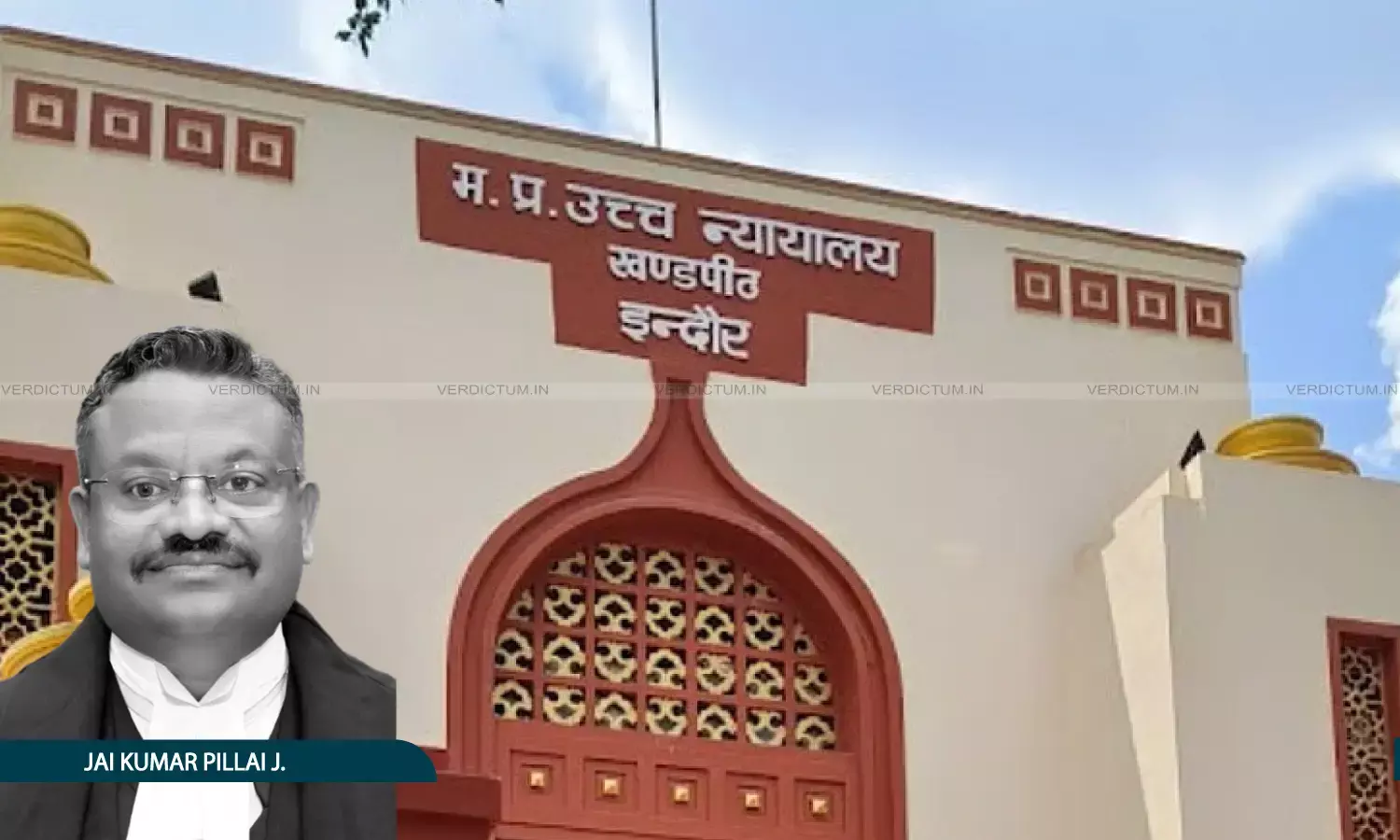
The Madhya Pradesh High Court has clarified that identity documents such as Aadhaar cards and voter identity cards cannot be regarded as conclusive or determinative proof of an employee’s date of birth in service-related disputes.
These observations were made while the Court was setting aside an appellate order that had reinstated a retired Anganwadi Sahayika (Helper) and, as a consequence, led to the termination of her successor.
A Bench of Justice Jai Kumar Pillai emphasized that service records prepared at the time of an employee’s initial appointment, and consistently relied upon throughout their tenure, carry greater evidentiary value. Such records, the Court held, cannot be displaced by identity documents like Aadhaar cards or voter identity cards, which are typically generated much later in life.
The Court added, “The Aadhaar Card and Voter Identity Card relied upon by Respondent No.5 cannot be treated as determinative proof of her date of birth. These documents are prepared on the basis of self-declaration and are meant for identification purposes alone. They are neither primary evidence nor statutory proof for determination of age in service matters.”
Advocate Akshay Bhonde appeared for the Petitioner and Advocate Amit Bhatia appeared for the Respondents.
Background
Petitioner, who had been appointed as an Anganwadi Sahayika in June 2018 following a duly notified and lawful selection process. Her appointment was made after the retirement of the previous Anganwadi worker who had superannuated in March 2017. Her retirement was based on the date of birth recorded in her official service records.
She did not challenge her retirement at the time it occurred. Instead, nearly two years later, she approached the appellate authority alleging that her date of birth had been incorrectly recorded in the service records. To support her claim, she relied on entries in her Aadhaar card and voter identity card, which reflected her date of birth as 1 January 1964—almost nine years later than the date recorded in her service documents.
Accepting this claim, the appellate authority allowed her appeal in September 2020, resulting in her reinstatement. Consequently, petitioner, who had already been appointed to the post, was removed from service. Aggrieved by this decision, she approached the High Court.
Finding
The High Court noted that the date of birth mentioned in the respondent’s Aadhaar card was not supported by any contemporaneous documentary evidence. The Court observed that the date appeared to be an approximate entry, a practice commonly followed when precise proof of birth is unavailable. As such, it could not be used to supersede the date recorded in official service records.
The Court also highlighted several undisputed factual circumstances that directly contradicted the respondent's claim of having been born in 1964. Specifically, it pointed out that the recorded years of birth of her son and daughter-in-law predated the year she claimed as her own birth year. These facts, the Court observed, clearly ruled out the possibility of respondent being born in 1964.
The High Court criticized the manner in which petitioner was removed from service. The Court said, "No independent notice of termination was issued, no inquiry was conducted and no reasons were assigned before terminating the services of the petitioner. The petitioner was removed merely as a collateral consequence of the appellate order, which itself is legally flawed. Such a method of termination not only violates the principles of natural justice but also runs contrary to the departmental guidelines governing removal of Anganwadi Workers."
The High Court concluded that the appellate order was vitiated by unexplained delay, reliance on inadmissible documents, and serious procedural irregularities. Accordingly, it quashed both the appellate order dated 2020 and the termination.
The Court directed that petitioner be reinstated in service with full continuity and all consequential benefits. It further ordered that any salary or benefits paid to respondent after her retirement be recovered along with interest and returned to the State.
Cause Title: Pramila v. The State of Madhya Pradesh & Ors., [2026:MPHC-IND:1034]
Appearance:
Petitioner: Advocate Akshay Bhonde
Respondents: Advocates Amit Bhatia, S.P. Pandey
Click here to read/download Judgment
