Madhya Pradesh High Court Issues Show Cause Notice To Advocate For Continued Appearance Despite Subsisting Contempt Conviction
Holding that an advocate found guilty of criminal contempt cannot appear, act, or plead before the Court unless the contempt has been duly purged, the High Court issued a show-cause notice after noting continued appearance despite a subsisting conviction and alleged conduct undermining judicial discipline.
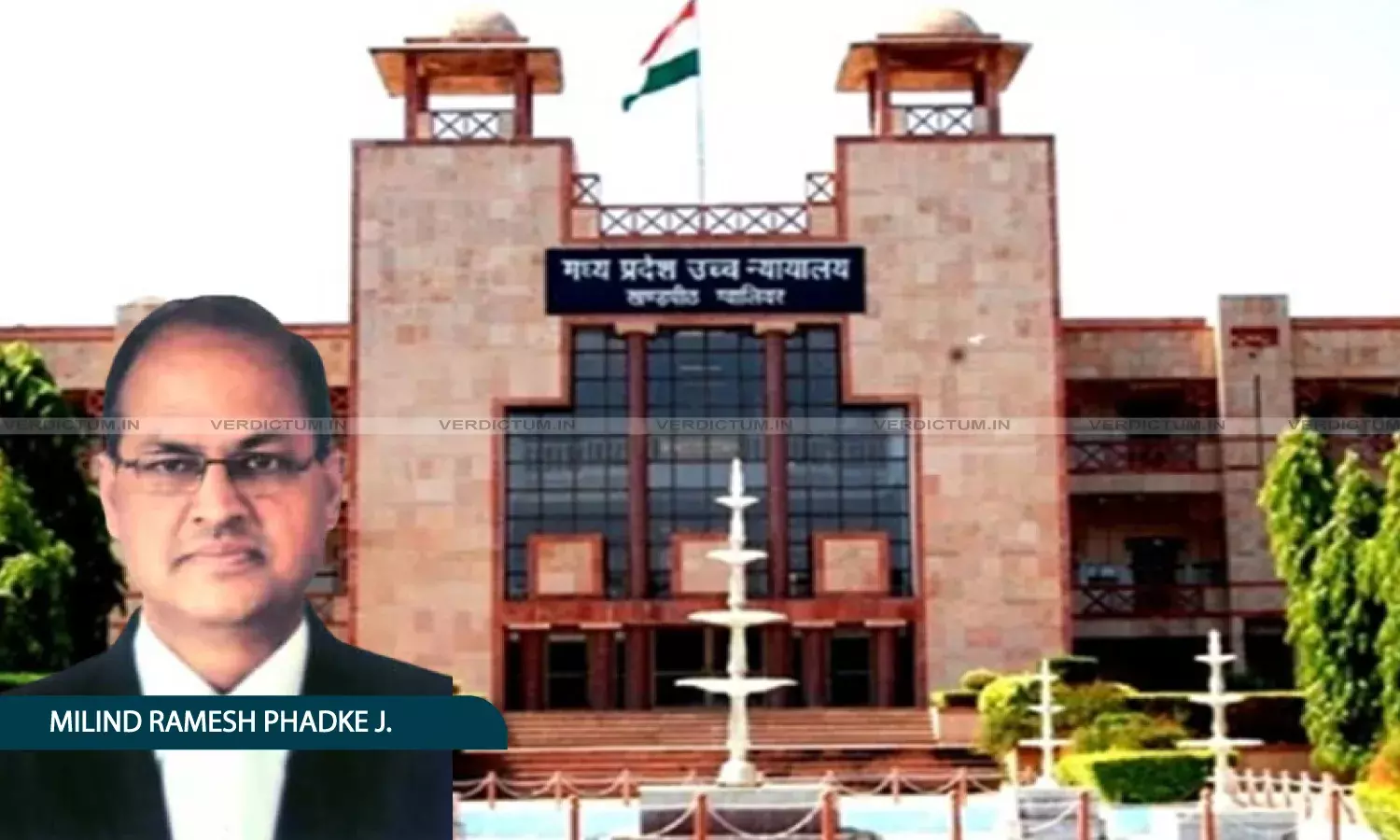
The Madhya Pradesh High Court issued a show-cause notice to an advocate for continuing to appear and argue matters despite a subsisting conviction for criminal contempt and in the absence of any material demonstrating that the contempt had been duly purged.
The Court, while dealing with a bail application, expressed serious concern over the advocate’s conduct and observed that Rule 16 of the High Court of Madhya Pradesh (Conditions of Practice) Rules, 2012, prohibits such appearance unless the contempt stands purged, which was not shown in the present case.
A Bench of Justice Milind Ramesh Phadke, while dismissing a bail application, observed: “In view of Rule 16 of the High Court of Madhya Pradesh (Conditions of Practice) Rules, 2012, and in light of the order dated 26.04.2024 passed in Contempt Petition (Criminal) No. 15 of 2018, whereby (the advocate) was held guilty of criminal contempt—an order which has attained finality upon affirmation by the Hon’ble Supreme Court—this Court is constrained to take cognizance of the continued appearance before this Court without any material demonstrating that the contempt has been duly purged”.
Background
The matter arose in the course of hearing a bail application filed in connection with offences registered under the Bharatiya Nyaya Sanhita, 2023, wherein the applicant was alleged to have been involved in an incident relating to obstruction and assault of a police constable on duty during a security arrangement.
The Court, after considering the rival submissions on bail, found the allegations to be serious in nature and declined to grant relief. However, while dealing with the matter, the Court also took note of the conduct of the counsel appearing for the applicant. It recorded that the advocate had earlier been held guilty of criminal contempt by a coordinate Bench, and that the said finding had attained finality upon affirmation by the Supreme Court, with only the quantum of fine being modified.
The Court then proceeded to examine whether, in view of Rule 16 of the High Court of Madhya Pradesh (Conditions of Practice) Rules, 2012, the continued appearance of the advocate without purgation of contempt was permissible.
Court’s Observation
The Madhya Pradesh High Court referred to decisions of the Supreme Court, including Supreme Court Bar Association v. Union of India, Bar Council of India v. High Court of Kerala, Mahipal Singh Rana v. State of Uttar Pradesh, and R. Muthukrishnan v. High Court of Madras, reiterating that constitutional courts possess inherent powers to regulate the appearance of advocates and ensure discipline and decorum.
It was observed that the combination of a subsisting conviction for criminal contempt, absence of purgation, and the conduct displayed during the hearing “demonstrates not only a violation of Rule 16 of the Rules, 2012 but also a disregard for the authority and majesty of the Court.”
The Court added that: “Such conduct tends to undermine the institutional discipline and the orderly administration of justice.”
The Court also referred to Rule 16 of the High Court of Madhya Pradesh (Conditions of Practice) Rules, 2012, observing that the Rule “explicitly mandates that no advocate who has been found guilty of criminal contempt shall appear, act, or plead before this Court or any subordinate Court in the District where the contempt was committed unless the contempt has been duly purged.”
It found that there was “no material on record to indicate” that the advocate had taken steps to purge the contempt. The Court clarified that “mere modification of the fine by the Hon’ble Supreme Court does not amount to exoneration nor does it constitute purgation under the law.”
Despite this position, the Court recorded that the advocate “was/is appearing and arguing the cases.”
During the bail hearing, the Court noted that the advocate “repeatedly attempted to divert the proceedings from the bail issues, raised matters already concluded by judicial orders, and made insinuatory and provocative remarks.”
The court further noted that “His submissions were argumentative beyond permissible limits and bordered on defiance of judicial discipline. He attempted to introduce personal vindication, challenge settled findings, and focus on extraneous matters rather than the merits of the application.”
Taking note of the Advocate’s conduct, the Court underscored that “advocacy carries with it not merely the right to argue zealously on behalf of a client, but also a concomitant duty to uphold the dignity, authority, and decorum of the judicial process.”
The Court concluded that the conduct “fell short of these responsibilities.”
Conclusion
In view of Rule 16 and the earlier contempt order that had attained finality, the Court remarked: “This Court is constrained to take cognisance of the continued appearance… without any material demonstrating that the contempt has been duly purged.”
Accordingly, in exercise of its constitutional and inherent powers, the Court directed issuance of a show-cause notice to the advocate “calling upon him to explain under what authority he was/is appearing, acting, and pleading before this Court in the absence of compliance with Rule 16 of the Rules, 2012.”
The Office was further directed to issue notice to the State Bar Council to inform the Court of the steps taken pursuant to the earlier contempt order, and to initiate action as warranted if no steps had been taken.
Both notices were directed to be issued within seven days and made returnable within four weeks. The matter has been directed to be listed in the week commencing 06.04.2026.
Separately, the Court also dismissed the bail application.
Cause Title: Munendra Singh v. State of Madhya Pradesh (Neutral Citation: 2026:MPHC-GWL:6777)
Appearances:
Applicant: Awdhesh Singh Bhadauria, Advocate
Respondent: Shri Mohit Shivhare, Public Prosecutor