

Sexual Acts Committed By Husband & Wife Within Marital Relationship Doesn't Attract Offence U/S.377 IPC: Madhya Pradesh High Court
The Madhya Pradesh High Court was considering a petition filed under Section 482 of the Code of Criminal Procedure by the petitioners (husband and the woman’s in-laws) seeking the quashment of the FIR in a criminal case.

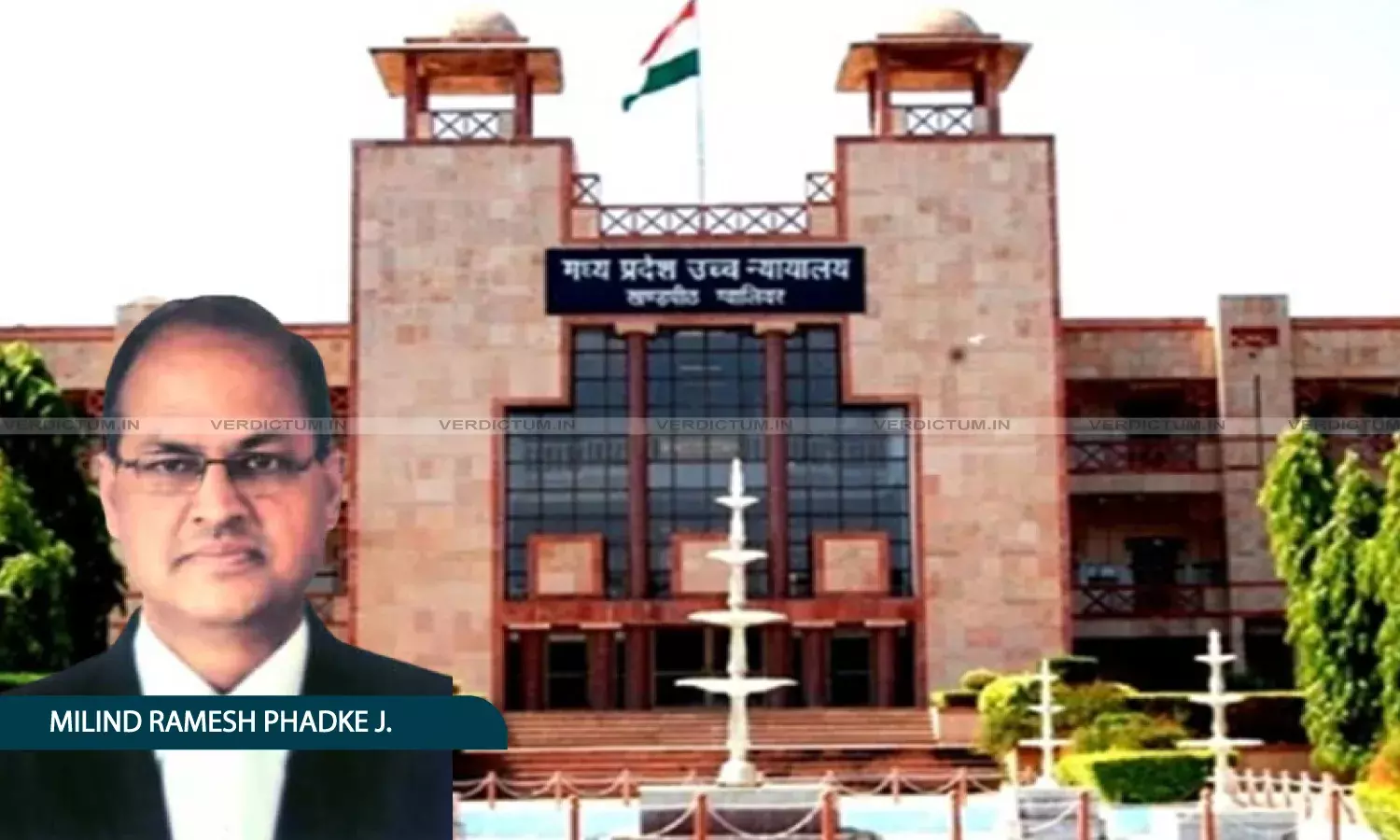
While quashing a case registered under Section 377 of the IPC against a man, where his wife alleged the commission of unnatural sex, the Madhya Pradesh High Court has held that the allegations made by the complainant against the accused pertained to the acts committed within the marital relationship, and in view of the exception carved out under Section 375, such allegations did not constitute an offence under Section 377 IPC.
The High Court was considering a petition filed under Section 482 of the Code of Criminal Procedure by the petitioners (husband and the woman’s in-laws) seeking the quashment of the FIR, charge-sheet, and all consequential proceedings arising out of a case registered under Sections 377, 354, 498-A, 323, 294, 506, 34 of the Indian Penal Code and Sections 3, 4 of the Dowry Prohibition Act, as well as Section 30 of the Arms Act.
The Single Bench of Justice Milind Ramesh Phadke held, “Applying the aforesaid legal position to the facts of the present case, it is apparent that the allegations made by the complainant against petitioner No.1, even if taken at face value, pertain to acts committed within the marital relationship. In view of the exception carved out under Section 375 IPC and the judicial pronouncements referred to hereinabove, such allegations would not constitute an offence under Section 377 IPC.”
Advocate Tapendra Sharma represented the Petitioner while Public Prosecutor Brijesh Kumar Tyagi represented the Respondent.
Factual Background
As per the prosecution's story, the complainant was lawfully married to the first petitioner in accordance with Hindu rites and customs. At the time of marriage, the complainant’s parents, within their financial means, provided sufficient dowry articles, including Rs 4 lakh in cash. Despite this, the accused persons remained dissatisfied and persistently alleged that the marriage had been settled for Rs 10 lakh, asserting that only Rs 4 lakh had been paid and demanded the remaining Rs 6 lakh along with a Bullet motorcycle. It was alleged that the complainant was continuously subjected to cruelty and harassment in connection with the said unlawful demands. Additionally, the husband was alleged to have subjected the complainant to physical and sexual abuse, including unnatural acts accompanied by threats and assault, with repeated assertions that such treatment would continue until the dowry demands were fulfilled.
It was further alleged that the complainant’s husband dispossessed her of all her stridhan and forcibly abandoned her at her parental home. The husband further threatened to divorce her and remarry if the demands remained unmet. Based on the aforesaid allegations, it was submitted that the accused persons, namely the husband, father-in-law, mother-in-law, and sister-in-law, in furtherance of their common intention, subjected the complainant to cruelty, harassment, and unlawful demands for dowry, thereby committing cognizable offences. Consequently, the impugned FIR was registered against the petitioners.
Reasoning
On a perusal of the FIR as well as the statements recorded under Section 161 Cr.P.C., the Bench noted that only general and omnibus allegations had been levelled against the sister-in-law without attributing any specific overt act. Significantly, in the statement of the complainant recorded under Section 7 before the Magistrate, no role whatsoever was assigned to her. Further, even in the earlier proceedings initiated by the complainant under Section 125 Cr.P.C., no allegations were made against her. “In absence of any specific allegation demonstrating her active involvement in the alleged offences, her implication appears to be vague and prima facie an abuse of the process of law”, the Bench stated while quashing the impugned FIR against her.
Dealing with the allegations made against the husband, the Bench referred to the judgment in Manish Sahu vs. State of M.P. (2023) wherein, following the law laid down by the Apex Court in Navtej Singh Johar vs. Union of India (2018), it has been held that consent is a determinative factor for attracting Section 377 IPC. However, in light of Exception 2 to Section 375 IPC, sexual intercourse or sexual acts by a husband with his wife (not being a minor) do not constitute rape, thereby rendering the aspect of consent within marriage legally immaterial for the purpose of prosecuting such acts as rape.
Further reference was made to the judgment of the Co-Ordinate Bench in Umang Singhar vs. State of M.P. (2023) wherein it has been held that in view of the expanded definition of rape, which includes acts such as anal and oral penetration, and the statutory exception in favour of marital relations, the offence under Section 377 IPC cannot be invoked for such acts between husband and wife during subsistence of marriage.
Thus, holding that no offence under section 377 of the IPC was made out, the Bench quashed the case under 377 against the petitioner. However, the Bench held that the proceedings in respect of the remaining offences against the husband and the parents-in-law would continue in accordance with law.
Cause Title: A v. The State of Madhya Pradesh (Neutral Citation: 2026:MPHC-GWL:9922)
Appearance
Petitioner: Advocate Tapendra Sharma
Respondent: Public Public Prosecutor Brijesh Kumar Tyagi, Advocate Madan Mohan Tripathi