"Case Akin To Crime Thriller": Karnataka High Court Refuses To Quash Proceedings Against Accused Involved In Multi Crore Fake SBI Loan Scam
The High Court declined to exercise its inherent jurisdiction to quash criminal proceedings where allegations disclosed a structured cyber-fraud scheme involving fabricated banking infrastructure and inducement to part with large sums of money.
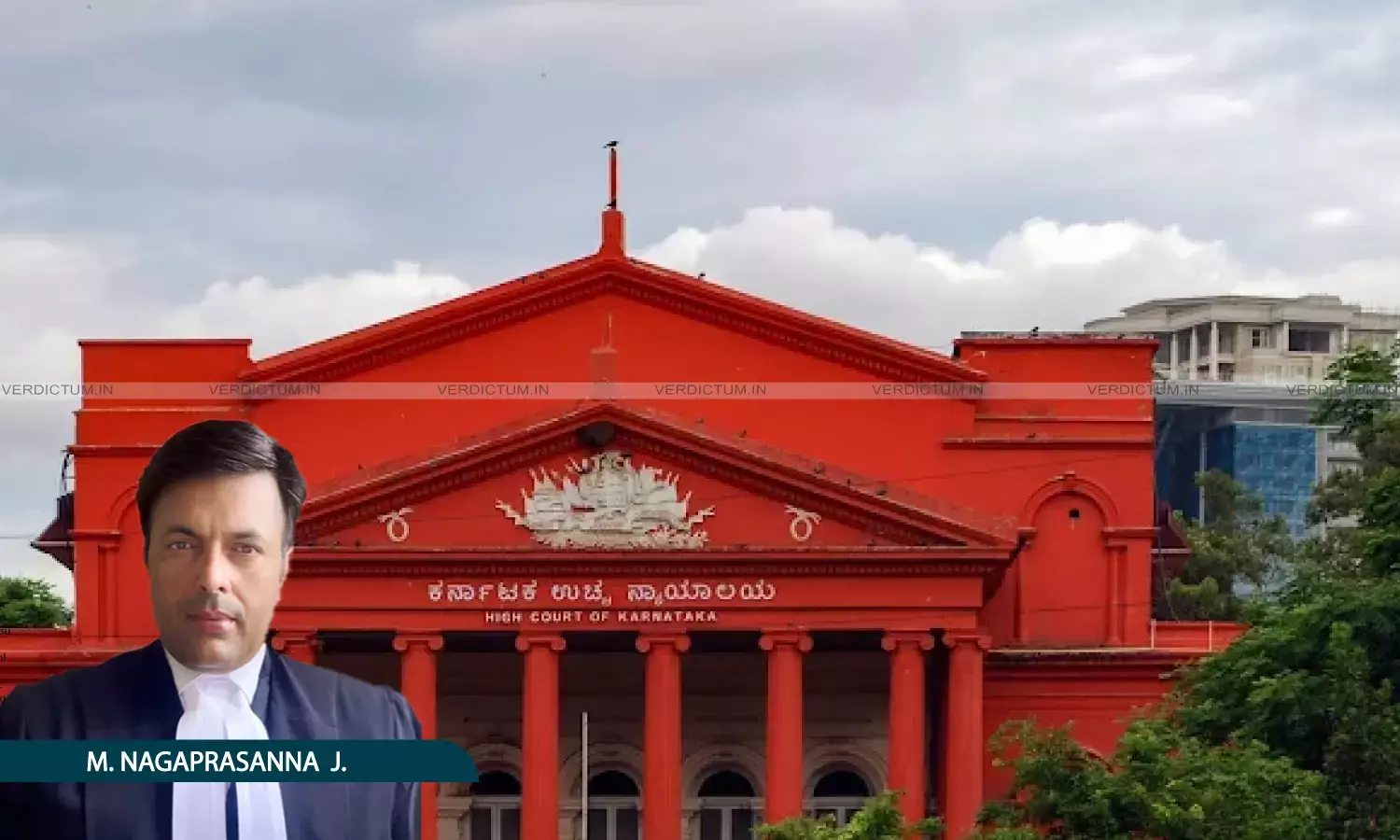
Justice M. Nagaprasanna, Karnataka High Court
The Karnataka High Court refused to quash criminal proceedings initiated against several accused, alleged to have orchestrated a fraudulent scheme promising to secure a ₹225-crore loan from the State Bank of India and inducing the complainant to pay ₹7.15 crore as commission.
The Court held that the allegations, supported by charge-sheet material and investigative records, disclosed prima facie offences that warranted trial and could not be interdicted under Section 482 of the Cr.P.C.
The Court was hearing a batch of petitions filed by different accused challenging the registration of the crime and subsequent proceedings arising from a single transaction.
A Bench of Justice M. Nagaprasanna, upon deciding the matter, observed: “…the allegations transcend the realm of mere breach of promise or failure of a commercial venture, …They strike at the heart of public trust in banking systems and digital infrastructure, …Creation of fake websites, impersonation of bank officials, fabrication of electronic communications are and can never be matters that can be brushed aside, as civil disputes or the transactions being purely civil in nature.”
Background
According to the prosecution, the complainant intended to establish a sugar factory and was searching for financing. He was allegedly introduced to persons who promised to arrange a ₹225-crore loan from SBI’s corporate finance branch in return for a 7% commission.
The accused allegedly created a fraudulent digital setup, including a fake website resembling SBI’s portal and fabricated email communications indicating that large sums had been credited to the complainant’s account.
Believing these representations, the complainant transferred ₹7.15 crore to the accused. Later, when he approached the bank physically and realised no such account or loan existed, he lodged a complaint leading to the registration of a criminal case for offences including cheating, forgery, conspiracy, and offences under the Information Technology Act.
Some accused approached the High Court after charge sheets were filed, while others filed petitions during the investigation. Since all petitions arose out of the same transaction, they were heard together.
The petitioners contended that the dispute was essentially civil in nature, involving recovery of money and that criminal law had been invoked to pressure them. They argued that there was a delay of about four years in lodging the complaint and that certain accused had no role in the alleged transaction.
It was further submitted that the alleged acts occurred outside Bengaluru and therefore the police there lacked jurisdiction. On these grounds, they sought the quashing of the FIR and criminal proceedings as an abuse of process.
The State contended that the charge-sheet materials clearly demonstrated that the accused had created a fake SBI website, generated OTPs, and sent messages showing fictitious credit entries of huge amounts to the complainant’s account. These actions were allegedly designed to lure the complainant into paying commission.
It was argued that the transaction was not a simple monetary dispute, but a case of cyber-fraud involving impersonation and forgery, and interference by the Court at this stage would obstruct investigation and trial.
Court’s Observation
The Court noted that the factual narrative regarding meetings, representations, communications, and payments was largely undisputed at this stage and formed part of the record. It was observed that the complaint described in detail the manner in which the accused allegedly induced confidence by creating a counterfeit digital environment resembling a legitimate banking platform.
The Bench held that allegations of creation of fake websites, sending fabricated transaction alerts, and generating OTP messages indicated elements of organised cyber-fraud rather than a mere civil dispute. Such allegations, if proved, would constitute serious criminal offences requiring adjudication through trial.
Addressing the argument of delay in filing the complaint, the Court noted that the complainant had explained that he realised the fraud only after attempts to withdraw funds failed and communications ceased, and that intervening circumstances, including the pandemic, contributed to the delay. These explanations, the Court held, could not be assessed conclusively at the quashing stage.
The Court further observed that the existence of charge-sheet material against some accused and investigative material against others indicated that the allegations were supported by evidence warranting examination during trial. Whether the individual accused was involved or not was a matter for evidence and cross-examination, not for determination in proceedings under Section 482 Cr.P.C.
On the contention that the dispute was civil in nature, the Court held that merely because money was involved would not render criminal proceedings invalid if allegations disclosed ingredients of cognizable offences such as cheating, forgery, and conspiracy.
“To quash the proceedings at this stage would be to smother a serious prosecution in its infancy and to grant immunity, where proceedings cry out for a full-blown trial”, the Court concluded.
Conclusion
The High Court held that the complaint and charge-sheet materials disclosed prima facie offences and that the case could not be characterised as a purely civil dispute. Finding no grounds to exercise inherent powers to quash proceedings, the Court dismissed the petitions and allowed the criminal case to proceed in accordance with the law.
Cause Title: Sri K. Balajee @ Balajee Sha v. State of Karnataka & Ors. (Connected Matters)
Appearances
Petitioners: Prateek Chandramouli; Sona Rajkumar; Hashmath Pasha, Senior Advocate with Kariappa N.A.; Lakshmy Iyengar, Senior Advocate with Manjunatha A.C.
Respondents: B.N. Jagadeesha, Additional State Public Prosecutor; Sudhanva D.S., Advocate.