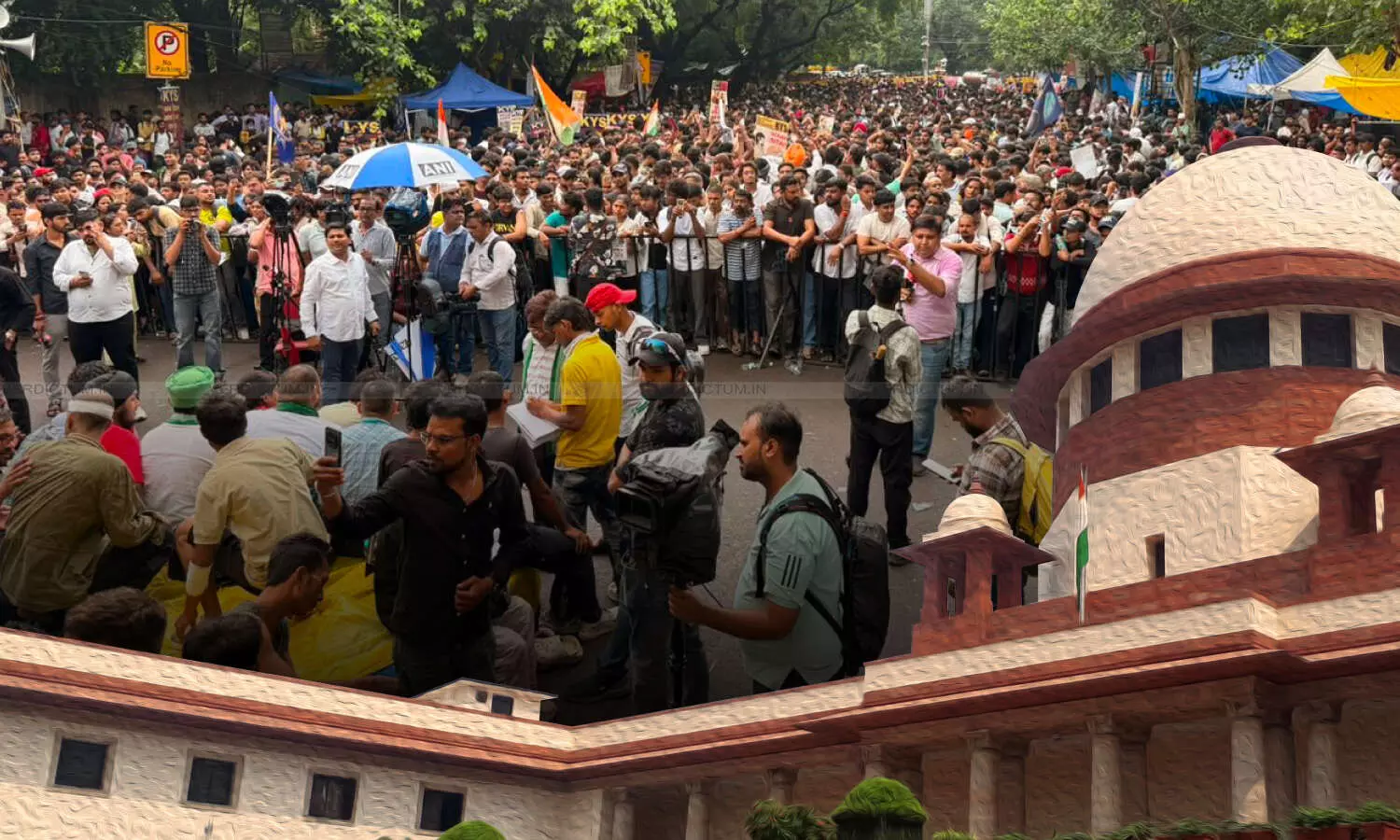
NEET Protests: Supreme Court Says States Free To Withdraw FIRs; Clarifies That "Criminal Antecedents" Limited To Heinous Crimes
 |
|The Court clarified that the term "criminal antecedents" applies strictly to grave and heinous offences, paving the way for relief to student protesters.
The Supreme Court clarified that the NCT of Delhi and state governments were at liberty to close or withdraw First Information Reports (FIRs) registered against candidates and citizens protesting the NEET-UG paper leak.
The Court also clarified that the word "criminal antecedents" in the previous order is to be read as grave and heinous offences.
On the last date of hearing, the Court issued interim directions prohibiting coercive action against students without criminal antecedents, ordering the immediate release of all detained minors, and mandating the preservation of all digital evidence and CCTV footage.
The Court also asked the Centre to preserve the ammunition log of Rapid Action Force (RAF) deployed at the Jantar Mantar and took note of a plea on the use of metallic pellet guns during the protests.
The Bench of Chief Justice Surya Kant, Justice Joymalya Bagchi and Justice V Mohana ordered, "With reference to the order dated 28th July 2026. It is pointed out that clauses 4 and 5 of Para 8 to some extent, are being misunderstood. As regard, it is clarified that NCT of Delhi or any other States shall be at liberty to close/withdraw the criminal cases in accordance woth law...Similarly in Para 8 Clause 5 it is clarified that the term criminal antecedents in the order is clarified to mean grave and heinous offences...Let respective counter affidavits be filed. List on August 18, 2026."
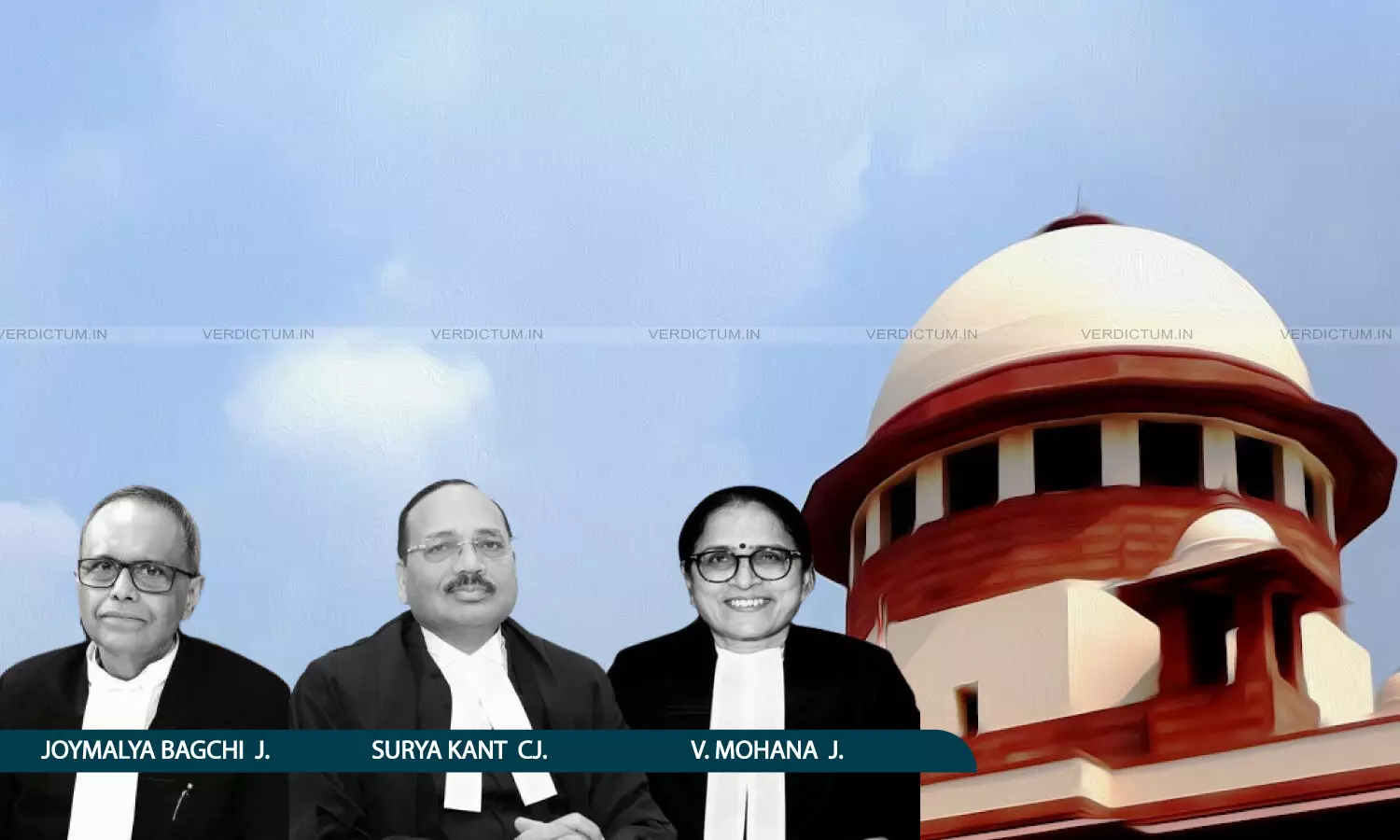
The Court was hearing a batch of writ petitions and intervention applications concerning alleged police excesses against students protesting the NEET paper leak, alongside pleas highlighting violence against on-duty police personnel.
Solicitor General Tushar Mehta informed the Bench that the executive was actively considering a mechanism to address the FIRs in consultation with the student representatives.
He submitted that while the government adopted a non-adversarial stance toward students, relief would not extend to individuals with criminal antecedents.
Responding to submissions by Senior Advocate A.M. Singhvi regarding the ambiguity of the term, the Court explicitly ordered that "criminal antecedents" must be strictly interpreted as involvement in grave and heinous offences, ensuring minor or petty infractions do not disqualify protesters from relief.
The CJI directed the Union and state authorities to segregate the FIRs into two distinct categories: those concerning student protesters and those involving hardened criminals. Justice Bagchi observed that criminal law architecture provided for the withdrawal of prosecution or the filing of closure reports by Public Prosecutors, emphasizing that pending FIRs should not remain an ongoing threat over students' heads.
Addressing submissions by Senior Advocates Vrinda Grover, N. Hariharan, Gopal S., and S. Sankaranarayanan regarding police high-handedness—including the use of pellet guns and unconsented mass facial surveillance at protest sites—the Court indicated that it was considering two potential courses of action: constituting an independent Special Investigation Team (SIT) composed of senior police officers or establishing an independent committee headed by a retired judge to investigate allegations of police excess and fix accountability.
Previously, the Court also took note of the allegations regarding physical violence and criminal intimidation faced by media personnel at the hands of the protesters. It was also emphasized that injuries suffered by on-duty police officers during the nationwide NEET-UG 2026 paper leak protests are a matter of equal concern alongside allegations of police excesses.
The Court also agreed to list an intervention application filed by food volunteer Junaid Malik, who alleged that he was illegally abducted, blindfolded, and dropped on a remote highway near Mussoorie by police personnel for managing food stalls at the NEET 2026 protest site.
On July 27, the Court remarked that the right to peaceful protest is an essential constitutional guarantee that cannot be denied, while emphasizing that injury to any individual—whether a student or a police officer—is of equal concern.
Previously, the Court agreed to hear two separate petitions alleging police excesses against students protesting against the NEET paper leak. Earlier that day, Chief Justice of India Surya Kant dismissed as "reckless” media reports that he had denied an urgent hearing on a plea challenging the July 20 police action against students, saying it was only a representation and not a petition.
Another bench of the Supreme Court has also made suggestions in a plea concerning structural and administrative reforms for conducting the NEET-UG examination, highlighting the urgent need to transition from temporary measures to permanent institutionalization.
Recently, the Delhi High Court had also issued notice to the Delhi Police and the Union of India in a Public Interest Litigation (PIL) alleging excessive use of force by the Delhi Police during the Cockroach Janta Party’s protest march at Jantar Mantar, New Delhi.
Cause Title: Shailendra Mani Tripathi v. Union of India & Ors.[W.P.(Crl.) No. 280/2026] and Himanshu v. Union of India & Ors. [W.P.(Crl.) No. 279/2026]