One-Day Abstention Exception Does Not Permit Bar Association To Obstruct Advocates From Attending Court: Telangana High Court
The Court directed the Bar Association office-bearers to ensure that future protests comply with the Supreme Court’s guidelines and do not obstruct access to courts.
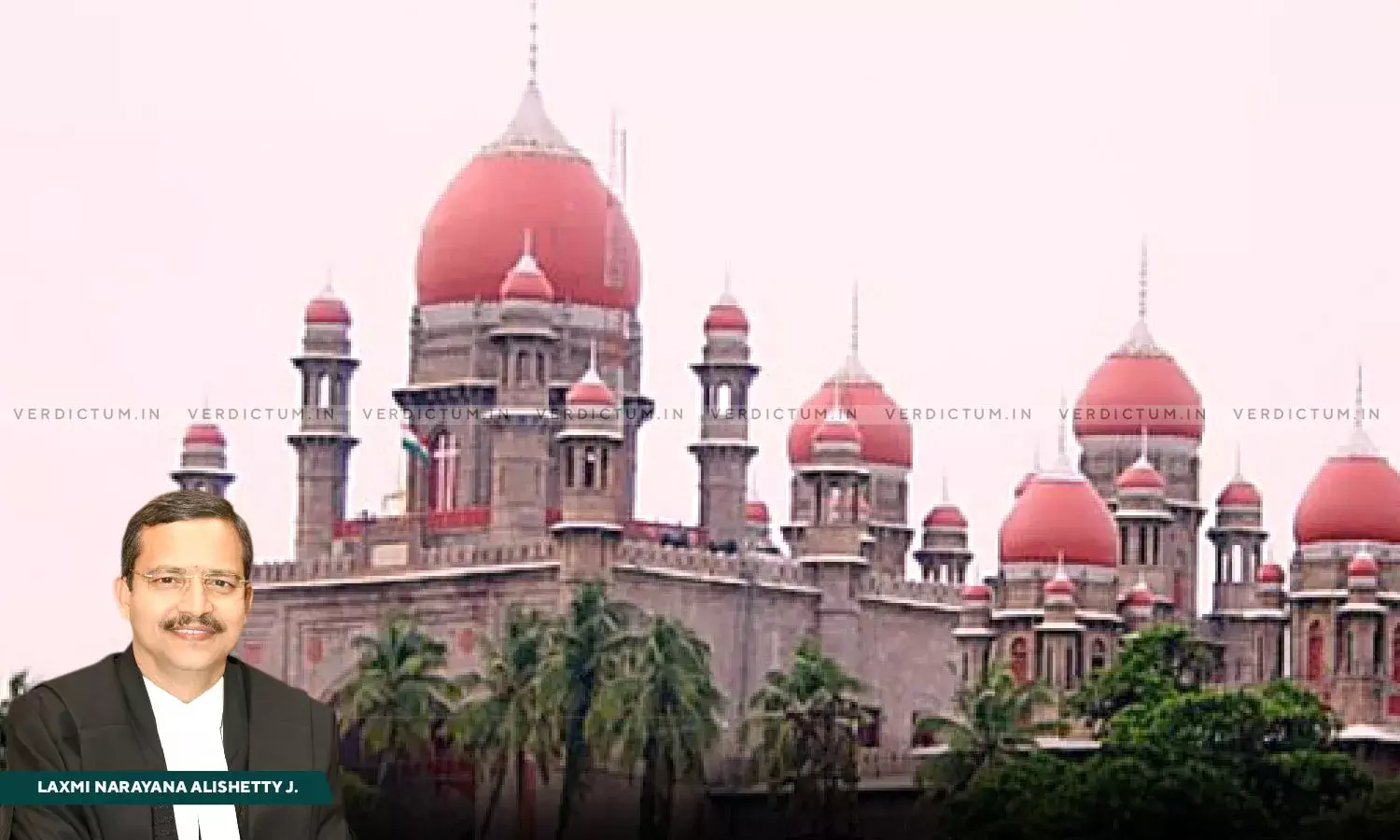
The Telangana High Court has held that the limited exception permitting advocates to abstain from court work for one day in the rarest of rare cases does not authorise a Bar Association or its office-bearers to coerce, intimidate or obstruct an advocate who chooses to attend court.
The Court clarified that lawyers have no right to call for a strike or boycott of courts, while the limited exception concerning the dignity, integrity or independence of the Bar or the Bench remains subject to the conditions prescribed by the Supreme Court.
The Court was hearing a contempt case filed by an advocate against office-bearers of the Metropolitan Criminal Court Bar Association, Nampally. The petitioner alleged that he was prevented from entering the court premises and assaulted after refusing to comply with a one-day boycott call.
A Bench of Justice Laxmi Narayana Alishetty observed: “The legal position remains unequivocal that the limited exception recognised in Ex-Capt. Harish Uppal’s case (cited supra) does not authorise a Bar Association or its office-bearers to prevent an advocate from attending his professional duties or to subject such advocate to any adverse consequence for disregarding a boycott call.”
Advocate Vijay Gopal appeared as Party-in-Person. Advocate G. Ashok Reddy appeared for the respondents.
Background
The Bar Association passed a resolution calling upon its members to abstain from court work for one day as an expression of solidarity and to condemn reported attacks on advocates.
The petitioner alleged that when he attempted to enter the court premises to attend a pending matter, he was threatened and directed to remove his advocate’s band and leave. He further alleged that he was assaulted and sustained injuries after falling on the stairs. Cross-criminal proceedings were subsequently initiated concerning the incident.
The petitioner contended that the boycott resolution violated the law declared by the Supreme Court and Rule 17 of the Telangana High Court Rules of Practice, 1980. He submitted that an advocate could neither be compelled to join a boycott nor face coercion or adverse consequences for attending court.
The respondents questioned the maintainability of the contempt proceedings. They argued that no specific conduct had been attributed to each office-bearer, the allegations involved disputed facts already forming the subject of criminal proceedings, and the resolution was only a one-day symbolic expression concerning the safety and dignity of advocates. They also pointed out that the petitioner was ultimately able to enter the court premises and attend his matter.
Court’s Observations
The High Court, at the outset, noted that the allegations were not ultimately pursued as criminal contempt but were examined as wilful disobedience of the Supreme Court’s binding directions governing strikes and boycotts by advocates.
The Court consequently held that the requirement of obtaining the Advocate General’s written consent under Section 15 of the Contempt of Courts Act, 1971, which specifically applies to criminal contempt, did not arise when the allegations were examined within the framework of civil contempt under Section 2(b) of the Act.
The Court observed: “Therefore, the requirement of obtaining the written consent of the learned Advocate General under Section 15 of the Contempt of Courts Act, 1971, which specifically applies to criminal contempt, does not arise.”
The Court added that the respondents’ objection concerning the absence of the Advocate General’s consent could not, by itself, defeat the proceedings. The issue was whether their alleged conduct constituted wilful disobedience of the Supreme Court’s binding directions so as to attract Section 2(b) of the Act.
Referring to Ex-Capt. Harish Uppal v. Union of India (2003), Common Cause, A Registered Society v. Union of India (2006) and Krishnakant Tamrakar v. State of Madhya Pradesh (2018), the Court reiterated that lawyers have no right to call for a strike or boycott courts. It added that an advocate cannot be compelled to participate in such action.
The Court observed: “There can be no dispute regarding the settled legal position that advocates have no right to resort to strikes or to give a call for boycott of Court work.”
The Court explained that the Supreme Court had recognised a limited exception in the rarest of rare cases involving the dignity, integrity or independence of the Bar or the Bench. Even then, abstention from court work could not exceed one day.
The Court further stated that the Bar President must first consult the Chief Justice or the concerned District Judge before advocates decide to abstain from work. The decision of the concerned judicial authority would be final and binding upon the Bar.
The Court noted that the resolution in the present case was confined to one day and was passed to express solidarity and condemn reported attacks on advocates. It acknowledged that the safety and dignity of advocates directly bear upon the independence and effective functioning of the Bar.
The Court observed: “Mere expression of solidarity by members of the legal fraternity in circumstances involving an alleged attack upon an advocate cannot, by itself, be treated as an act directed against the administration of justice.”
However, the Court found no material showing that the Bar Association President had consulted the concerned Metropolitan Sessions Judge before the resolution was passed. It held that the respondents could not justify every act allegedly undertaken pursuant to the resolution merely because the abstention was limited to one day or was described as an expression of solidarity.
The Court added: “Even assuming that the circumstances leading to the resolution could be brought within the limited exception recognised in Ex-Capt. Harish Uppal’s case (cited supra), such exception would extend only to the limited abstention from Court work contemplated therein and would not extend to any act of coercion, intimidation, obstruction or physical assault upon an advocate who chooses to attend Court.”
The Court held that the alleged act of physically obstructing and assaulting the petitioner fell outside the limited exception. It clarified that such conduct, if established, would violate the Supreme Court’s directions in Ex-Capt. Harish Uppal.
The Court noted that the office-bearers had been impleaded collectively without specific allegations and material demonstrating the individual role of each respondent. It held that contempt liability could not ordinarily be imposed merely because a person held an office in the Bar Association.
Referring to Dr. U.N. Bora, Ex-Chief Executive Officer v. Assam Roller Flour Mills Association (2021), the Court stated that contempt proceedings are quasi-criminal and require proof beyond reasonable doubt of deliberate, conscious and intentional disobedience.
The Court observed: “Contempt proceedings cannot, ordinarily, be proceeded on the respondents collectively in the absence of specific allegations and material demonstrating the individual role and involvement of each respondent.”
The Court found that a specific allegation of obstruction and assault had been made against only one respondent. It further found no material showing the presence or participation of another respondent who had been impleaded merely because he was an Executive Committee member. The Court consequently held that the alleged conduct of one respondent could not create vicarious contempt liability for the other office-bearers.
The Court noted that the alleged assault and wrongful restraint had already led to cross-criminal proceedings. Since the parties disputed the circumstances of the incident, the Court held that it would not conduct a parallel adjudication of those factual questions in contempt jurisdiction.
The Court also noted that the material did not disclose that any other advocate who attended court despite the boycott call had been similarly assaulted, intimidated or coerced by the office-bearers. It further noted that the petitioner subsequently entered the court premises and attended his pending matter.
Having considered the disputed facts, the pending criminal proceedings and the absence of sufficient material establishing wilful disobedience by the individual respondents, the Court declined to proceed further in contempt.
The Court nevertheless clarified: “The aforesaid view of the Court shall not be understood as approving, condoning or legitimising any act of assault, intimidation, coercion or obstruction of an advocate seeking to attend Court, despite call of boycott by ar association.”
The Court stated that office-bearers of Bar Associations must exercise due care, restraint and responsibility while organising or participating in a boycott or protest.
The Court held that even where a protest is claimed to arise from exceptional circumstances, no advocate, litigant or other person can be intimidated, coerced, obstructed or harmed for choosing to attend court or pursue a legal remedy.
The Court directed: “The office-bearers shall ensure that any future protest/call for a strike/boycott is conducted strictly in accordance with the guide lines law laid down by the Hon’ble Supreme Court and shall not obstruct/prevent access to Court or interfere with the administration of justice.”
Conclusion
The High Court dismissed the contempt case after finding insufficient material to establish wilful disobedience attributable individually to the respondents. It also declined to determine the disputed assault allegations while the related criminal proceedings remained pending.
The Court directed Bar Association office-bearers to exercise care, restraint and responsibility while organising protests. It stated that no advocate, litigant or other person could be intimidated, coerced, obstructed or harmed for choosing to attend court or pursue a legal remedy.
The Court further directed that any future strike, boycott or protest must strictly comply with the Supreme Court’s guidelines and must not obstruct access to courts or interfere with the administration of justice. The pending applications were closed without any order as to costs.
Cause Title: Vijay Gopal v. N.V. Ramana Goud and Others
Appearances
Petitioner: Advocate Vijay Gopal, Party-in-Person
Respondents: Advocates Ashok Reddy, M.P.K. Aditya, Ponnam Ashok Goud, Mohd. Muzaffer Ullah Khan
Click here to read/download Judgment