

Cheating & Criminal Breach Of Trust Are "Independent & Distinct" Offences, Cannot Coexist On Same Facts: Supreme Court Reiterates
The Court noted that when a dispute between the parties is essentially civil in nature, a case of cheating or criminal breach of trust per se would not arise.

The Supreme Court has quashed a 14-year-old cheating case against two company directors who had withheld payments worth ₹1.19 crore to set off a previous deposit. The Bench reiterated that criminal breach of trust under Section 406 of the IPC and cheating under Section 420 of the IPC are independent and mutually exclusive offences that cannot coexist on the same set of facts, holding that criminal proceedings cannot be permitted to continue where the grievance is essentially civil in nature.
Setting aside the Gujarat High Court's order sustaining the charge under Section 420 read with Section 114 of the IPC, the Bench noted that no civil suit had been filed and that allowing the prosecution to continue would be nothing but an abuse of the process of the Court.
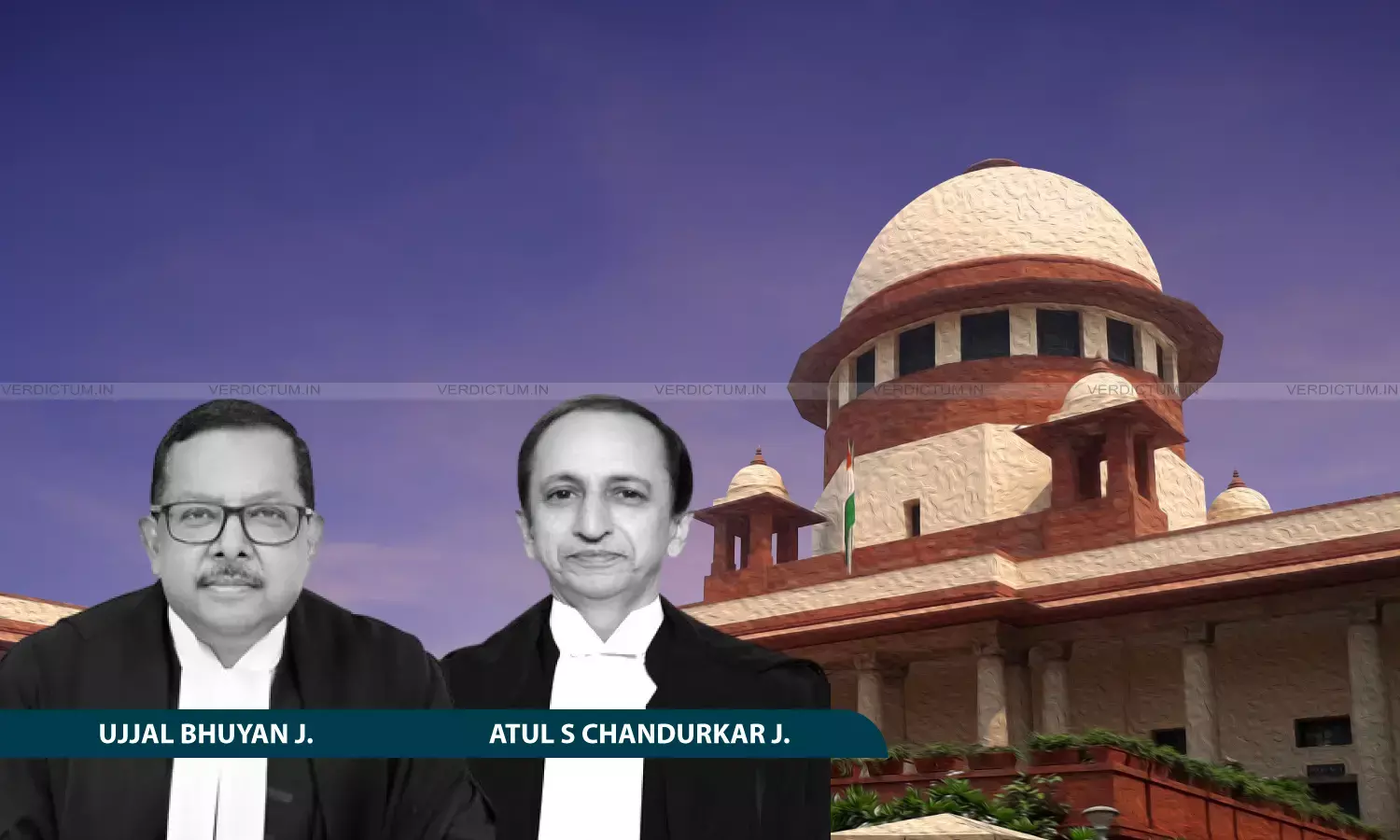
A Bench of Justice Ujjal Bhuyan and Justice Atul S. Chandurkar noting Delhi Race Club v. State of Uttar Pradesh (2024) 10 SCC 690, observed, "While concluding, this Court explained that the offences of cheating and criminal breach of trust are independent and distinct. The two offences cannot coexist simultaneously in the same set of facts".
“…when the dispute between the parties is essentially civil in nature, a case of cheating or criminal breach of trust per se would not arise…we have no hesitation in coming to the conclusion that the grievance raised by Respondent No.2 is essentially civil in nature. Instead of availing his civil remedy, Respondent No.2 has resorted to criminal proceedings to recover the amounts stated to have been withheld by the appellants. This certainly cannot be the object of a criminal proceeding. In the circumstances, we are of the view that allowing the criminal proceedings to continue would be nothing but an abuse of the process of the Court”, the Bench said further.
Senior Advocate Nikhil Goel appeared for the appellants and Advocate Prashant Bhagwati appeared for the respondent.
The appellants, directors of Shivamy Enterprises Pvt. Ltd., a steel trader, had bought steel bars from Hans Ispat Ltd. since 2006. The informant, an employee of Hans Ispat, alleged that the appellants purchased 293 metric tonnes of TMT bars worth Rs. 1,19,00,000 in November 2011 and issued ten post-dated cheques that were dishonoured. Pursuant to which, an FIR was registered at Anjar, Kutch East, under Sections 406, 420 and 114 of the IPC.
The Magistrate rejected the appellants' discharge application on February 08, 2016. Their revision was dismissed by the High Court as not maintainable on March 24, 2021, but the Supreme Court held on December 18, 2024 that it was maintainable and remitted it.
Thereafter, the High Court discharged the appellants under Section 406 but sustained the Section 420 read with 114 charge and directed a modified charge. The Supreme Court issued notice on April 24, 2026 and stayed the proceedings.
The Court noted that the informant's own police statement admitted that Rs. 2,00,00,000 was paid by the appellants to the company between December 2006 and February 2007, when the Barnala Group owned it.
Cause Title: Yogesh Premjibhai Suvariya & Anr. v. State of Gujarat & Anr. (Neutral Citation: 2026 INSC 1079).