

UP Panchayat Raj Act| Prescribed Authority Becomes Functus Officio After Passing Final Order In Election Petition: Supreme Court
The Court held that once a Prescribed Authority passes a final order in an election petition under the U.P. Panchayat Raj Act, 1947, it ceases to retain jurisdiction over the matter and cannot thereafter declare fresh election results based on recounting.
The Supreme Court has held that a Prescribed Authority exercising jurisdiction under Section 12-C of the Uttar Pradesh Panchayat Raj Act, 1947, becomes functus officio immediately upon passing a final order in an election petition and cannot thereafter continue proceedings.
The Court observed that even where recounting is subsequently conducted, election officials who had already discharged their duties upon declaration of results cannot reassume authority to alter or freshly declare election results.
The Court was hearing a civil appeal challenging an Allahabad High Court judgment which had set aside an order of the Sub-Divisional Officer/Prescribed Authority directing recounting of votes in a Gram Pradhan election and the subsequent declaration of the election petitioner as the returned candidate after recounting.
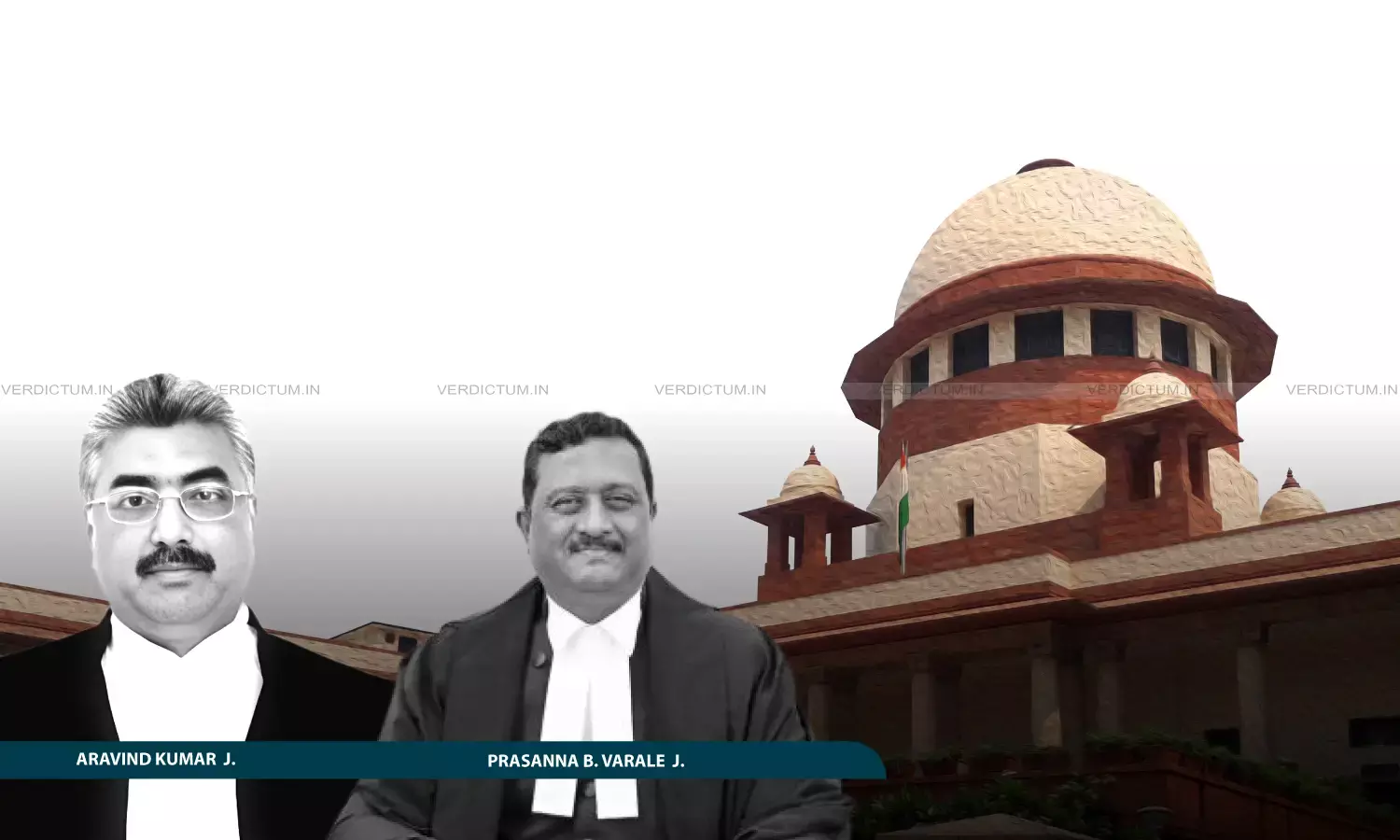
A Bench comprising Justice Aravind Kumar and Justice Prasanna B. Varale observed: “ …a bare perusal of the order of the Prescribed Authority in the present case indicates that it is in the nature of a final order, as it has completely allowed the application filed by the Appellant herein and, therefore, leaves no scope for passing any further order after the recounting is conducted, the authority which passed the order had become functus officio. However, despite passing the recounting order dated 05.11.2022, the Prescribed Authority, after the recounting was completed, proceeded to pass yet another order dated 17.03.2023, wherein it accepted the report of the Tehsildar and declared the Appellant, i.e., Urmila Devi, as the returned candidate, thereby declaring her as elected to the post of Pradhan of Gram Panchayat, Parauli, Suhagpur”.
The Bench accordingly held: “Having become functus officio upon passing the order dated 05.11.2022, the Prescribed Authority could not have passed any further order or continued the proceedings. The difficulty arising from the passing of a final order and the consequent cessation of jurisdiction is that, even after recounting, the election officers who were appointed for the purposes of conducting the election and had already discharged their duties upon the declaration of the results cannot reassume authority to declare the election results afresh or set aside the earlier results. The power to set aside election results vests exclusively with the Prescribed Authority, and once it has become functus officio, such power cannot be exercised thereafter”.
Advocate Bipin Bihari Singh appeared for the appellant, while Advocate Kaushal Yadav, AOR, represented the respondents.
Background
The dispute arose out of the 2021 Gram Panchayat Pradhan election in Uttar Pradesh, in which the appellant lost by a margin of two votes.
The appellant thereafter instituted an election petition under Section 12-C of the Uttar Pradesh Panchayat Raj Act, 1947, alleging serious irregularities during the counting of votes, including discrepancies in Forms 45 and 46 and wrongful rejection of ballot papers.
The election petitioner sought a recount of votes and a declaration of the returned candidate’s election as invalid.
After considering the pleadings and election records, the Sub-Divisional Officer/Prescribed Authority passed an order dated 05.11.2022 allowing the election petition, rejecting the objections of the returned candidate and directing recounting of votes.
The returned candidate challenged the recounting order before the Allahabad High Court. Initially, interim protection against recounting was granted, which was later vacated.
Subsequently, recounting was conducted, and the appellant was declared elected by a margin of twelve votes. The appellant also took an oath as Gram Pradhan.
The Allahabad High Court later allowed the writ petition filed by the returned candidate and held that the Prescribed Authority had become functus officio after passing the order dated 05.11.2022 and therefore lacked jurisdiction to declare fresh election results after recounting.
Court’s Observation
The Supreme Court examined the scheme of Section 12-C of the Uttar Pradesh Panchayat Raj Act, 1947, governing election disputes concerning Panchayat elections. The Court observed that Section 12-C vests exclusive authority in the Prescribed Authority to adjudicate election disputes and set aside election results.
Referring to the doctrine of functus officio, the Bench reiterated that once a judicial or quasi-judicial authority passes a final order granting final relief, it ceases to retain jurisdiction over the matter. The Court relied upon the Constitution Bench judgment in Hari Vishnu Kamath v. Syed Ahmad Ishaque (1955) and approved the reasoning adopted by the Allahabad High Court in Parshuram v. State of U.P., decided in 2022.
The Bench quoted the Allahabad High Court’s reasoning that once an election petition itself stands allowed, the Prescribed Authority becomes functus officio and any recounting thereafter would become legally meaningless because the authority conducting the recounting would lack power either to set aside the election or declare another candidate elected.
The Supreme Court then examined whether the order dated 05.11.2022 was interim or final in nature.
The Court distinguished its earlier decision in Raj Kumari v. Asha Devi (2024), where an order directing recounting had been treated as an interim order because the election petition had only been “partially accepted” and the Prescribed Authority had reserved the matter for final orders after recounting.
In contrast, the Bench observed that in the present case, the order dated 05.11.2022 had completely allowed the election petition and rejected the defence of the returned candidate, thereby conclusively deciding the election petition itself.
The Court held that after passing such a final order, the Prescribed Authority ceased to possess jurisdiction and therefore could not subsequently accept the recounting report and declare the election petitioner as elected through another order dated 17.03.2023.
The Bench further explained the practical difficulty arising from such a course of action and observed that election officers appointed for conducting elections discharge their functions once results are declared and cannot later reassume authority to freshly declare election outcomes after recounting.
The Court observed that the statutory power to set aside election results rests exclusively with the Prescribed Authority and once that authority becomes functus officio, no further adjudicatory action can be undertaken in the same proceedings.
Conclusion
The Supreme Court held that the Allahabad High Court had correctly concluded that the order dated 05.11.2022 was final in nature and that the Prescribed Authority became functus officio immediately upon passing the said order.
Accordingly, the Court upheld the judgment of the Allahabad High Court setting aside the recounting proceedings and the subsequent declaration of the appellant as elected Gram Pradhan.
The civil appeal was dismissed.
Before parting, the Court reiterated the High Court’s observation, cautioning the Sub-Divisional Magistrate/Prescribed Authority to remain careful while dealing with election petitions in future.
Cause Title: Urmila Devi v. State of Uttar Pradesh & Ors. (Neutral Citation: 2026 INSC 471)
Appearances
Appellant: Bipin Bihari Singh, Moni Cinmoy, Rakesh Kumar Singh, Anand Kumar Singh, Ajay Gupta, Advocates; Ashok Anand, AOR
Respondents: Kaushal Yadav, Nandlal Kumar Mishra, Dr Ajay Kumar, Naina Garg, Onkar Nath Sharma, Ritul Tandon, Advocates; Kaushal Yadav, AOR; Shaurya Sahay, AOR; Dr Sushil Balwada, AOR; Ram Kishor Singh Yadav, Yashoda Katiyar, Arjun Raghuvanshi, Anila Bharti, Advocates
