

Supreme Court Mandates Unified ICU Standards; Directs States To Prepare Immediate Implementation Action Plan
The Court has ordered the identification of five priority areas in manpower and logistics to ensure minimum mandatory standards across all Intensive Care Units in India.

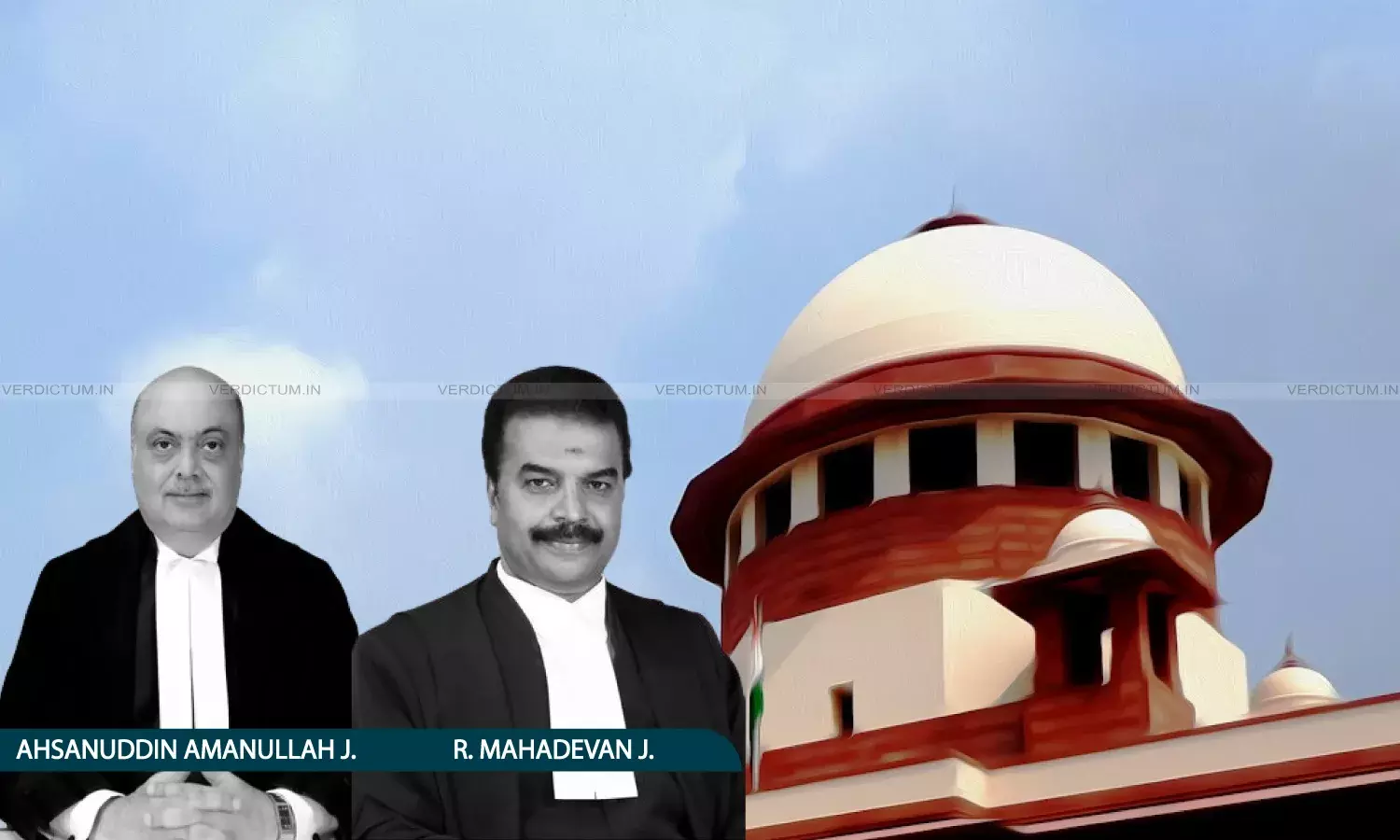
The Supreme Court has directed all States and Union Territories to immediately formulate a realistic action plan for the implementation of the "Guidelines for Organization and Delivery of Intensive Care Services."
The Court emphasized that the immediate challenge lies in determining absolutely essential requirements for ICUs, focusing on a prioritized list of five basic issues related to both manpower and equipment.
To ensure administrative accountability, the Bench ordered that Additional Chief Secretaries or Health Secretaries must personally attend state-level expert meetings within one week to establish robust monitoring mechanisms and ground-level SOPs.
The Bench of Justice Ahsanuddin Amanullah and Justice R Mahadevan observed, “At the first instance, five basic issues shall be identified and prioritised. The challenge, according to the Court, lies in determining what ought to be treated as absolutely essential and mandatory; accordingly, an initial list of five basic requirements, in terms of priority, relating to both manpower and equipments/logistics, shall be prepared. The meeting shall also formulate a methodology for implementation on the ground and more importantly, indicate a mechanism to ensure compliance and monitoring of such implementation. We expect the said exercise to commence immediately and the first meeting to be held within one week from today. We direct that such meeting shall be attended personally by the concerned Additional Chief Secretary/Secretary, as the case may be, heading the Department of Health and Medical Education in the States and the UTs.”
Additional Solicitor General Aishwarya Bhati, Amicus Curiae Karan Bharihoke, Dr Nitish Naik for the Committee, along with Advocate General Amit Kumar for Respondents.
The matter was taken up with several eminent medical professionals present in person, including the Director of AIIMS, New Delhi, and others from Mahajan Imaging and Labs. Additionally, several high-ranking doctors and chairpersons from institutions such as Medanta, the Institute of Liver and Biliary Sciences (ILBS), Tata Memorial Centre (ACTREC), and Sir Ganga Ram Hospital who provided practical suggestions for the formulation of final guidelines regarding the establishment and standardization of Intensive Care Units (ICUs) across various levels.
During the course of the hearing, the medical experts proposed several critical measures for the Court’s consideration. These included the prescription of strict timelines, the specialized training of personnel handling sophisticated equipment, and the formulation of standard operating procedures (SOPs) in the form of checklists.
A significant emphasis was placed on the creation of a GPS-based hospital locator to enable the public to identify the nearest medical facilities and available services during emergencies. These suggestions were duly noted by the Additional Solicitor General (ASG) and the Amicus Curiae.
The Court recorded that a foundational document titled "Guidelines for Organization and Delivery of Intensive Care Services" was prepared and submitted. This document, which reached a stage of consensus among the experts, was taken on record as a practical and implementable minimum standard for ICUs. The Court directed that copies of these guidelines be shared with all States and Union Territories (UTs).
As an immediate measure, the Court directed the Additional Chief Secretaries/Secretaries of the Health Departments in all States and UTs to convene meetings with experts to prepare a realistic action plan. The Court mandated that five basic issues relating to manpower and equipment be prioritized as essential requirements. Furthermore, a methodology for ground-level implementation and a mechanism for monitoring compliance were ordered to be formulated. The first of these meetings was directed to be held within one week, with the personal attendance of the concerned Secretaries.
Following the State-level deliberations, the reports were directed to be forwarded to the Secretary, Department of Health, Government of India. The Union Health Secretary was then tasked with coordinating a joint meeting between the State Secretaries and the Court-appointed team to prepare a final, common agreed draft. This comprehensive blueprint was ordered to be placed before the Court within three weeks. For the purpose of clarity, the Court clarified that the term "Intensive Care Unit (ICU)" would encompass all facilities previously discussed in earlier orders.
“The initial exercise shall be carried out at the State/UT level. The report prepared pursuant thereto, shall be forwarded by the respective States/UTs to the Secretary, Department of Health, Government of India, who shall, in turn, circulate the same to all the States/UTs as also to the learned ASG. Learned ASG is requested to share the same with the learned Amicus Curiae and the members of the team constituted by the Court”, the Court said.
The Court recognized the imperative need for specialized training for nursing staff, noting their round-the-clock presence with patients. Consequently, the Indian Nursing Council and the Para Medical Council of India were impleaded as party respondents.
The Court directed these bodies to present a plan on the next date of hearing regarding the augmentation of their curriculum and training modules to ensure that graduates are equipped to manage ICU environments effectively.
The Ministry of Health was directed to formally issue the current guidelines to all States/UTs as an advisory and to upload them, along with subsequent reports, onto its official website.
The Court directed, “We direct that such meeting shall be attended personally by the Secretary, Ministry of Health, Government of India and the Additional Chief Secretaries/Secretaries, as the case may be, heading the Department of Health and Medical Education in the States and the UTs. Learned ASG, learned Amicus Curiae and the members of the team constituted by this Court are also requested to participate in the said meeting. A final report/blueprint/recommendation shall be prepared, which shall be placed before this Court on the next date.”
The Court asked all members of the expert team to be present for the next hearing, either physically or virtually, and scheduled the matter for further proceedings on May 18, 2026.
Cause Title: Asit Baran Mondal & Anr. v. Dr Rita Sinha Mbbs Ms (Obst. Gynae) & Ors.
Appearances:
Petitioner: Petitioner-in-person
Respondent: Advocate General Amit Kumar, Advocate General Lenin Singh Hijam, Senior Additional Advocate General Lokesh Sinhal, Additional Advocate General Shiv Mangal Sharma, Additional Advocate General Amit Anand Tiwari, Deputy Advocate General Piyush Hans, Deputy Advocate General Kartikey Rastogi.