

"Marred By Humongous Administrative Delay": Supreme Court Pilots Systemic Automated Premature Release Software For Convicts In Agra & Lucknow
The Bench drawing on digital processing models on Madhya Pradesh HC’s framework, pushes automated consideration of premature release cases.

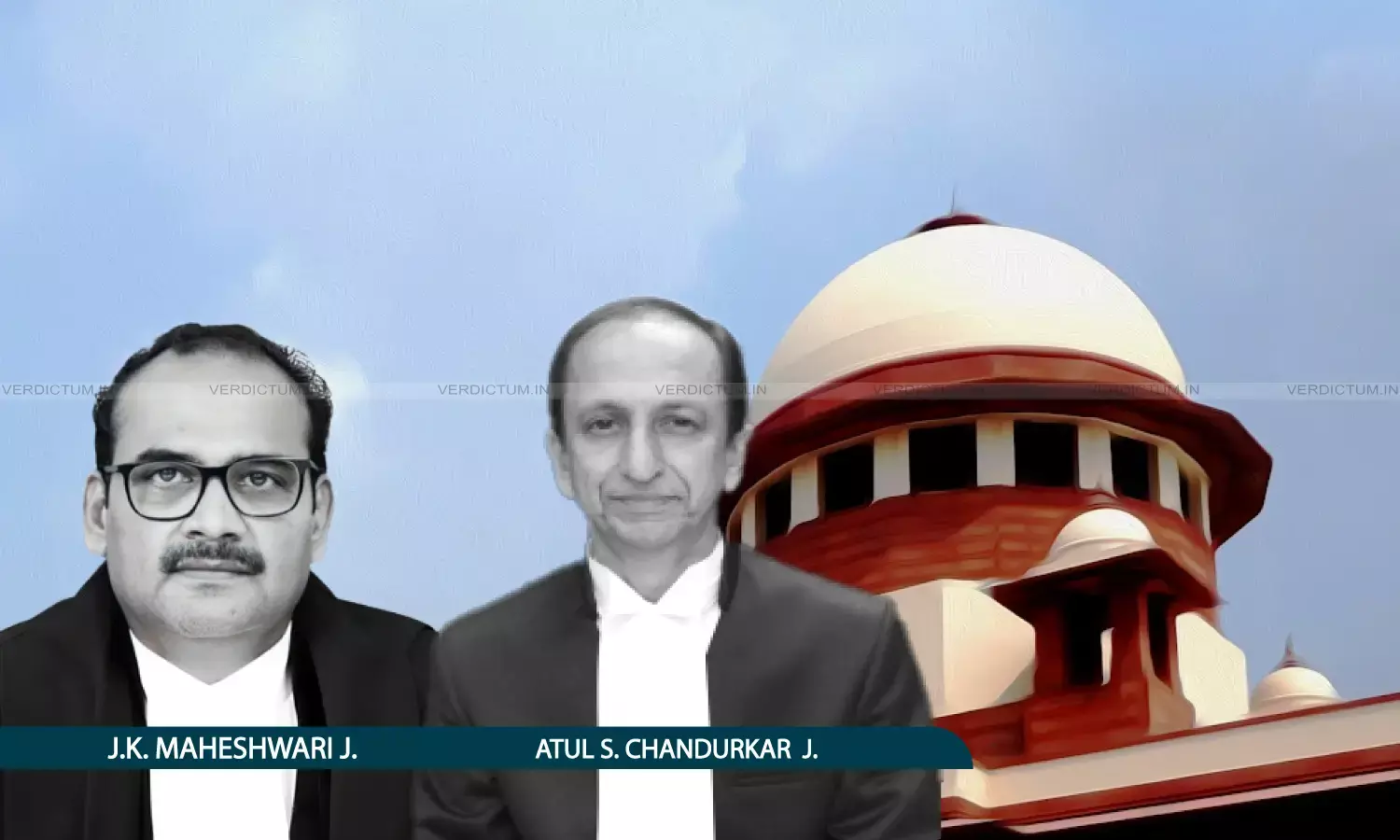
The Supreme Court has piloted a systemic digital framework for processing premature release cases in Central Jail, Agra and District Jail, Lucknow, while indicating that the model may serve as a template for wider adoption across States.
The Court noted that the “E-Prisons Early Release Processing Module”, developed by National Informatics Centre (NIC) with inputs from multiple stakeholders and informed in part by the software model demonstrated by the Madhya Pradesh High Court, is intended to create a seamless, accountable and largely automated mechanism for consideration of early release applications. The Court made clear that the long-term objective is development of a broader interoperable system capable of replication across jurisdictions.
A Bench of Justice J.K. Maheshwari and Justice Atul S. Chandurkar passed the directions while deciding an appeal in which issues surrounding the legality of releases granted under an earlier Allahabad High Court order led to wider scrutiny of remission administration in Uttar Pradesh. “…the Court realized the huge gap in implementation of the different mechanisms for early release in the State which is marred by humongous administrative delay caused at different stages before different authorities. It was informed that a major cause of such delay is due to the processing of remission applications through physical paperwork and the Court mooted the proposal to take corrective measures”, the Bench observed.
Senior Advocate K. Parameshwar and Ravi Raghunath, AOR assisted the Court as amicus curiae.
In the matter, the appellant, convicted under Sections 302, 148 and 149 IPC, had been released on bail pursuant to directions issued in another case relating to delayed consideration of premature release applications.
While examining the validity of such release, the Court was apprised of irregular releases of certain convicts and significant pendency affecting numerous eligible prisoners under different remission mechanisms in the State.
Thereafter, successive affidavits placed before the Court, disclosed delays at multiple stages of scrutiny, prompting judicial monitoring and eventually consideration of structural technological intervention as a corrective response.
The Court reiterated that remission and premature release remain matters governed by statutory and constitutional mechanisms vested in the appropriate government, but held that such power carries a corresponding duty of timely and meaningful consideration.
“…While the pilot project of the Processing Module is ongoing in the State of Uttar Pradesh in terms of the directions issued in this order, the State of Madhya Pradesh may implement the software as developed by the High Court. After the conclusion of the pilot project, the best practices, 20 implementation framework and learning from the Madhya Pradesh High Court, software can contribute towards improving the Processing Module and vice versa. Ultimately, the intent of this Court is to ensure that in the future, a catch-all software can be prepared which can be made applicable across the board in all States across the country and both software can contribute towards achieving a seamless system for automating the process of consideration of early release applications”, the Bench noted.
“The Registry is also directed to circulate a copy of this order to all States and Union Territories, which, if they deem fit, may develop software along similar lines in collaboration with the NIC or otherwise, for the automatic consideration of prisoners’ applications for premature release in accordance with their respective policies/schemes”, the Bench directed.
Accordingly, the Court ordered dedicated staffing, technical support, infrastructure, training and institutional monitoring for the pilot project, while directing that the order be circulated to all States and Union Territories for consideration of similar systems. The matter has been listed on May 18, 2026 for compliance and further directions.
Cause Title: Surendra @ Sunda v. State of Uttar Pradesh (Neutral Citation: 2026 INSC 414)
Appearances:
Appellant: Sanjai Kumar Pathak, AOR, Shashi Pathak, Arvind Kumar Tripathi, Robin Kumar, Shweta Jayshankar Dwivedi, Advocates.
Respondent: Pradeep Misra, AOR, Daleep Dhyani, Suraj Singh, T. R. B. Sivakumar, AOR, Chand Qureshi, AOR, M/S. Dubey & Chandra Law Chambers, AOR, Ravi Raghunath, AOR (assisting Amicus Curiae).