

Compulsory Third Party Insurance U/S 147 MV Act Does Not Automatically Cover Gratuitous Occupants Of Private Vehicles Or Pillion Riders Under Act Only Policy: Supreme Court
The Bench said that entitlement turns on "the character of the risk" and not on a person being a third party; declines to depart from Tilak Singh and Sudhakaran K.V..

The Supreme Court has held that compulsory third-party insurance under Section 147 of the Motor Vehicles Act, 1988 does not automatically cover an occupant of a private vehicle or a pillion rider under an Act Only Policy, for which no additional premium is paid. It said a person does not become entitled to such cover merely because he is neither the insured nor the insurer.
The Court, nevertheless directed the insurer to pay the outstanding award with interest and recover it from the owner, holding that the absence of statutory or contractual liability is not an absolute bar to a "pay and recover" direction under Article 142 of the Constitution of India in exceptional cases.
The three-Judge Bench found the distinction lies between the status of a person and the character of the risk sought to be enforced against the insurer. It noted that Section 147(1)(b)(i) specifically refers to goods owners and clause (ii) to passengers of public service vehicles. If "any person" covered every occupant, those references would become redundant. The Court found no reason to depart from United India Insurance Co. Ltd. v. Tilak Singh (2006) and Oriental Insurance Co. Ltd. v. Sudhakaran K.V. (2008).
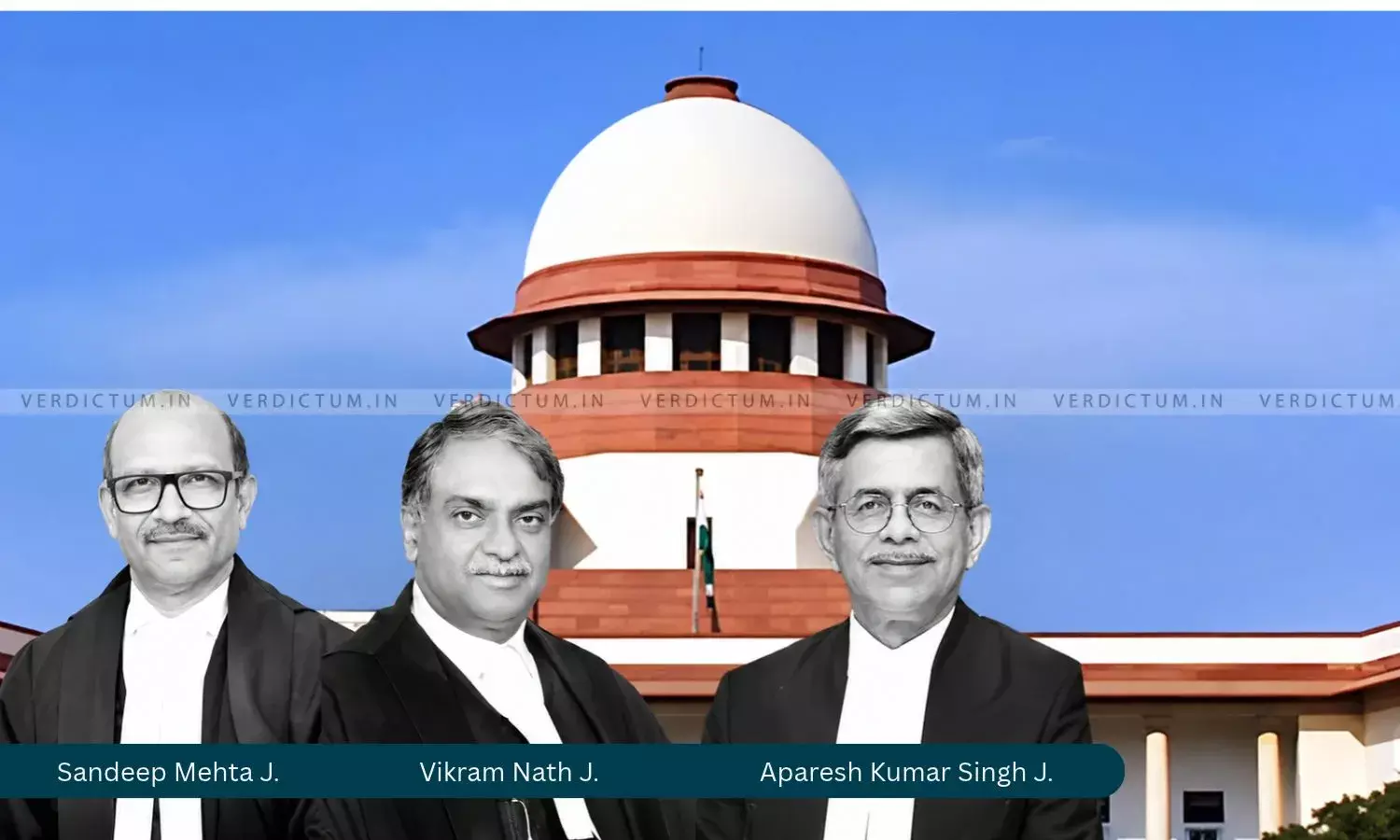
A Bench of Justice Vikram Nath, Justice Sandeep Mehta and Justice Aparesh Kumar Singh observed, “We hold that a person does not become entitled to compulsory insurance coverage under Section 147 merely because such person is neither the insured nor the insurer. The liability of an insurer under an Act Only Policy must be determined by reference to the risks which the MV Act requires to be insured. Where the risk falls outside such coverage, liability cannot be imposed unless the terms of the insurance policy otherwise provide for it. This conclusion settles the extent of the insurer's statutory and contractual liability.”.
Shirish K. Deshpande, AOR appeared for the petitioner while Amit Kumar Singh, AOR appeared for the respondent.
A man died after the Tata Sumo jeep in which he was returning from a wedding in April 2012 overturned. The owner was driving. His wife and two sons claimed compensation. The Tribunal at Latur found rash and negligent driving, found the vehicle was hired and no premium was paid for passenger cover, and awarded Rs. 7,79,800 with 7.5 per cent interest. It directed the insurer to pay and recover from the owner.
The Bombay High Court, Aurangabad Bench set that direction aside, holding the risk was not covered and Article 142 power was not available to the Tribunal or the High Court.
On the second question, the Court distinguished enlarging an insurer's liability from directing it to pay first while preserving recovery. Placing reliance on Shilpa Sailesh v. Varun Sreenivasan (2023), it said such a direction should ordinarily be considered only where the liability of the person responsible is judicially established, exceptional necessity exists, the direction is necessary and proportionate, and a hearing and recovery safeguards are provided. The power must not become "an alternative system of compulsory insurance", and it does not extend to Tribunals or High Courts.
Here, the owner's liability was established, over fourteen years had passed, and the first appellant said she was a widow without income. The Court affirmed that the insurer bears no statutory or contractual liability, but modified the High Court judgment. The insurer must pay the outstanding award with interest, after adjusting amounts received.
The Tribunal is to determine the amount within four weeks and the insurer must deposit it within eight weeks thereafter. The insurer may recover from the owner through execution before the Tribunal without a separate suit.
Cause Title: Sukumarbai and Others v. United India Insurance Company Ltd. and Another (Neutral Citation: 2026 INSC 1272)
Appearances:
Petitioners: Shirish K. Deshpande, AOR, Rucha Pravin Mandlik, Rishi Didwania, Muskan Garg, Gaurangi Patil, Rajesh Singh, Ram Shinde, Prem Reddy, Mohit Gautam, Trisha Arun Singh, Advocates.
Respondents: Amit Kumar Singh, AOR, K Enatoli Sema, Chubalemla Chang, Prang Newmai, Advocates.