

Supreme Court Stays Conviction Of Amit Jogi In Murder Case Of NCP Leader
The Court has issued notice to the CBI and stayed the operation of the Chhattisgarh High Court’s order that overturned the acquittal of Amit Jogi.

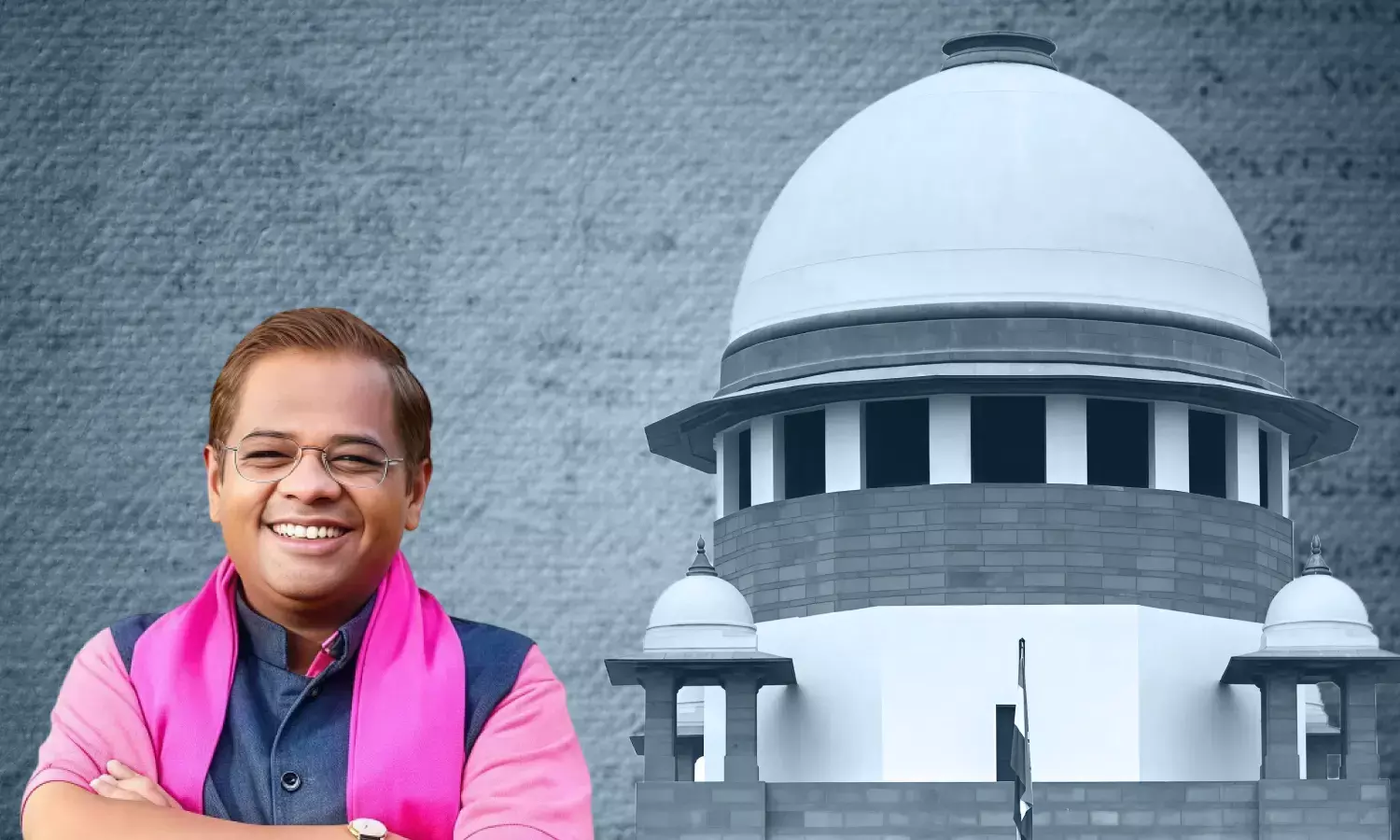
The Supreme Court of India has issued a notice to the Central Bureau of Investigation (CBI) and stayed the Chhattisgarh High Court’s judgment that had previously overturned the 2007 acquittal of Amit Jogi in the 2003 murder of NCP leader Ram Avtar Jaggi.
While the High Court had recently convicted Jogi and sentenced him to life imprisonment, labelling his original acquittal "perverse".
The Bench of Justice Vikram Nath, Justice Sandeep Mehta and Justice Vijay Bishnoi ordered, "Notice issued to CBI. Meanwhile, the operation of the impugned order shall remain stayed."
Senior Advocates Kapil Sibal and Mukul Rohatgi appeared for Amit Jogi, while Senior Advocates Siddharth Luthra and Gopal Sankarnarayan appeared for the Respondent-Complainant.
Before the Chhattisgarh High Court, an appeal was filed against the order acquitting Jogi of the charges framed under Sections 120-B(1), 302/34, and 427/34 of the Indian Penal Code.
It was the case of the CBI that NCP leader Ram Avtar Jaggi (the deceased) was shot dead on June 4, 2003, while traveling in his car in Raipur. Initially, the Moudhapara Police registered an FIR under Sections 447 and 307 of the IPC, which was later converted to Section 302 IPC after the victim succumbed to his injuries. The State Police first arrested five persons and filed a charge-sheet alleging that the murder was committed for the motive of robbery.
The investigation was later transferred to the CBI, which filed a supplementary charge-sheet against 31 accused persons. The CBI presented an entirely different motive, alleging that the murder was a political conspiracy to eliminate the deceased, who was organizing a major NCP rally seen as a threat to the then Chief Minister and his son, Amit Jogi. According to the CBI, the five persons initially arrested by the State Police were actually "imposters" set up by certain police officials to conduct a sham investigation.
The CBI alleged that the murder was carried out by Chiman Singh as part of a criminal conspiracy involving Amit Jogi and others. However, after considering the evidence on record, the learned Trial Judge acquitted Amit Jogi of all charges. Following this acquittal, the CBI filed a petition seeking leave to appeal, which the High Court of Chhattisgarh allowed on March 25, 2026.ion and cover up the real perpetrators.
The High Court held, "It is pertinent to note that the learned Trial Judge has unnecessarily attempted to distinguish the role of accused-Amit Jogi from that of the other co-accused/convicts. The finding that the co-accused acted independently to please Amit Jogi, without his knowledge, and in a manner not contemplated by him, is unsustainable. On the contrary, the evidence indicates that the plan to eliminate the NCP office bearers originated from Amit Jogi himself. Therefore, the distinction drawn by the learned Trial Judge is artificial, unwarranted, and devoid of merit."
The High Court observed that the trial judge unnecessarily attempted to distinguish Jogi's role from the other convicts, whereas the evidence holistically pointed toward him being the principal architect and mastermind of the conspiracy.
The High Court emphasized that Amit Jogi's commanding position as the son of the then-Chief Minister provided him with the influence necessary to orchestrate a sophisticated, high-level organized crime. This included managing police authorities to arrange for "imposters" to pose as the assailants and coordinating meetings across various locations, such as Batra House and the CM House. The Court found it unsustainable to suggest that co-accused acted independently to please Jogi without his knowledge, concluding instead that the plan to eliminate NCP office bearers originated from him personally.
Cause Title: Amit Jogi v. Central Bureau of Investigation and Ors. [SLP(Crl) No. 5776/2026]