

"Mistaken Identity": Supreme Court Acquits Sri Lankan Refugee In UAPA Case Wrongly Identified As Absconding LTTE-Accused
The Court held that the prosecution failed to establish that the appellant “Ranjan” was the same person as the absconding accused “Sri” in an LTTE revival conspiracy case under the UAPA, and found that the conviction was based on a fundamentally flawed identification process.
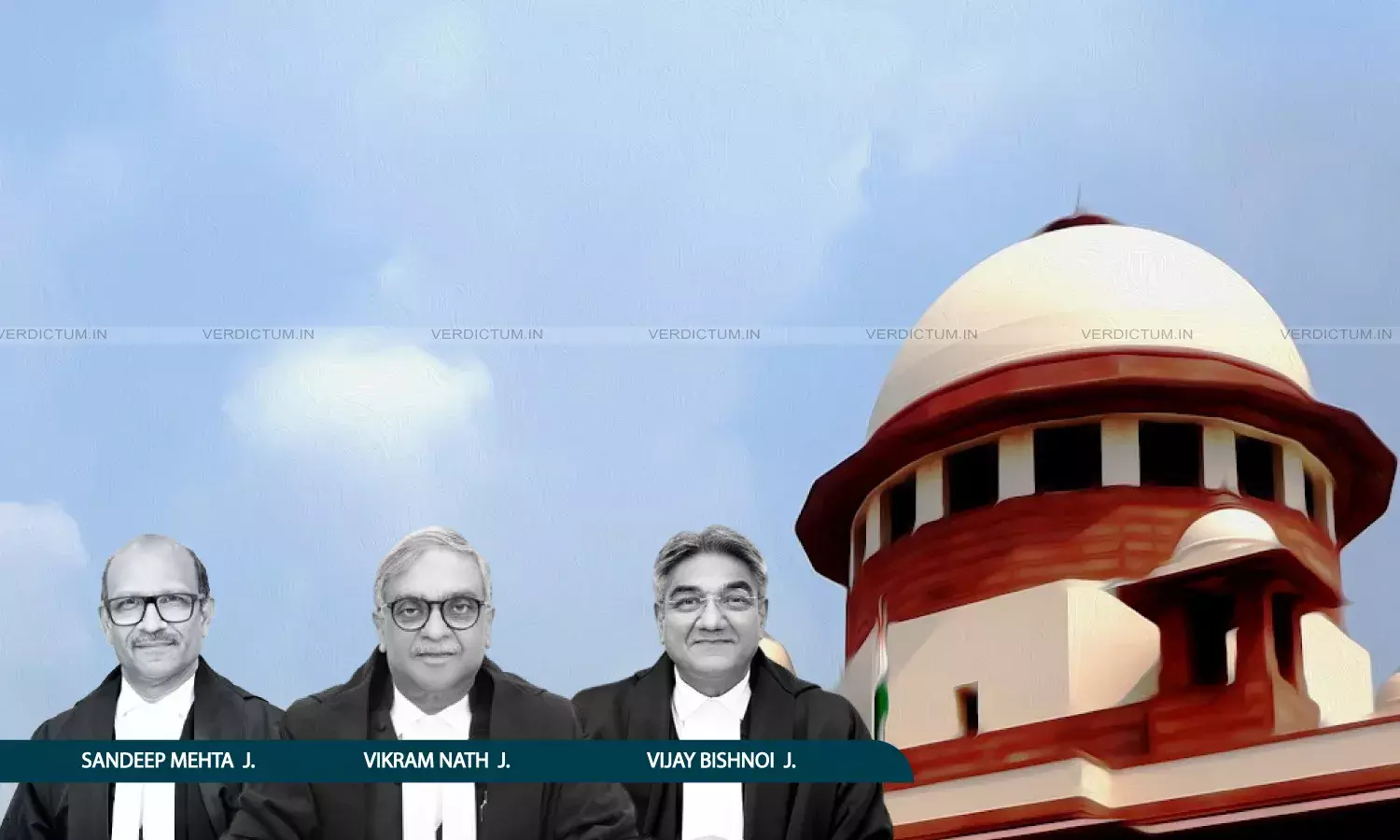
The Supreme Court has acquitted a Sri Lankan refugee who had been convicted under the Unlawful Activities (Prevention) Act, 1967 (UAPA), in an alleged conspiracy to revive the banned Liberation Tigers of Tamil Eelam (LTTE), holding that the prosecution had failed to prove that he was the absconding accused “Sri” named in the original FIR.
The Court found that the appellant, whose real name was recorded as “Ranjan” in official documents, had been falsely implicated based on “mistaken identity” through belated and unreliable witness testimonies.
The Court was hearing a criminal appeal challenging the judgment of the Madras High Court affirming the conviction of the appellant for offences under Sections 120B IPC, Sections 10(a)(i), 10(a)(iv) and 38(1) of the UAPA, Section 6 of the Poisons Act, Section 14(c) of the Foreigners Act and Section 3 read with Section 12(1)(a) of the Passport Act.
A Bench of Justice Vikram Nath, Justice Sandeep Mehta and Justice Vijay Bishnoi observed: “We are of the firm opinion that the Courts below erred in holding that the appellant-Ranjan is the same as the absconding accused ‘Sri’ (A-5), and the conviction based on this flawed identification cannot be sustained in the eyes of the law.”
The Bench further observed: “It is therefore clearly a case where the appellant has been falsely implicated by being assigned the identity of another person, namely, the so-called absconding accused ‘Sri’ (A-5).”
Background
According to the prosecution, a conspiracy had been hatched in 2015 by certain accused persons to revive the banned LTTE organisation and to send cyanide capsules and poisonous chemicals to Sri Lanka for eliminating persons allegedly responsible for the downfall of the LTTE.
The prosecution alleged that one accused named “Sri” had handed over cyanide capsules, GPS devices and poisonous substances to another accused for smuggling them into Sri Lanka.
The appellant, a Sri Lankan national, had arrived in India in 2009 along with his wife and son using a valid Sri Lankan passport and tourist visa. He thereafter registered himself as a non-camp refugee in Tamil Nadu and continued residing in Trichy for several years without any criminal complaint against him.
The appellant’s wife and son later relocated to Switzerland after obtaining asylum and citizenship there. The appellant also applied for a Swiss visa and was awaiting police clearance when he was arrested in 2021 by Q Branch officers on the allegation that he was actually the absconding accused “Sri” referred to in the 2015 FIR.
The appellant consistently maintained that he had never been known as “Sri” and that he had been falsely implicated due to mistaken identity.
The trial court convicted the appellant and sentenced him to multiple prison terms, including five years rigorous imprisonment for offences under the IPC and UAPA. The conviction was later affirmed by the Madras High Court.
Court’s Observation
The Supreme Court extensively analysed the prosecution evidence and found serious infirmities in the identification of the appellant as the absconding accused “Sri”. The Court noted that the entire prosecution case on identity rested solely upon the testimonies of two witnesses, both Sri Lankan refugees, who claimed that the appellant was also known as “Sri”.
However, the Court found that neither of these witnesses had ever stated in their earlier police statements or in previous trials that the alleged accused “Sri” was also known as “Ranjan”. The Bench observed: “This crucial assertion has surfaced only at a much later stage, thereby seriously denting the credibility of their version and creating substantial doubt regarding the identity of the appellant.”
The Court further found that both witnesses had admitted to possessing Aadhaar cards, PAN cards and other Indian identity documents despite not possessing Indian citizenship. The Bench expressed concern over the conduct of the investigating agency in failing to take action against these witnesses despite material indicating that they had procured documents portraying themselves as Indian citizens.
The Court observed: “This aspect, in itself, casts a serious doubt on the manner in which the investigation has proceeded.”
The Supreme Court also found the conduct of the witnesses “highly unnatural and suspicious” because despite allegedly witnessing the handing over of cyanide capsules and poisonous substances, they neither informed the police nor distanced themselves from the principal accused.
The Bench observed that both witnesses continued to provide shelter and support to the main accused even after allegedly learning about plans to revive LTTE activities. The Court further held that the testimonies of the witnesses contained “glaring contradictions and material improvements.”
The Bench observed: “The belated introduction of this name, years after the alleged incident, renders their testimonies highly suspect.”
The Supreme Court also rejected the reliance placed by the courts below on the evidence of the appellant’s landlady and neighbours. The Court noted that the landlady had categorically stated that there was no resident by the name “Sri” in her premises and that she knew the appellant only as “Ranjan”.
Similarly, the appellant’s neighbours had merely described ordinary neighbourhood interactions and had never stated that the appellant was known by the name “Sri”. The Court therefore concluded that these witnesses actually undermined the prosecution's case instead of corroborating it.
The Bench also found a complete absence of any documentary evidence connecting the appellant with the alleged absconding accused. The Investigating Officer himself admitted that the name “Ranjan” did not appear in any earlier proceedings, FIRs, chargesheets or investigation records relating to the absconding accused “Sri”.
The Court also found it significant that no Test Identification Parade had been conducted after the appellant’s arrest, despite the prosecution's case resting entirely on witness identification.
Referring to its earlier decision in Vishwanatha v. State of Karnataka (2024), the Court reiterated that where identity itself is doubtful and unsupported by corroborative material, conviction cannot be sustained merely on weak in-court identification.
The Supreme Court further found that the appellant had openly resided in Trichy for years after the alleged incident and had duly registered himself with local police authorities as a refugee.
The Bench found it implausible that an absconding accused in a serious UAPA case would openly approach the Swiss Embassy and local authorities seeking police clearance for relocation abroad. The Court observed: “This conduct is wholly inconsistent with the prosecution’s case and is entirely consistent with the conduct of an innocent person going about his routine life.”
The Supreme Court also made strong observations against the investigating agency and noted that no material had been placed on record to show what steps had actually been taken to trace the real absconding accused “Sri”. The Bench observed: “Such inaction and indolence on the part of the investigating agency casts a serious doubt on the bona fides of its conduct.”
Conclusion
The Supreme Court held that the appellant had been falsely implicated in the LTTE-UAPA case due to mistaken identity and that there was no reliable evidence connecting him with the alleged conspiracy.
The Court accordingly set aside the judgments of the trial court and the Madras High Court and acquitted the appellant of all charges.
The Court further directed that the appellant be released forthwith from the Special Camp at Trichy and permitted him to pursue his request for relocation to Switzerland in accordance with the law.
Cause Title: Sri v. State Rep. by the Inspector of Police, Q Branch, Ramanathapuram, Tamil Nadu (Neutral Citation: 2026 INSC 516)
