

Supreme Court Reserves Order On Sucheta Dalal's Plea For Centralised Database Of Unclaimed Funds Of Deceased Account Holders
The Centre, RBI and SEBI told the Court that portals, faster claim rules and a nationwide campaign have already returned over Rs 6,453 crore to rightful owners.

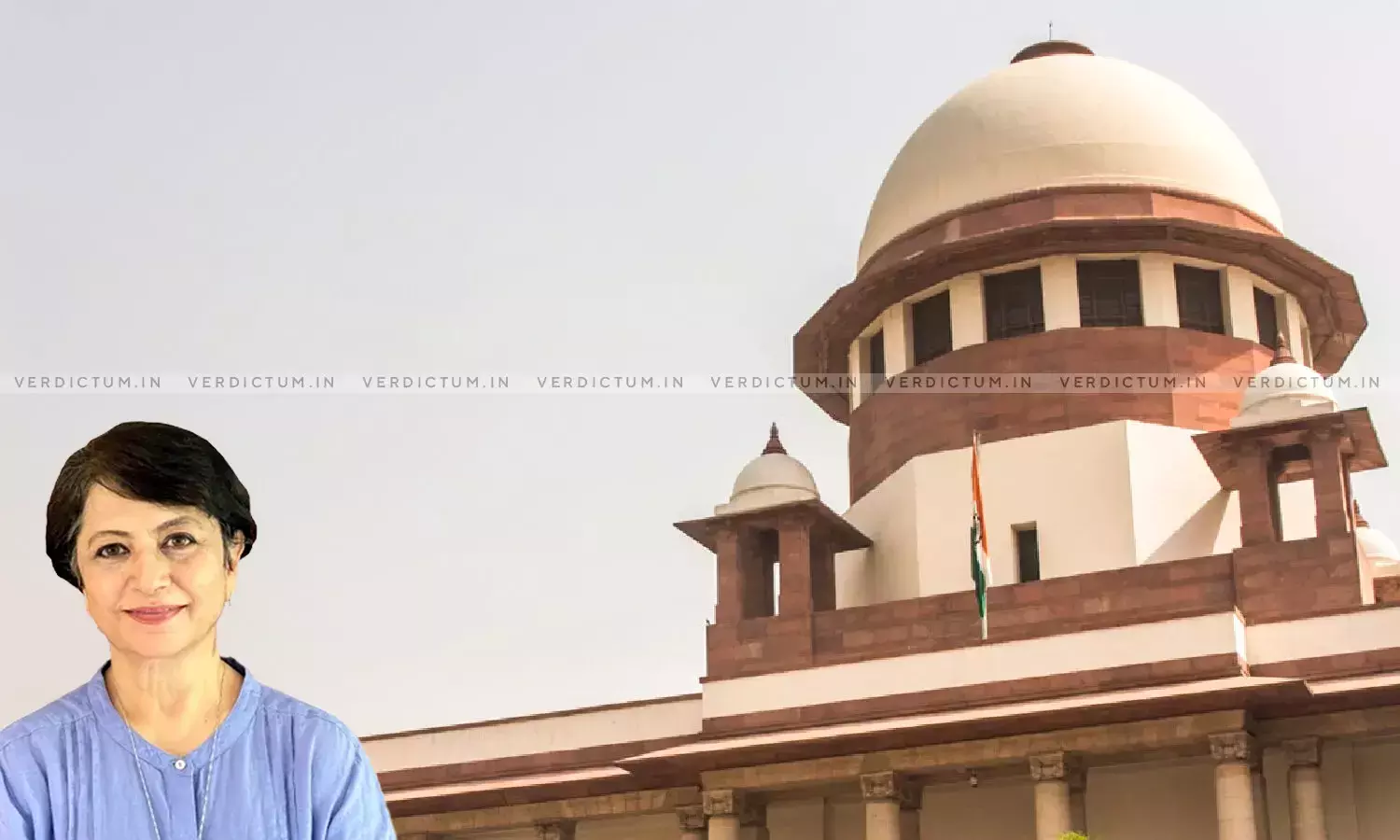
The Supreme Court reserved its order on a plea by journalist Sucheta Dalal seeking a centralised database of bank accounts, insurance, post office funds and other money left by deceased account holders, along with a simple procedure for legal heirs to claim it.
The Centre and the financial regulators told the Court that the petition has already been acted on.
A Bench of Justice Vikram Nath and Justice R Mahadevan heard and reserved the matter for orders.
Advocate Prashant Bhushan appeared for the petitioner, Additional Solicitor General N Venkataraman for the Centre and Senior Advocate Dama Seshadri Naidu for the Reserve Bank of India.
The Supreme Court had earlier issued notice on the plea to the Ministry of Finance, RBI, SEBI and others. The petition said the money in the Depositor Education and Awareness Fund (DEAF) grew from Rs 18,381 crore at the end of March 2019 to Rs 39,264.25 crore at the end of March 2021.
It asked for a centralised online database under RBI’s control with the name, address and last transaction date of each deceased account holder, so that legal heirs can find unclaimed money without long and difficult litigation.
Bhushan told the Bench that unclaimed money ends up in three different funds. Bank accounts go to the DEAF. Securities such as shares and mutual funds go to the Investor Education and Protection Fund (IEPF). Post office, insurance and provident fund accounts go to the Senior Citizens’ Welfare Fund.
“When somebody dies, and nobody comes to claim, because sometimes the heirs don’t even know where their parents’ funds are lying, they don’t know whether they have invested in shares,” he said. He relied on the recommendations of an expert committee that the Supreme Court had appointed in an earlier case.
ASG Venkataraman said the money moves into these funds under the law, through the Companies Act and the Banking Regulation Act. He said, “It’s not that we have taken some money and gone somewhere… The grievance was you do better visibility, better access, and put it in your portal so that people who don’t have the details from their own parents can access the site and do it.”
Bhushan said only 10% of the money had been refunded so far. He acknowledged progress but said it was not enough. He added, “No doubt that there is some movement in the right direction. But, my Lord, that movement is not adequate.”
The ASG disputed this, saying that only about 10% of the claims were pending.
For the Ministry of Corporate Affairs, which runs the IEPF Authority, the ASG referred to Section 124 of the Companies Act and Rule 5(8) of the IEPF Rules. Under these, every company must file Form IEPF-2, giving the names and last known addresses of the people entitled to the money, the nature and amount of what they are owed, and the date it is due to be transferred to the IEPF.
He read from the Ministry’s additional affidavit. According to it, the MCA system now lets the public search the statements of unclaimed and unpaid amounts that companies file, along with the details of each company’s nodal officer. The IEPF Refund Rules, 2016 were amended and claims moved from version 2 to version 3 of the MCA system, so the process is now fully digital. In August 2025, the IEPF Authority launched an integrated portal that brings together three systems that used to work separately. Once a claim is approved, the portal transfers the shares and dividends automatically.
The ASG said Prayer A of the petition, which asks for a centralised database, had “exactly” been met as far as the MCA is concerned.
The ASG also referred to the nationwide campaign “Aapki Poonji, Aapka Adhikar”, launched on 4 October 2025 from Gandhinagar. The campaign was built on “three A’s: awareness, access, and action” and held camps in 748 districts over 10 phases. As of 18 April 2026, Rs 6,453 crore had been returned to rightful owners.
The ASG noted that the Ministry of Social Justice, which handles the Senior Citizens’ Welfare Fund, has not been made a party. He said that fund works the same way, and asked the Court to close the matter.
Senior Advocate Dama Seshadri Naidu, appearing for RBI, said the bank had filed an additional affidavit on 28 April 2026, as the Court directed on 17 March 2026. The petitioner had complained that few banks had joined the UDGAM (Unclaimed Deposits Gateway to Access inforMation) portal and that it was hard to use.
“It’s an ongoing process. People are accessing it. If anybody feels there should be any modification, we are open to have that one done,” Naidu said. He added that Rs 4,777 crore of unclaimed deposits was transferred to banks in 2025-26.
After hearing the parties, the Bench reserved its order.
Cause Title: Sucheta Dalal v. Union of India & Ors. [W.P.(C) No. 185/2022]