

Supreme Court Reserves Order On Sambhal Jama Masjid Committee's Plea Challenging Mosque Survey
The Court also heard arguments on whether the prohibition against altering the religious character of a site under the Places of Worship Act applies to structures governed by the Ancient Monuments Preservation Act.

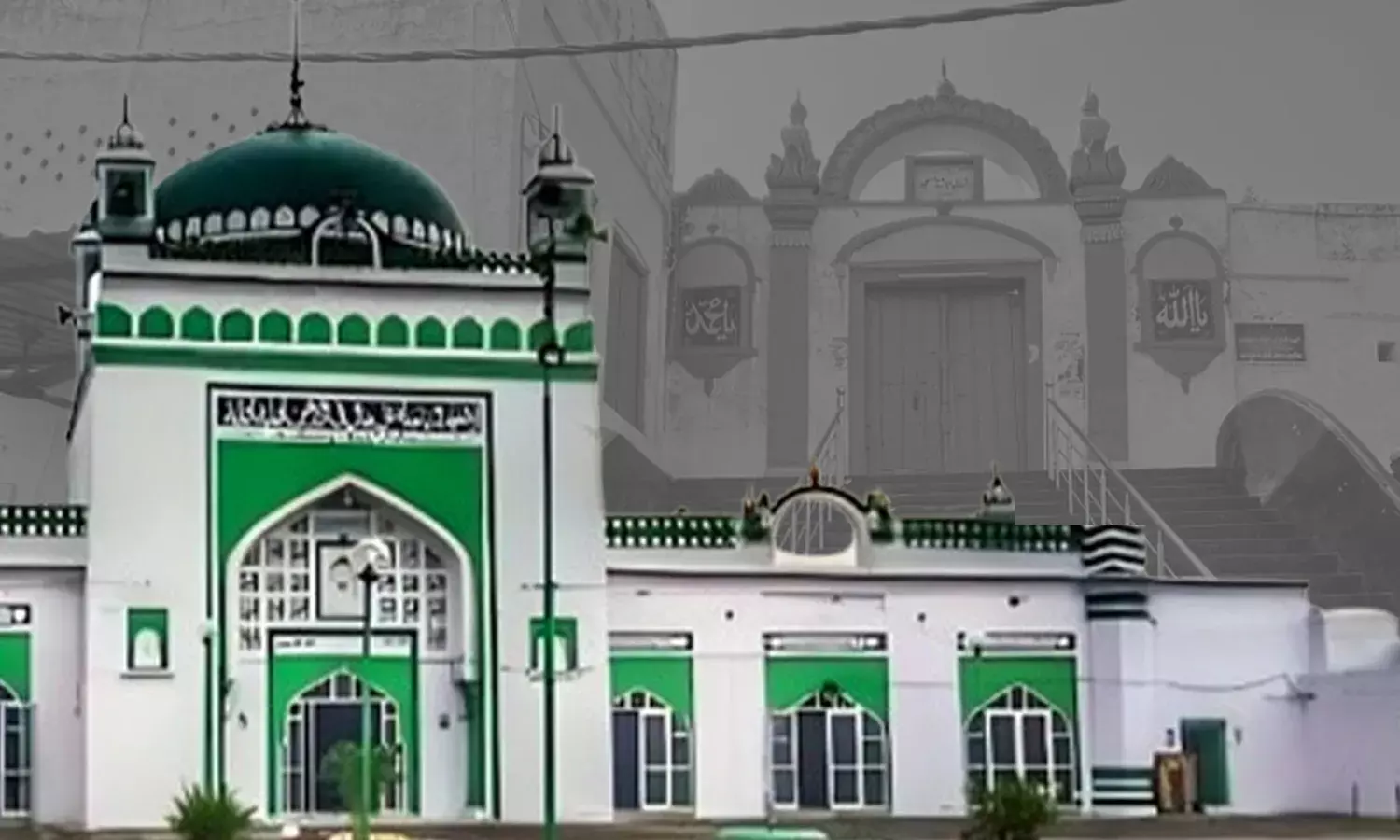
The Supreme Court has reserved its order on a petition filed by the Sambhal Jama Masjid Committee, which impugned the order passed by the Allahabad High Court directing the appointment of an Advocate Commissioner to conduct a survey of the mosque.
The suit alleged that the religious structure was constructed after demolishing a Hindu temple.
The main issue was whether the Places of Worship (Special Provisions) Act, 1991, which the plaintiffs claim to be the Sri Harihar Temple, and whether the statutory bar against changing the religious character of a site applies to monuments protected under the Ancient Monuments Preservation Act.
The Bench of Justice PS Narasimha and Justice Alok Aradhe heard the matter at length and reserved the judgment.
Senior Advocate Huzefa Ahmadi and Advocate Nizam Pasha for the Management Committee of the Masjid, Advocate Hari Shankar Jain appeared for the Plaintiffs, and Additional Solicitor General KM Nataraj appeared for the State of Uttar Pradesh
ASG K.M. Nataraj submitted that the State remained neutral on the merits, as the main suit was not pending before the Supreme Court, but was bound to protect the religious rights of both communities. He clarified that the suit was at a nascent stage with no application filed under Order VII Rule 11 of the Code of Civil Procedure (CPC).
He highlighted that Section 2(b) of the Places of Worship Act, 1991, defines "conversion" to include alterations, while Section 3 imposes a strict prohibition on changing the character of any place of worship. He added that the scope of "religious denomination" under Article 26 of the Constitution awaited authoritative interpretation by a nine-judge Bench.
The ASG argued that under Section 4(2), pending suits abate only if they relate to conversion, meaning proceedings not seeking conversion faced no statutory bar.
Advocate Vishnu Shankar Jain submitted that the subject monument was declared protected under the Ancient Monuments Act in 1920, placing it under the 1958 Act regime. Citing the Bhojshala case, he argued that the Supreme Court’s decision to remand that matter to the High Court demonstrated that the Places of Worship Act did not create an absolute bar.
Senior Counsel Hufeza Ahmadi argued that Section 3 of the Act imposes an overarching, independent bar on converting any place of worship, irrespective of religious denomination or the long title of the Act. He clarified that while Section 4(3)(a) exempts ancient monuments from the abatement provisions under Section 4, it does not exempt them from the core prohibition against conversion under Section 3.
It was the case of the Respondents that Sri Harihar Temple, dedicated to Lord Kalki in the heart of the city of Sambhal, is being forcibly and unlawfully used by the committee known as the Jami Masjid Committee, Sambhal.
Earlier, on April 1, 2025, the Supreme Court refused to entertain a plea challenging an Allahabad High Court order that asked the Archaeological Survey of India to whitewash the Mughal-era Jama Masjid in Uttar Pradesh's Sambhal district.
On January 10, 2025, the Court also intervened in the dispute over a well near the Jama Masjid in Sambhal and directed that no Municipality notices related to the well be given effect to until further orders.
The Court had also asked the management of Sambhal district's Shahi Jama Masjid to move the Allahabad High Court to challenge a Civil Court's Order to hold a survey of the mosque, while also asking the Civil Court to not proceed with the matter till the High Court hears it.
A civil suit was instituted in the same Court seeking an injunction against the management of the mosque to not create any hurdle in the access to the mosque, which the plaintiff termed as a temple.
The petition filed by the management of the mosque urges attention to the fact that the Civil Court heard the matter ex-parte and on the same day, appointed an Advocate Commissioner to hold a survey, which too was conducted on that day itself in heavy police presence.
On the intervening night of November 23 and 24, the management was informed that a second survey was to be conducted. This was held early morning on November 24, and led to communal violence in the area, resulting in the deaths of six people.
In the petition, the mosque management said the "rampant ordering of surveys where belated claims on mosques are made is emerging as a pattern". It prayed that surveys in cases where belated claims are filed against places of worship should not be ordered and executed as a matter of course in cases involving disputes between two communities over places of worship without hearing the defendants and allowing sufficient time to the aggrieved persons to seek judicial remedies against the Order of survey.
Cause Title: Committee Of Management, Jami Masjid Sambhal, Ahmed Marg Kot V. Hari Shankar Jain And Ors. ( SLP(C) No. 21599/2025)