

“Judicial Directions Not A Burden To Be Resisted”: Supreme Court Imposes Costs On Uttar Pradesh Government For 13-Year Delay In Compliance
The Supreme Court held that the State had failed to implement clear judicial directions concerning the appointment of Auxiliary Nurse Midwives for over thirteen years, compelling the affected employees to engage in prolonged litigation to secure service benefits that ought to have been granted within six weeks.
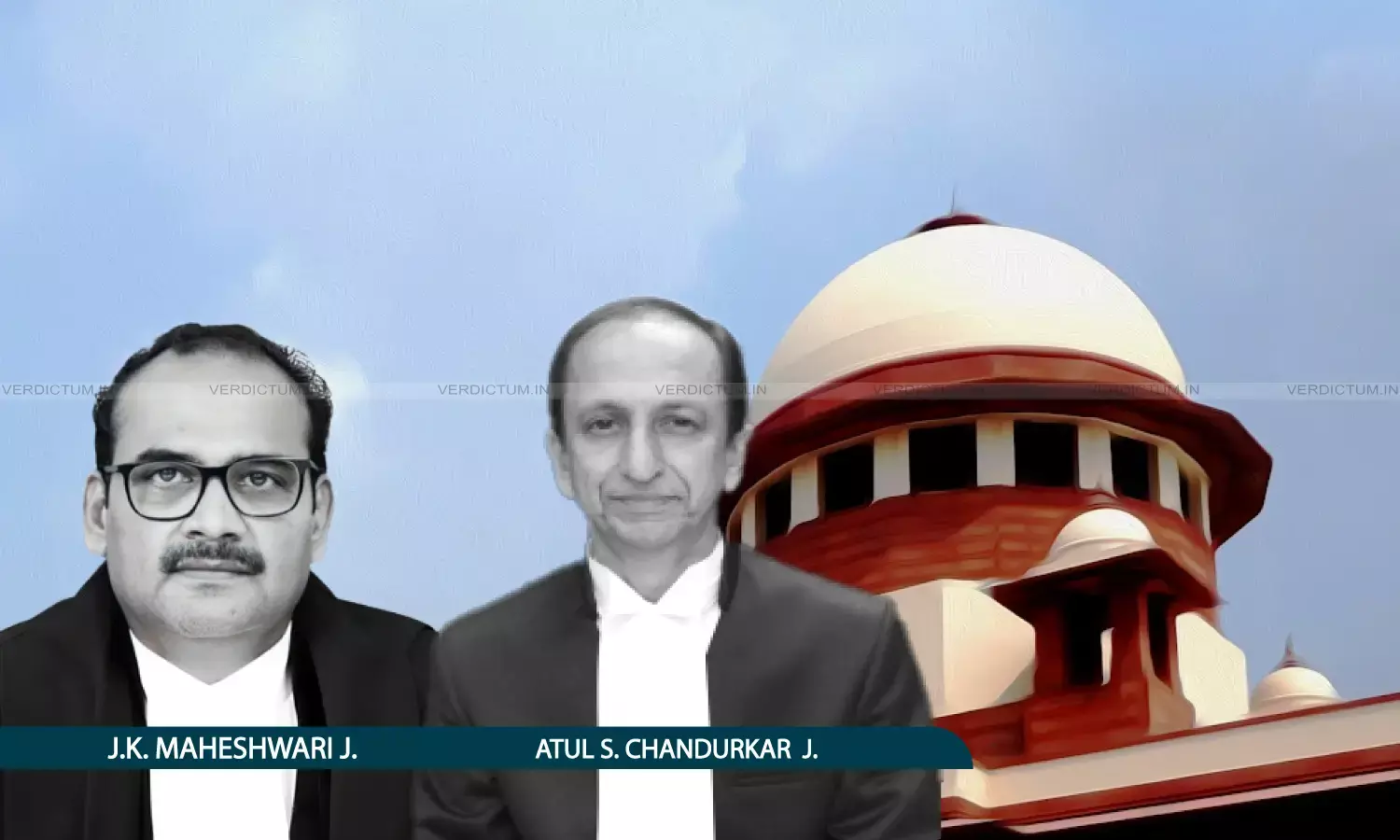
The Supreme Court has imposed symbolic costs of ₹1 lakh on the State of Uttar Pradesh after finding that judicial directions issued in 2013 regarding the appointment of Auxiliary Nurse Midwives (ANMs) as Basic Health Workers (Female) remained unimplemented for over thirteen years.
Observing that compliance with judicial orders is a constitutional obligation and not a burden to be resisted, the Court criticised the prolonged non-compliance which forced the affected employees to litigate for more than a decade to secure their service rights.
The Court was hearing appeals arising out of the dismissal of contempt petitions filed by ANMs who had obtained favourable directions from the Allahabad High Court in 2013 for consideration and appointment as Basic Health Workers (Female).
Although the directions had attained finality after dismissal of the State's challenges, the appointments were not made, resulting in contempt proceedings and further litigation before the Supreme Court.
A Bench of Justice J.K. Maheshwari and Justice Atul S. Chandurkar observed: “We therefore call upon the State of Uttar Pradesh and commend this as a general principle to all State governments and public authorities, to treat compliance with judicial directions not as a burden to be resisted or delayed, but as a constitutional obligation to be discharged promptly, particularly when the directions concern the service rights of employees.”
Advocates Mrigank Prabhakar appeared for the appellants, while Additional Advocate General Ajay Agrawal appeared for the State of Uttar Pradesh.
Background
The dispute originated from a batch of writ petitions concerning Auxiliary Nurse Midwives who had been serving on a contractual basis and sought appointment as Basic Health Workers (Female). By judgment dated 01.02.2013, the Allahabad High Court directed the State to consider the petitioners for appointment against existing vacancies, grant necessary relaxation in qualifications and age, and accord them preference over outside candidates.
A review order dated 21.10.2013 further clarified that similarly situated candidates who had completed training under earlier eligibility conditions were also entitled to consideration. These directions subsequently attained finality.
Despite the finality of the directions, the appointments were not made. The affected candidates initiated contempt proceedings alleging non-compliance. However, the High Court dismissed the contempt petitions in 2018, holding that the State had considered the candidates and that no wilful disobedience was made out. Aggrieved thereby, the appellants approached the Supreme Court.
Court's Observations
The Supreme Court held that the High Court had misconstrued its earlier directions. The Bench observed that the original directions clearly required preference to be accorded to the appellants and similarly situated candidates before appointments could be offered to outside candidates.
The Court noted that the State improperly placed the appellants and outside candidates in a common merit pool, thereby defeating the purpose of the directions.
The Bench observed: “The Direction No. 5 can be read only to mean that the appellants and similarly situated candidates would first be appointed against existing vacancies, and the residual vacancies only, if any, left would go to outside candidates.”
The Court found that the explanation offered by the State proceeded on a fundamentally incorrect understanding of the earlier judicial directions.
The Bench held: “The High Court also accepted the explanation, contained in the order of the Director General, Family Welfare dated 04.01.2018, as sufficient compliance. The said explanation was premised on the erroneous understanding that the appellants were to be evaluated in competition with outside candidates on merit.”
According to the Court, the State's conduct was not a mere error in understanding but a departure from unambiguous directions.
The Supreme Court emphasised that contempt jurisdiction exists to secure compliance with final judicial directions and cannot be defeated by an authority's self-serving interpretation of a clear order.
The Court observed: “The directions of 01.02.2013, read with the review order of 21.10.2013, are, as we have held above, clear and unambiguous. The State's years-long failure to implement them may be termed as willful non-compliance.”
The Bench further clarified that the principle protecting bona fide errors of interpretation applies only where judicial directions are genuinely ambiguous and capable of multiple meanings, which was not the situation in the present case.
During the pendency of the appeals, the Supreme Court directed the State to report compliance. Thereafter, appointment orders were issued to the appellants and similarly situated candidates. The State informed the Court that appointment orders had been issued to 181 out of 195 candidates, while others were either deceased, not similarly situated, or had failed to participate in verification proceedings. The Court was ultimately informed that all appellants had received their appointment letters.
Taking note of the compliance, the Court declined to pursue a punitive contempt action and observed that the primary purpose of contempt jurisdiction is to secure obedience to judicial orders rather than to punish.
Expressing serious concern over the thirteen-year delay, the Court underscored that the State occupies a position of trust vis-à-vis its employees and is expected to honour judicial orders promptly.
The Bench observed: “The State being a model employer, occupies a position of trust vis-à-vis its employees. It is not merely a litigating party that this Court has repeatedly affirmed. A model employer is expected to honour court orders not because it has no choice but respecting the rule of law and the legitimate claims of those who serve it.”
The Court further remarked: “Every year of delay meant a year of lost seniority, lost emoluments, and lost dignity for these women. The human cost of institutional non-compliance is rarely counted, but it is real, and it is heavy.”
Accordingly, the Bench Concluded: " Appropriate administrative mechanisms must be put in place to ensure that directions of courts are monitored, tracked, and complied with within the time prescribed by the court. The State is expected to take note of the same and institute a framework to fix accountability on erring officials whose non-compliance results in obstruction in access to justice. Therefore, this order be communicated to the highest administrative authorities for introspection, and the immediate development of the necessary compliance mechanism".
Conclusion
Allowing the appeals, the Supreme Court set aside the Allahabad High Court's order dismissing the contempt petitions. Taking note of the belated compliance achieved during the pendency of the proceedings, the Court dispensed with the personal appearance of the officials concerned and directed the appellants to join their duties at their designated places of posting.
The Court further directed the State authorities to facilitate their joining without creating any additional procedural hurdles. While closing the proceedings, the Court imposed symbolic costs of ₹1 lakh on the State of Uttar Pradesh, directing that the amount be deposited with the State Legal Services Authority within eight weeks for utilisation towards the welfare of women and children.
Cause Title: Reena Kumari & Ors. v. Praveer Kumar & Ors. (Neutral Citation: 2026 INSC 642)
Appearances
Appellants: Mrigank Prabhakar, AOR; Manoj K. Mishra, AOR.
Respondents: Ajay Agrawal, Additional Advocate General, with Vishwa Pal Singh, AOR and others.
