

Suit For Possession Simpliciter Not Maintainable Where Serious Dispute Casts A Cloud Over Plaintiff’s Title: Supreme Court
The Bench noted that an agreement to sell confers no title without a registered sale deed; allottee who abandoned the construction covenant by letter, and his heirs, are estopped.

The Supreme Court has held that a plaintiff whose title is clouded by a registered sale deed in the defendant’s favour cannot rely on a bare prayer for possession. Where the defendant raises a serious and concrete challenge to title, the plaintiff must seek a substantive declaration, such as cancellation of the deed or specific performance.
The Court also reiterated that an agreement to sell creates no interest in immovable property, and that only a registered sale deed conveys title. It held that an allottee who, by his own letter, admitted inability to perform a mandatory construction covenant and asked for the plot to be transferred to another cannot later resile from that stand. His heirs are equally estopped.
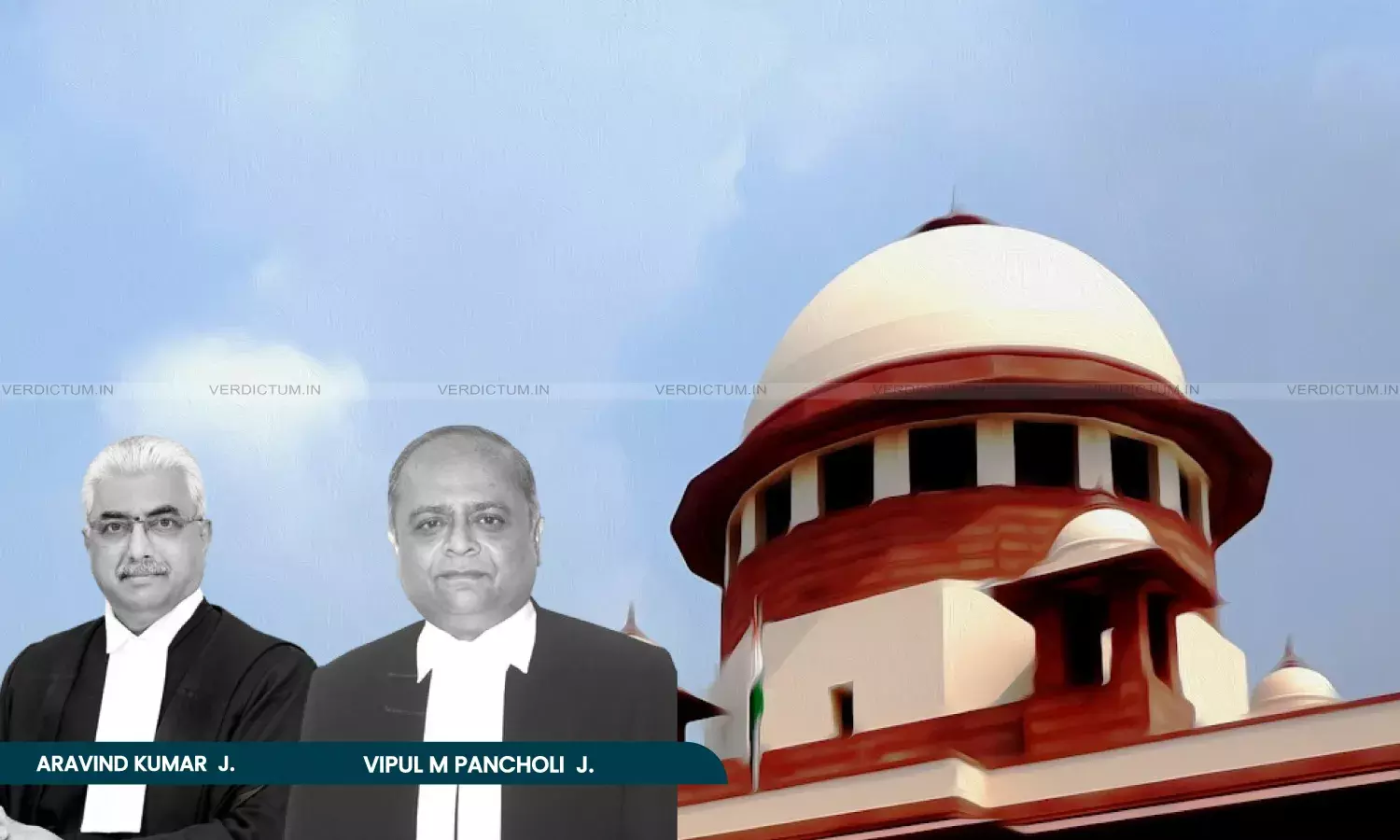
A Bench of Justice Aravind Kumar and Justice Vipul M. Pancholi observed, “We are unable to subscribe to the reasoning of the Trial Court ruling that the Plaintiffs’ suit for possession was maintainable. In our opinion, a suit for possession simpliciter is not maintainable where there is serious, concrete dispute casting a cloud over the plaintiff's title, necessitating a substantive prayer for declaration”.
Advocate Vineet Jhanji appeared for the appellant and Senior Advocates V. Raghavachari Acharya, Chinmoy Pradeep Sharma appeared for the respondents.
The dispute concerned Plot No. 8, Friends Colony, New Delhi, measuring about 4,132 square yards. A cooperative housing society had agreed to sell the plot to Sohan Singh, on condition that he construct a house within three years, failing which he would lose the right to a sale. Before that period expired, he wrote to the society asking that the plot be transferred to Gurbax Singh, whom he described as his nephew. The society complied. Gurbax Singh took possession, built a house at his own cost, and received a registered sale deed in 1960.
Sohan Singh’s heirs filed a suit for possession in 1975 without seeking cancellation of the sale deed or specific performance. The Trial Court held the suit maintainable and within limitation but dismissed it on estoppel. The Delhi High Court affirmed, holding the suit barred by limitation and rejecting the plea of part-performance under Section 53A of the Transfer of Property Act, 1882. The heirs then approached the Supreme Court.
On limitation, the Court held the suit barred under Articles 54, 59 and 64 of the Limitation Act, 1963, even if time were reckoned from the plaintiffs’ own date of knowledge. It found no dispossession, as the plot was handed over on Sohan Singh’s own request.
On maintainability, relying on Anathula Sudhakar v. P. Buchi Reddy (Dead) by Lrs. And Others; (2008) 4 SCC 594, the Court held that the registered sale deed cast a clear cloud on the plaintiffs’ title, so a declaration was necessary. It held that the agreement to sell, never followed by a registered sale deed, conferred no title.
The four ingredients of Section 115 of the Evidence Act were satisfied by Sohan Singh’s letter, and his conduct also amounted to direct acquiescence. Section 53A was unavailable because the plaintiffs were out of possession and Sohan Singh was not ready and willing to perform. The Court declined to examine the fraud allegation, finding no cogent evidence.
The Court upheld the High Court’s judgment, dismissed the appeal, disposed of pending applications, and made no order as to costs.
Cause Title: Rano Singh and Others v. Gurbax Singh (D) Th LRs and Others (Neutral Citation: 2026 INSC 1137)
Appearances:
Appellant: Vineet Jhanji, Jyoti Mendiratta, AOR, Imran Moulaey, Ananya Bas, Advocates.
Respondent: V. Raghavachari Acharya, Sr. Adv., Chinmoy Pradeep Sharma, Sr. Adv, Sumeet Lall- 1619, AOR, Kunal Sinha, Nicholas Choudhury, Sidhant Kapoor, Palak Rawat, Vanshika Ashu, Prasouk Jain, Rabiya Singh Thakur, Shalini Nair, Abhishek Wadhwani, Vijay Deora, Irfan Hasier, Aditya Agarwal, Samarth Goel, Aashna Gill- 3840, AOR, Advocates.