Income-Tax Reassessment Without Section 143(2) Notice Is Invalid; Assessee’s Participation Cannot Cure Its Absence: Supreme Court
The Court held that Section 292BB of the Income Tax Act cures defects in the service of an issued notice, but cannot save reassessment proceedings where the mandatory notice was never issued. A letter under Section 142(1) is not a substitute for such notice.
The Supreme Court has held that an Assessing Officer cannot undertake reassessment under Section 143(3), read with Section 147 of the Income Tax Act, 1961, without issuing a notice under Section 143(2).
The Court further ruled that an assessee’s participation in the proceedings does not confer jurisdiction upon the Assessing Officer or cure the complete absence of the mandatory notice.
The Court was hearing connected civil appeals filed by the Revenue against orders of the Orissa High Court affirming the Income Tax Appellate Tribunal’s decision to set aside reassessment orders concerning Orissa Mining Corporation Limited and another assessee.
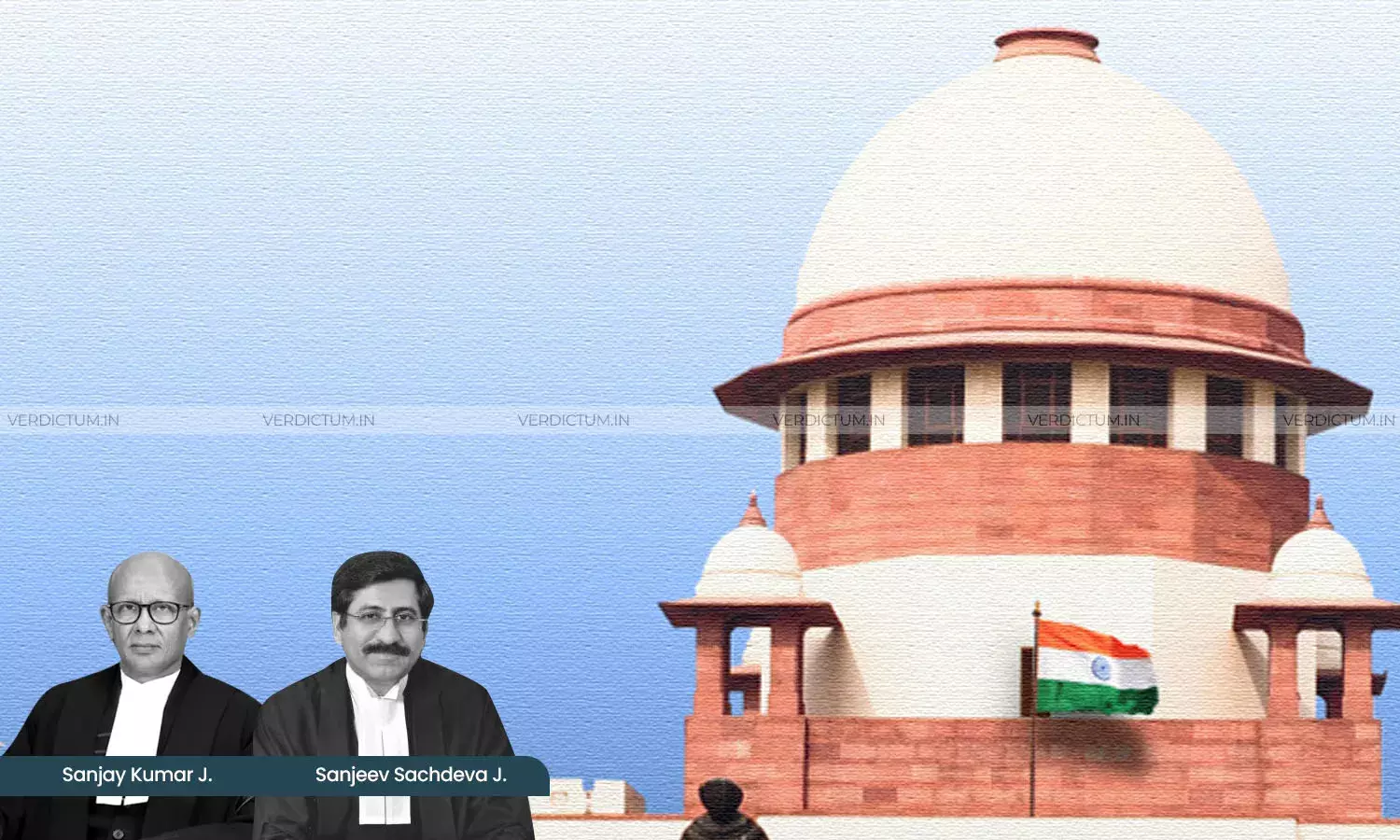
A Bench of Justice Sanjay Kumar and Justice Sanjeev Sachdeva observed: “The Assessing Officer cannot undertake the proceedings of reassessment under Section 143(3), read with Section 147 of the Act, unless a notice under Section 143(2) of the Act has been issued to the Assessee. Mere participation of the Assessee in the assessment proceedings, in the absence of a notice under Section 143(2) of the Act, does not confer jurisdiction on the Assessing Officer to frame an assessment under Section 143(3) of the Act.”
Senior Advocate Nisha Bagchi appeared for the Revenue, while Senior Advocate Ashok Panigrahi appeared for the assessees.
Background
The assessees had filed returns under Section 139 of the Income Tax Act for the relevant assessment years. Their returns were assessed and orders were passed under Section 143(3). The Revenue subsequently reopened the assessments under Section 147 by issuing notices under Section 148.
Orissa Mining Corporation requested that its previously filed return be treated as the return filed in response to the Section 148 notice. The other assessee refiled the same return. The Assessing Officer did not issue notices under Section 143(2), but issued notices under Section 142(1) seeking documents and stock information before framing the reassessment orders.
The Commissioner of Income Tax (Appeals) rejected the assessees’ objection concerning the absence of Section 143(2) notices. The appellate authority reasoned that they had participated in the proceedings after receiving notices under Sections 148 and 142(1) and could not raise the objection at the appellate stage.
The Income Tax Appellate Tribunal set aside the reassessment orders after holding that the proceedings were vitiated by the absence of Section 143(2) notices. The High Court upheld that decision, leading the Revenue to approach the Supreme Court.
Court’s Observations
Section 143(2) Notice Is Mandatory For Reassessment
The Court referred to Assistant Commissioner of Income Tax v. Hotel Blue Moon (2010), which held that an Assessing Officer intending to undertake an inquiry must comply with Sections 142, 143(2) and 143(3). The Bench observed that the omission to issue the prescribed notice was not a curable procedural irregularity.
The Court stated: “A notice under Section 143(2) of the Act is mandatory, as it grants the Assessee an opportunity to produce or cause to be produced any evidence or particulars based on which the Assessee claims relief. A notice under section 143(2) of the Act is sine qua non for a proceeding for reassessment under Section 147 of the Act. In the absence of a notice under Section 143(2) of the Act, no further proceedings can be undertaken by the Revenue.”
The Bench noted that the Revenue admitted that no Section 143(2) notice had been issued for any of the relevant assessment years. It consequently held that the Assessing Officer lacked the jurisdiction to frame the reassessments.
Section 292BB Cannot Cure Complete Absence Of Notice
The Revenue relied on Section 292BB, which deems a notice to have been properly served where an assessee participates in assessment or reassessment proceedings without raising an objection before their completion.
The Court held, however, that this deeming provision applies only where the Revenue claims to have issued a notice. It can cure objections regarding its service, timely service or manner of service, but cannot create a notice that was never issued.
The Bench observed: “Such a deeming fiction can come into play only if notice is alleged to have been sent by the Revenue. Only when the Revenue contends that a notice, as required under the Act has been sent, the Assessee who has participated in the proceedings or inquiry relating to assessment or reassessment, pursuant to the notice would be precluded from taking any objection that the notice was not served upon him, or was not served in time, or that the service of notice was not proper. Said deeming fiction cannot come into play where the Revenue has admittedly not even issued the notice. Where the Revenue itself contends that no notice was sent, as required under the Act, the provision of Section 292BB will have no applicability.”
Referring to Commissioner of Income Tax v. Laxman Das Khandelwal (2021), the Court reiterated that Section 292BB validates service affected by certain infirmities when the assessee participates in the proceedings. It does not save the complete non-issuance of a notice under Section 143(2).
Reliance On Earlier Return Does Not Dispense With Notice
The Court rejected the contention that a Section 143(2) notice was unnecessary because the assessees had relied upon their earlier returns instead of filing fresh returns in response to the notices under Section 148.
The Bench held that an assessee may request that the return previously filed under Section 139 be treated as the return submitted in response to a Section 148 notice. The assessee is not required to physically refile a copy of the same return.
The Court stated: “If the Assessee seeks to reiterate its earlier Return of Income, it is not necessary for the Assessee to refile a copy of its earlier Return of Income. In the present case, the Assessees have chosen not to file a fresh return and have reiterated their Return of Income already filed. Thus, the obligation on the Revenue to issue a notice under Section 143(2) of the Act, requiring the Assessee to produce evidence on which the Assessee seeks to rely on in support of the Return of Income, cannot be dispensed with.”
Section 142(1) Letter Is Not A Substitute
The Court further rejected the Revenue’s contention that a letter issued under Section 142(1), requiring the assessees to explain the grounds for the proposed reassessment, sufficiently complied with Section 143(2).
The Bench held: “A letter given by the Assessing Officer under section 142(1) of the Act during the course of reassessment proceedings would not satisfy the requirements of a notice under section 143(2) of the Act. A notice under section 143(2) of the Act is a sine qua non for commencing the proceedings. A letter issued after commencing the proceedings would not cover up the lacuna in the proceedings and would not validate what is non est.”
Conclusion
The Supreme Court upheld the Income Tax Appellate Tribunal’s finding, as affirmed by the Orissa High Court, that the reassessment proceedings were vitiated by the failure to issue mandatory notices under Section 143(2).
The Court dismissed the Revenue’s appeals and held that neither the assessees’ participation, their reliance upon previously filed returns nor the issuance of letters under Section 142(1) cured the jurisdictional defect. Pending applications were also disposed of.
Cause Title: Principal Commissioner of Income Tax, Bhubaneshwar v. Orissa Mining Corporation Ltd. (Neutral Citation: 2026 INSC 1171)
Appearances
Appellant: Senior Advocate Nisha Bagchi; Advocates Madhulika Upadhyay, Sudarshan Lamba, Venkataraman Chandrashekhara Bharathi and Raj Bahadur Yadav
Respondents: Senior Advocate Ashok Panigrahi; Advocates Shubhranshu Padhi, Subhas Chandra Das, Jay Nirupam, D. Girish Kumar, Pranav Giri, Ritik Sharma, Raj Kumar Mehta and Himanshi Andley