

Breaking| Stop Unruly Mob Movement, But Don't Halt Everything: Apex Court Orders Reconsideration Of Metro, Train Shutdowns Ahead Of Oct 10 Protest
The Court was hearing a plea challenging the shutdown of 57 metro stations, the cancellation of train services, and internet curbs enforced in Delhi ahead of the October 10 protests against CEC Gyanesh Kumar.

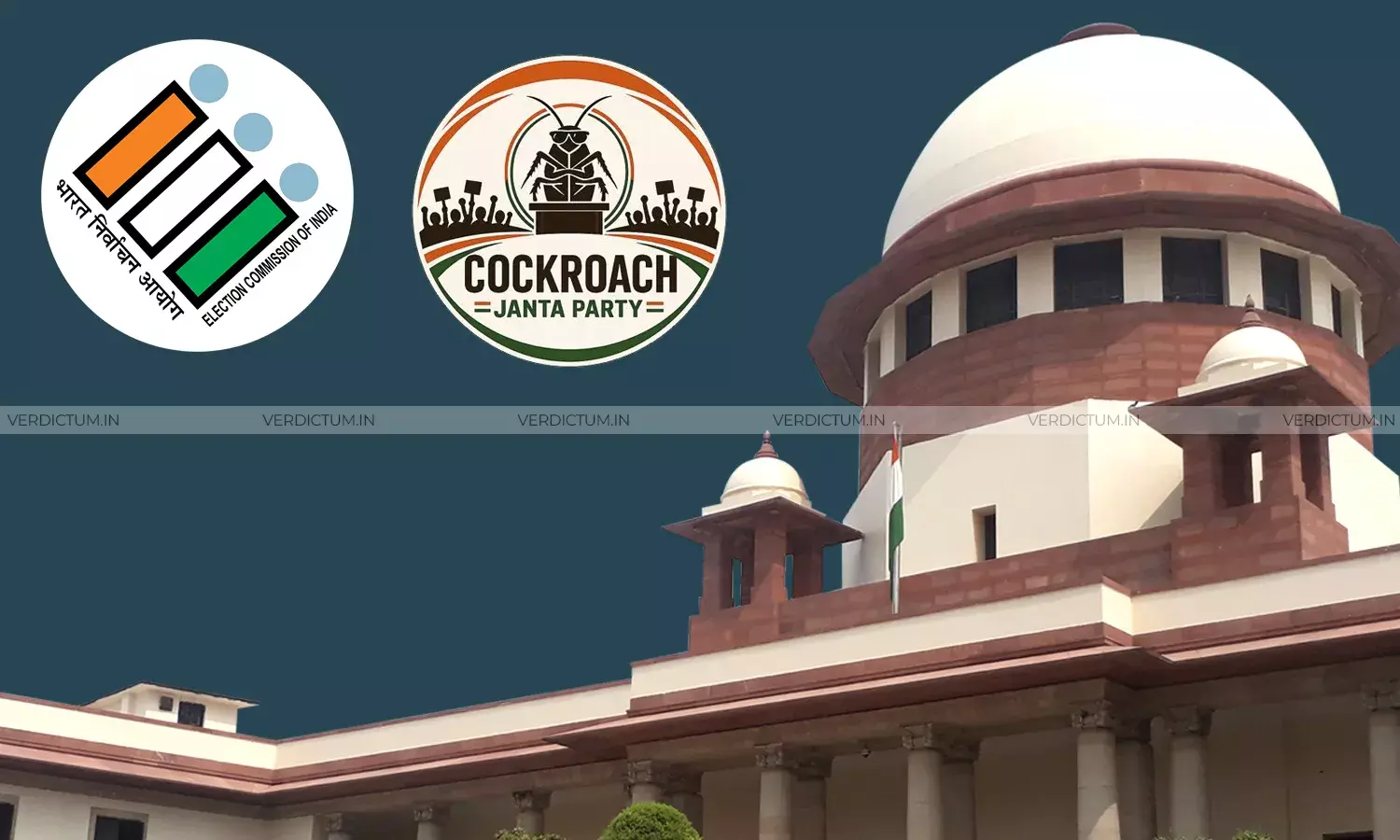
The Supreme Court has directed the concerned authorities to reconsider the complete prohibition on Metro services and train movements in New Delhi ahead of the October 10 protests against Chief Election Commissioner Gyanesh Kumar.
Today in the afternoon, Senior Advocate Kapil Sibal has mentioned the plea against the blanket administrative crackdown, arguing that it severely infringed upon citizens' fundamental rights to movement and peaceful assembly under the Constitution.
The Bench of Chief Justice Surya Kant, Justice Joymalya Bagchi and Justice V Mohana ordered, "In light of this, the limited issue that falls for our consideration is whether the complete prohibition on the movement of Metro trains and the movement of trains reaching New Delhi and Hazrat Nizamuddin railway stations requires reconsideration. Upon having been suggested from our side that there is a key distinction between complete prohibition and regulation of movement of Metro and other trains, the learned Solicitor General of India has fairly agreed to impress upon the authorities to reconsider the prohibition. He has agreed to allow the movement of Metro trains and other railways in a regulated manner, keeping in mind the principles of proportionality, so that no inconvenience is caused to the citizenry and residents of Delhi. In terms of that assurance, we make it clear that while there shall be no complete prohibition of the movement of Metro and railways, a considered decision shall be taken by the authorities. We direct that due publicity be given with respect to the reconsidered decision taken for allowing Metro trains and other railways in an appropriately regulated manner, so that no inconvenience is caused to the public at large. Such decision may be given wide publicity to ensure free flow of traffic and avoid further inconvenience to commuters."
The Court also directed that the public at large must not face any inconvenience.
Senior Advocates Kapil Sibal, Gopal Sankarnarayanan, Abhishek Manu Singhvi and Advocate Vrinda Grover appeared for the Applicants/Petitioners, while Solicitor General Tushar Mehta appeared for the Union
Chief Justice Kant said, "Mr. Solicitor General, here we have some serious concern about it. Our concern is not with respect to any protesters, not with respect to any individuals. Our concern is about, if not millions, hundreds of thousands of the commuters—those who come from Gurgaon, come from Greater Noida, come from East Delhi, come from South Delhi to Delhi for their livelihood. There are people, there are students, there are employees, there are senior citizens who travel in these facilities. So we are talking for and on behalf of the common citizenry of this city. So, it should not be misused. Whatever regulatory measure you are entitled to, that's right. The first line says that you want to stop unruly mob movement, do that! But that does not mean that you stop and put on halt everything, and people have no right—I mean, no facility available. Everybody doesn't have a car, everybody doesn't have private facilities. People use public transport, that you know better than us."
Chief Justice also added, "On an illustrative basis, suppose tomorrow is not court work. We know that most of the lawyers have their private cars, there's no difficulty. But what about the clerks working? What about the court staff working? What about those working in the canteen/cafe or any other places who have to travel?"
The Court remarked that while the authorities are fully permitted to enforce strict safety measures like frisking, CCTV surveillance, and extra security checks to prevent the entry of anti-social elements or unruly mobs, citizens remain entitled as a matter of right to access and avail public transport facilities.
"If you have to avoid certain things, do only to the extent that makes sure that you have avoided it. But it does not mean that you will use a hammer to kill a fly! That principle needs to be kept in mind", the Court said.
Mehta replied, "My Lord, that is what Your Lordships have said as an example. It may not be reflected that the Chief Justice of India said the government is using a hammer to kill a fly!"
Chief Justice replied, "It does not amount to that. Maybe out of abundant precaution you have done it. Precaution you keep, abundant precaution you keep, there is nothing wrong in that, because law and order is your subject and your responsibility also. And law and order responsibility is not that it is something state property only. It's that people need to be safe. There are our daughters, our young children, our senior citizens, very old people; there are patient people—they travel through this, so they need to be protected also. So measures are always... no difficulty at all in measures. But make sure that everything is not halted."
The Solicitor General submitted that initial permission for demonstration had been granted for a single day, from 10:00 AM to 5:00 PM, on a written undertaking from the organizers, but the gathering illegally persisted for 17 days.
He stated that protestors attempted to march towards the Parliament building—a restricted area and a symbol of national sovereignty—leading to clashes in which over 200 police personnel were injured.
"The lady police officers were molested and attacked. They have been injured, and kindly see any video of your choice, the way in which the police have shown exemplary restraint. They were being abused for being mothers, sisters, etc.; they were not doing anything. Now, keeping all these factors in mind, and that was also an unlawful protest, because protest was not permitted. This is also a protest which is not permitted", he added.
Refuting allegations of a city-wide blackout, the Solicitor General clarified that internet restrictions were limited strictly to a 4-kilometre radius around Raisina Hill as a proportionate measure in compliance with established judicial precedents. He assured the Court that proportionate steps would be taken to ensure the safety and free movement of citizens.
The Court also said that Jantar Mantar suffered from severe space constraints, lacking basic amenities such as sanitation, medical access, and water facilities, which severely compromised basic human rights and disrupted nearby residential areas.
It was suggested that the government may consider identifying a larger, alternative open space, like Ramlila Maidan, to accommodate peaceful demonstrations while ensuring safety, medical assistance, and public order.
The Court also said in its order, "The orders dated 8th October 2026 and 9th October 2026 show that Metro trains, as well as all Mail/Express trains reaching New Delhi Railway Station and Hazrat Nizamuddin Railway Station, were ordered to be stopped or cancelled in light of the "likelihood of unruly mob movement towards sensitive locations". These prohibitive orders have been made operative from today, i.e., 9th October 2026. In respect of the proposed protests at Jantar Mantar and other locations, we accorded liberty to the organizers of the protest to submit urgent petitions before this Court, as we were inclined to accord a hearing after 2:00 PM or thereafter. All the learned Senior Counsel objecting to the stoppage of Metro and other railways have, however, fairly stated that they do not represent the proposed protestors, and no other petition on their behalf has been filed before us."
The protest is scheduled to be held on October 10 after it was reported by The Indian Express that Election Commissioners Dr Sukhbir Singh Sandhu and Dr Vivek Joshi registered written dissents on record on at least 14 separate occasions over a 10-month period. The objections pertained to administrative decisions and official orders issued without the knowledge, consent, or participation of the full Commission, four of which occurred on a single day.
A plea is also pending before the Supreme Court seeking directions against all decisions, guidelines, directives, and software modifications initiated, approved, or implemented under Chief Election Commissioner Gyanesh Kumar. The plea alleged that the decisions were taken without full Commission concurrence or contrary to the majority opinion of the other Election Commissioners.
The Court refused to pass immediate ex parte interim directions to suspend Chief Election Commissioner Gyanesh Kumar and issued notice to the Union of India, the Election Commission of India, and other respondents.
Recently, the National Human Rights Commission also took cognizance under Section 12 of the Protection of Human Rights Act, 1993, of the alleged use, mobilisation and involvement of minor children in a public gathering/protest held in Mumbai on October 02, 2026, and the subsequent publication and circulation of photographs/videos relating thereto on social media platforms. It was reported that the protest took place at Shivaji Park, Mumbai, demanding the resignation of Chief Election Commissioner Gyanesh Kumar.
Cause Title: Shailendra Mani Tripathi v. Union of India & Ors.[W.P.(Crl.) No. 280/2026]