

Where Witness Departs In Court From What He Told Police, Court Cannot Prefer Police Version Over Testimony On Oath: Supreme Court Acquits Man In Double Murder Case
The Court said that Bhagwan Dass judgment cannot be read as treating a hostile witness’s police statement as substantive evidence, and a proved contradiction only impeaches the witness.

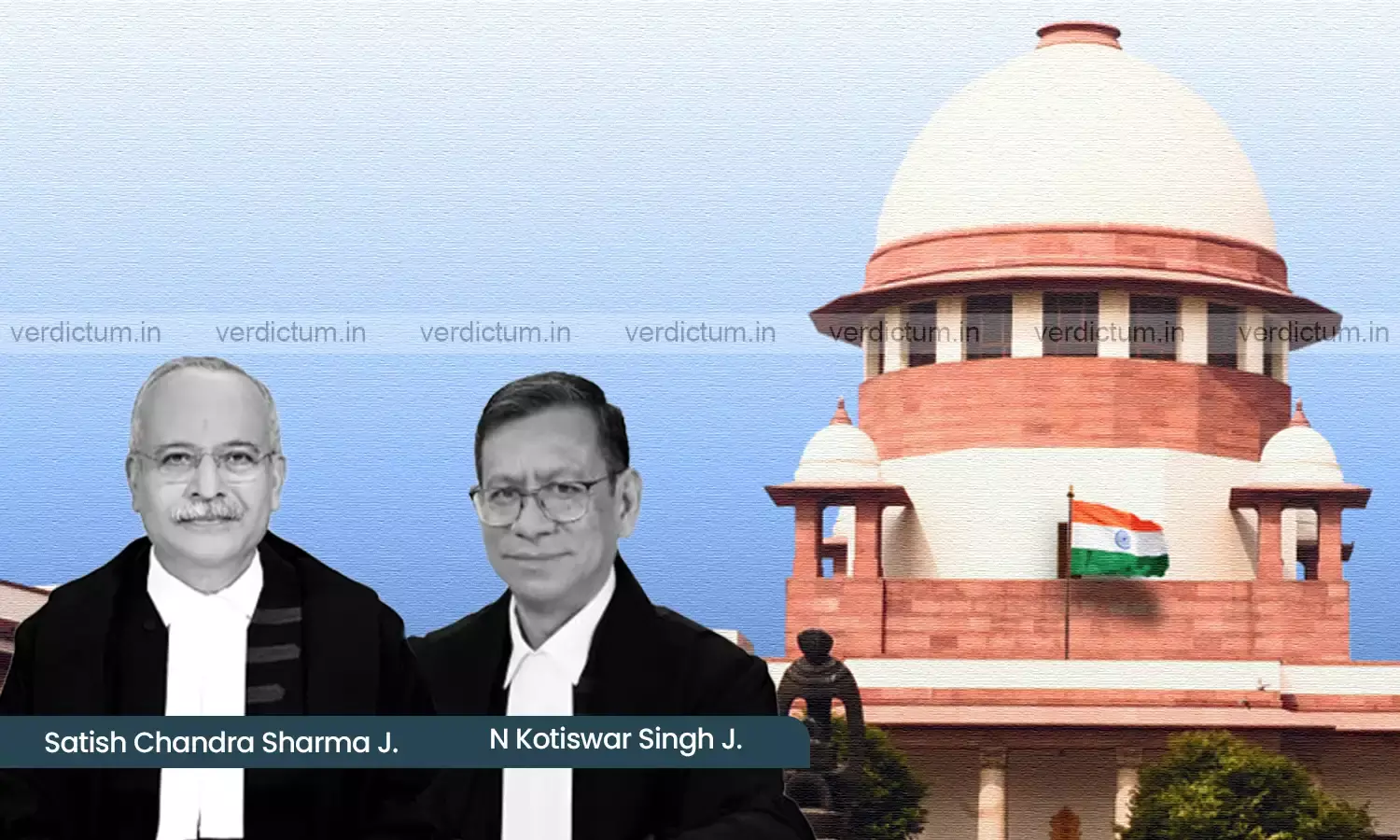
The Supreme Court has held that where a witness departs in court from what he told the police, the Court cannot prefer the police version over his testimony on oath. It set aside the double murder conviction of a man whose case rested on witness statements recorded under Section 161 CrPC, all of which the witnesses disowned at trial. It clarified that its decision in Bhagwan Dass v. State (NCT of Delhi) (2011) cannot be read as laying down that where a witness turns hostile, his statement to the police may be treated as substantive evidence of its contents.
The Court explained that Section 162 of the CrPC permits a police statement to be used only to contradict the witness, and that even a proved contradiction serves only to impeach the witness’s credit. A proved contradiction may show that the witness is unreliable, but not that what he told the police is true. Where a witness departs in court from his police statement, the Court cannot prefer the police version over his testimony on oath.
A Division Bench of Justice Satish Chandra Sharma and Justice N. Kotiswar Singh observed, “…If even a statement recorded by a Magistrate is not substantive evidence, a statement made to the police, which carries none of these safeguards, cannot be. Where a witness departs in court from what he had told the police, the Court cannot prefer the police version over his testimony on oath… Every statement relied upon by the courts below is a statement recorded by the police and falls squarely within the vigour of Section 162 CrPC”.
While explaining the facts in Bhagwan Dass, and referring the lower courts’ reliance as “misplaced” it noted, “To begin with, the reliance upon Bhagwan Dass (supra) is misplaced…the decision of the Constitution Bench in Tahsildar Singh (supra), which held that Section 162 CrPC enacts an absolute bar against the statement made before a police officer being used for any purpose whatsoever, was not brought to the notice of the Court. Bhagwan Dass (supra) cannot, therefore, be read as laying down that where a witness turns hostile, his statement to the police may be treated as substantive evidence of its contents”.
Senior Advocate D.N.Goburdhun appeared for the appellant and Senior Advocate Ruchi Kohli, AAG appeared for the respondent.
On the night of April 17, 2011, two widows of village Ranila, Bhiwani, were found dead in the village. The FIR named only the appellant, Naresh. It was registered on the statement of a village panch who did not claim to have seen the occurrence. The police attributed the killings to a danda until the post-mortem revealed bone-deep incised wounds. A second disclosure statement then led to the recovery of a gandasi.
Every private witness who could have spoken to the occurrence turned hostile at trial. This included the child of one of the deceased. The Additional Sessions Judge, Bhiwani, nonetheless relied on their earlier police statements, the recoveries and a motive of “honour killing”, and sentenced both accused to death. The Punjab and Haryana High Court acquitted the co-accused, commuted Naresh’s sentence to life imprisonment and upheld his conviction because his name figured in the FIR.
The Supreme Court held that the proviso to Section 162(1) CrPC permits only one use of a police statement, which is to contradict the witness. The Court observed that the contradictions were not even proved through the Investigating Officers.
On the recoveries, the Court held that the Investigating Officers never deposed to the words actually used by the appellant, so the disclosures were not proved under Section 27 of the Evidence Act. It found that the danda was unconnected with the fatal incised injuries. It observed that the disclosure leading to the gandasi was unreliable by the High Court’s own reasoning for discarding the co-accused’s second disclosure, and that the forensic evidence was inconclusive. Several circumstances were also never put to the accused under Section 313 CrPC.
The Court held that none of the circumstances satisfied the “panchsheel” of proof in circumstantial evidence cases, and that they gave rise at best to suspicion. It also held that the High Court breached the principle of parity by acquitting the co-accused on identical evidence.
The Court allowed the appeals and acquitted Naresh of all charges under Sections 302, 449, 297 and 201 IPC. It directed his release forthwith, unless required in another case, and set aside the compensation. It recommended that the District Legal Services Authority, Bhiwani, consider compensation for the deceased’s legal representatives.
Cause Title: Naresh v. State of Haryana (Neutral Citation: 2026 INSC 1220)
Appearances:
Appellant: D.N.Goburdhun, Sr. Adv., Anjani Aiyagari- 1155, AOR, Jayanta Kumar Biswas, Vandana Khanorkar, Advocates.
Respondent: Ruchi Kohli, AAG, Sr. Adv., Samar Vijay Singh, AOR, Srishti Mishra, Sabarni Som, Vijay Sharma, Aman Dev Sharma, Gaj Singh, Advocates.