

Uncertain Or Unquantified Claims Cannot Be Permitted To Resurface Years After Approval: Supreme Court On Operational Creditors' Sub-Judice Claims Against Tata Steel
The Court said that permitting such claims to linger would be "akin to a hydra-headed recurrence", antithetical to clean slate doctrine underlying the Insolvency Code.

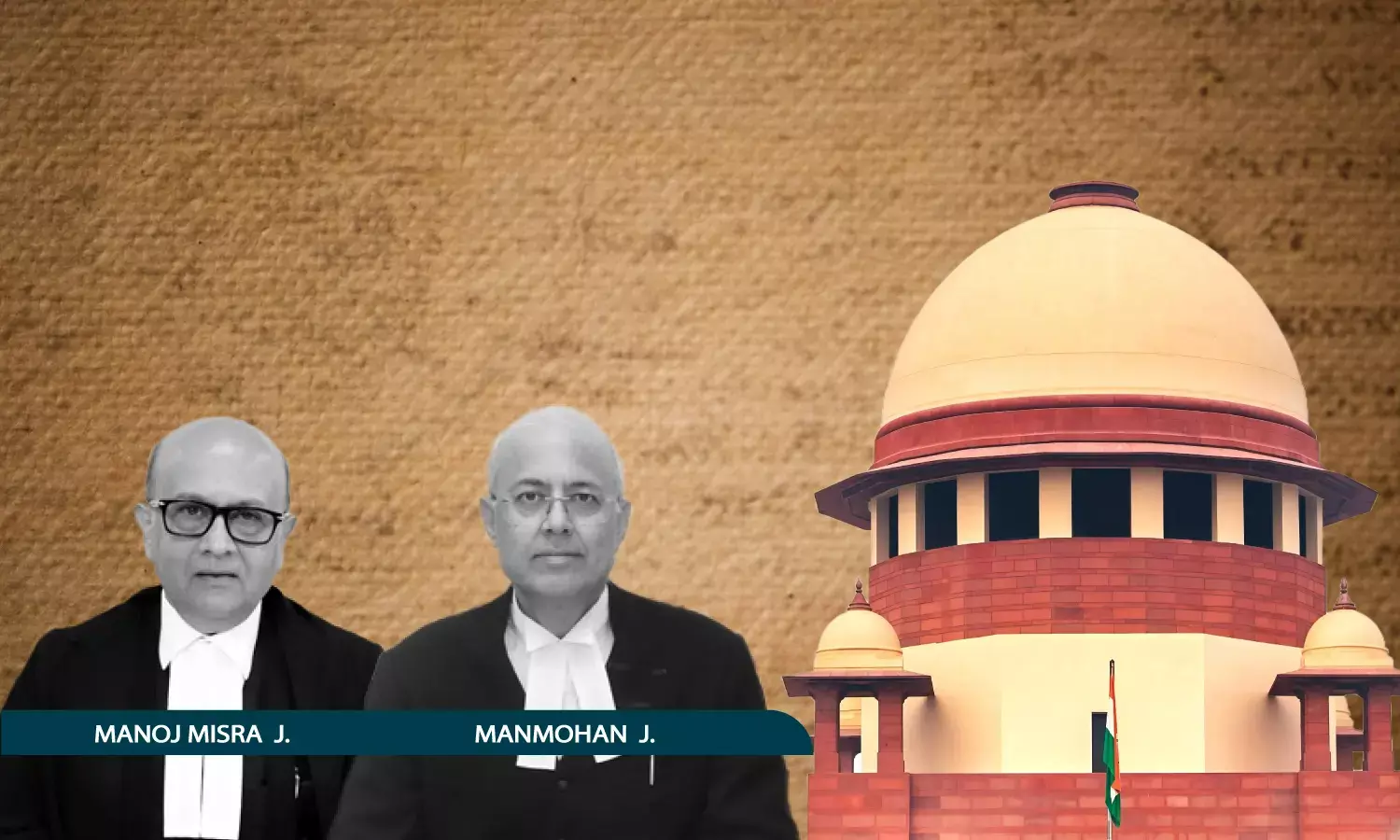
The Supreme Court has held that uncertain or unquantified claims of Operational Creditors cannot be permitted to resurface against a Successful Resolution Applicant years after approval of a Resolution Plan, setting aside Bombay High Court orders that had permitted a recovery suit against Tata Steel Limited to continue despite approval of its Resolution Plan for Bhushan Steel Limited.
The Court held that allowing such claims to linger and resurface would be "akin to a hydra-headed recurrence" and antithetical to the "clean slate" principle underlying the Insolvency and Bankruptcy Code, holding that only claims crystallised and quantified as on the date of Plan approval were payable, and directed dismissal of both a pending civil suit and connected arbitration proceedings initiated by two Operational Creditors.
A Bench of Justice Manoj Misra and Justice Manmohan observed, “…no Resolution Plan can succeed if uncertain or unquantified claims are permitted to linger and resurface against the Successful Resolution Applicant years after approval. Such a situation would be akin to a hydra-headed recurrence and is antithetical to the ‘clean slate’ principle…Only crystallised claims as on the effective date (i.e. 18th May 2018) are payable on a pro-rata basis”.
“…this Court is nevertheless of the view that the Code does not adequately account for the position of small operational creditors, including MSMEs and statutory local bodies, who stand significantly disenfranchised under the present framework by being placed at the bottom of the repayment waterfall”, the Bench observed.
Senior Advocate Ramji Srinivasan appeared for the appellant, Advocate Garvesh Kabra appeared for the respondent, and Senior Advocate Neeraj Kishan Kaul appeared for the intervenor.
The dispute arose from the Corporate Insolvency Resolution Process of Bhushan Steel Limited, during which two Operational Creditors, Varsha, who had filed a civil recovery suit, and Masyc Projects Private Limited, which had initiated six arbitral references, submitted claims before the Resolution Professional.
Their claims were admitted only at a notional value of Rupee One each in the Interim List of Creditors, which carried a note stating that the claims were subject to pending disputes and would be governed by the outcome of ongoing proceedings.
In the subsequent Final List of Creditors, this note was replaced with differently worded language, and the claims continued to be recorded at Rupee One each. Tata Steel's Resolution Plan, while stating that Operational Creditors were entitled to nil payment given the liquidation value, nonetheless earmarked Rs.1,200 crore as an Operational Creditors Settlement Amount, of which Rs.200 crore was set aside for pro-rata distribution among creditors whose claims had been admitted.
After the Plan was approved by the NCLT and upheld by the NCLAT, Tata Steel sought dismissal of the pending suit and arbitration, but both the Trial Court and the arbitrator declined, and the Bombay High Court dismissed Tata Steel's challenge, permitting the suit to proceed.
Before the Supreme Court, Tata Steel contended that the sub-judice claims had been admitted only at a notional value precisely because they remained disputed, that the Resolution Plan's clauses on extinguishment of claims and settlement of sub-judice claims left no obligation beyond the earmarked settlement amount, and that continuation of the suit and arbitration violated the "clean slate" doctrine recognised in Ghanashyam Mishra & Sons Pvt. Ltd. vs. Edelweiss Asset Reconstruction Co. Ltd. (2021) 9 SCC 657.
The creditors countered that the Resolution Plan itself carved out sub-judice claims from extinguishment through specific annexures, that a "face value reservation mechanism" ought to have been read into the settlement clause to preserve their claims pending adjudication, and, in Varsha's case, that the Plan itself was vitiated by fraud through alteration of the notes attached to the creditor lists.
The Court held that the Resolution Plan deliberately converted the appellants' claims from a notional Re.1 value to a final quantified Re.1 claim, extinguishing any contention that the claims remained alive. It ruled that Regulation 12(2) of the CIRP Regulations requires operational creditors' claims to be crystallised before approval of the Resolution Plan, and that the Rs.200 crore corpus earmarked for such claims could not cover unquantified disputes.
Rejecting arguments based on contra proferentem, a proposed "face value reservation mechanism", and allegations of fraud, the Court held that an approved Resolution Plan is binding unless recalled by the NCLT.
In an Afterword, the Court urged the Law Commission and Legislature to examine the treatment of small operational creditors under the IBC.
Accordingly, it allowed the appeals, set aside the Bombay High Court and Trial Court orders, and dismissed the civil suit and arbitration proceedings.
Cause Title: M/s Tata Steel Ltd. v. Varsha & Anr. (Neutral Citation: 2026 INSC 717)
Appearances:
Appellant: Ramji Srinivasan, Senior Advocate.
Respondents: Garvesh Kabra, Neeraj Kishan Kaul, Senior Advocate, for Intervenor-Masyc.