

Supreme Court Declines To Supervise Arbitral Awards Execution Through Clarification Plea; Requests Law Commission To Study Enforcement
It noted that once the substantial question of law certified under Article 134-A is answered, the scope of the appellate proceedings stands exhausted; dismisses Miscellaneous Application.

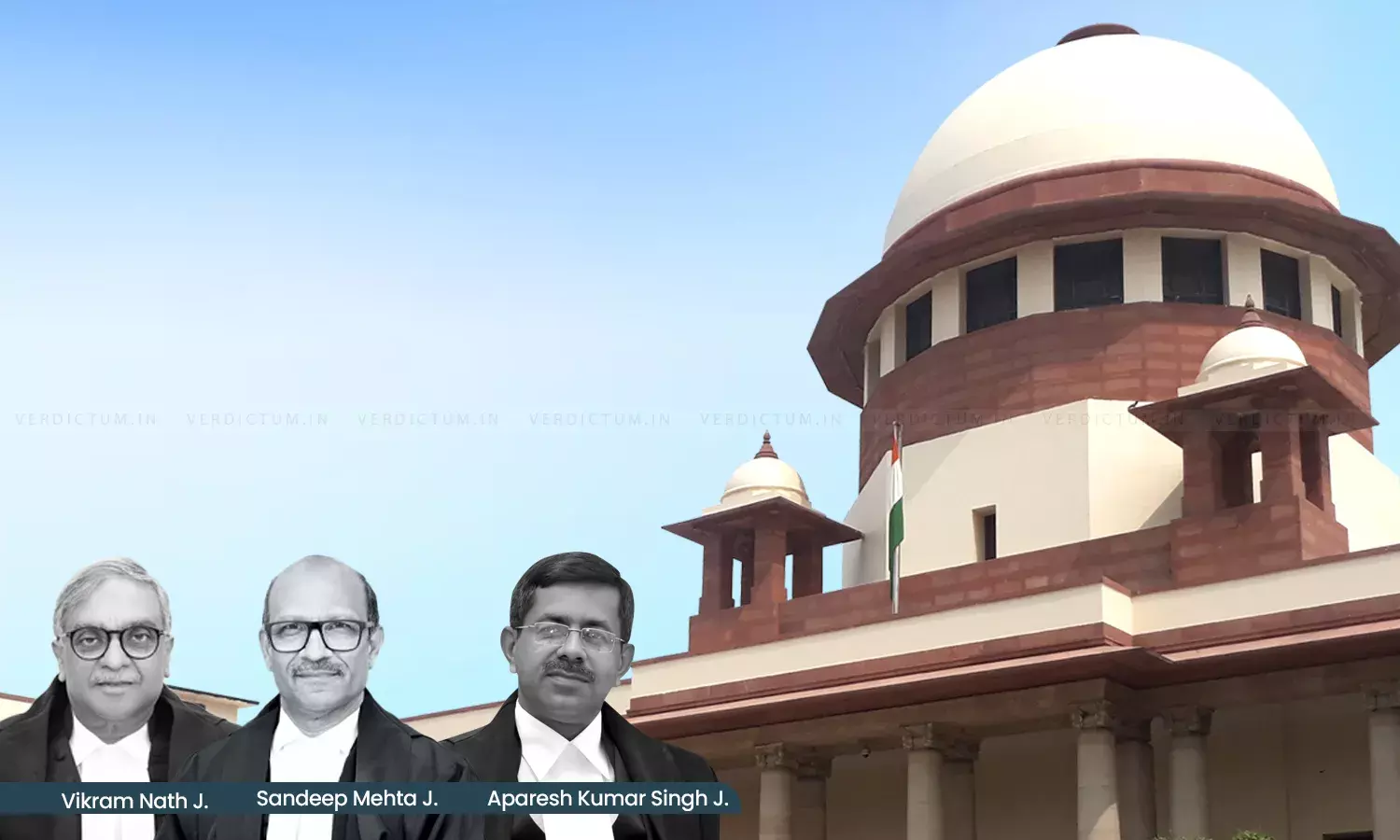
The Supreme Court has held that it cannot be asked, in the guise of a clarification, to supervise execution proceedings pending before another court. It ruled that its jurisdiction on a certified question of law ends once the question is answered.
Dismissing the Miscellaneous Application and disposing of the appeal against the Delhi High Court’s interim order, the Court held that it is for the executing court, and the appellate court above it, to decide questions arising in execution. It also requested the Law Commission of India to undertake a focused study of the framework governing enforcement and execution of arbitral awards.
In an epilogue, the Court expressed concern that the parties were still litigating enforcement more than twenty-four years after the award. It observed that an arbitral regime must be measured by whether the successful party can realise the award’s fruits within a reasonable time. It flagged asset disclosure, coordination of execution modes, repetitive objections and delay as matters needing scrutiny.
A Bench of Justice Vikram Nath, Justice Sandeep Mehta and Justice Aparesh Kumar Singh observed, “…This Court cannot be called upon, in the guise of seeking clarification, to assume a supervisory role over the continuing execution proceedings or to adjudicate upon every issue that may arise therein. It is for the competent court seized of the execution proceedings, and the appellate court exercising jurisdiction over its orders, to determine the questions arising in accordance with law”.
“The promise of arbitration remains unfulfilled if a party, having traversed the arbitral process, is compelled to embark upon another protracted course of litigation to secure the benefit of the award… we request the Law Commission of India to undertake a focused study of the statutory and procedural framework governing the enforcement and execution of arbitral awards. The study may identify the practical impediments to timely recovery, examine the experience of other jurisdictions, and consider whether domestic and foreign arbitral awards warrant distinct enforcement procedures or a common framework with appropriate safeguards”, it noted further.
Advocate Rishabh Sancheti appeared for the appellant and Vikramjit Banerjee, Additional Solicitor General appeared for the respondent.
The appellant, Royal Construction Company Pvt. Ltd., is the award-holder under an arbitral award dated August 10, 2002, with the amounts denominated in Iraqi Dinars. The respondent, National Projects Construction Corporation, is the award-debtor. By its judgment of February 24, 2015, the Supreme Court restored the award’s directions, stressing minimal judicial intervention.
In execution, a Single Judge of the Delhi High Court directed on July 26, 2017 that the award-debtor could discharge its liability in Indian currency at the exchange rate on the date of the underlying agreement.
On December 17, 2019, the Division Bench set this aside and certified a substantial question of law under Articles 134-A and 133(1)(a) on the relevant date for conversion. On October 10, 2023, the Supreme Court answered the question in the negative, holding that no occasion arose to fix a conversion date. While execution continued, the respondent contended that the principal had been paid in 2009 under High Court orders. On February 16, 2026, the High Court granted the parties liberty to seek clarification from the Supreme Court.
The Court held that it erred in appreciating the scope of the earlier adjudication. Its jurisdiction was confined to the certified question, and it did not examine factual matters such as amounts deposited and later withdrawn. Once the question was answered, the scope of the earlier proceedings stood exhausted, and it would be impermissible to enlarge it with questions distinct from and unconnected with the lis.
“Before parting, we deem it appropriate to express our concern at the protracted course which the present proceedings have taken. The arbitration in the present case was invoked when the Arbitration Act, 1940 held the field. We are now approaching three decades under the Arbitration and Conciliation Act, 1996, enacted, inter alia, in furtherance of the UNCITRAL Model Law and with the objective of facilitating the expeditious resolution of disputes through minimal judicial intervention. However, more than twenty-four years after the arbitral award was rendered, the parties continue to litigate over its enforcement. Such a state of affairs strikes at the very rationale underlying the adoption of arbitration as an effective alternative to conventional civil litigation”, it noted.
The Court disposed of the appeal and dismissed the Miscellaneous Application, and left the award-debtor at liberty to raise all objections on adjustment or set-off before the executing court. It requested the Law Commission to study the framework and make recommendations, and directed the Registry to forward a copy of the judgment to the Commission’s Chairman.
Cause Title: M/s Royal Construction Company Pvt. Ltd. v. M/s National Projects Construction Corporation (Neutral Citation: 2026 INSC 1167)
Appearances:
Appellant: Rishabh Sancheti, Advocate.
Respondent: Vikramjit Banerjee, Additional Solicitor General.