

“Flimsy Prosecution Story”: Supreme Court Acquits Two on Death Row In 2012 Gang Rape-Murder Case
The Bench found “last seen” evidence unreliable, questioned sketch identification & held an unbroken chain of custody for key forensic exhibits was not proved.

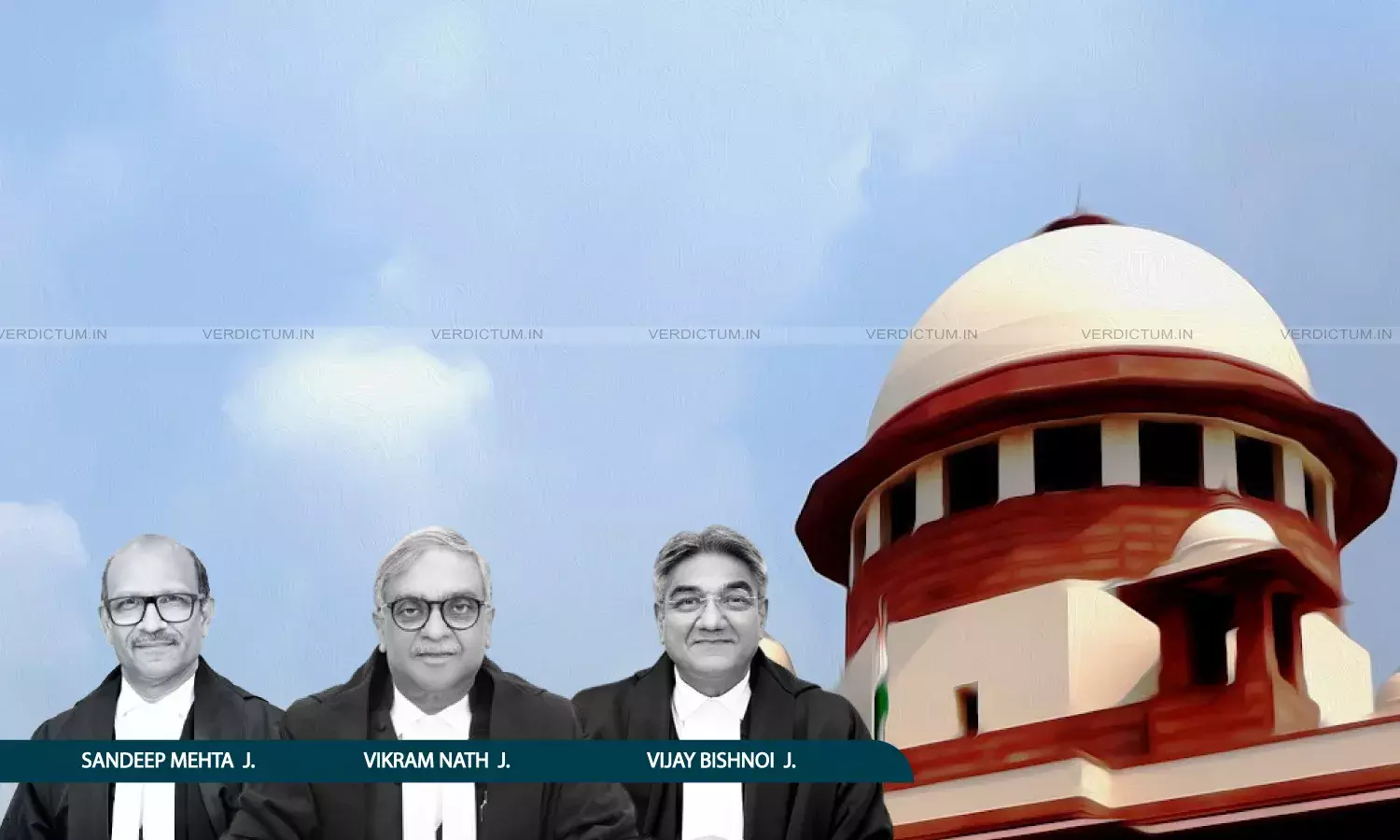
The Supreme Court has acquitted two death row convicts in a rape and murder case from Uttarakhand, holding that the prosecution failed to prove either the “last seen together” circumstance or the unbroken chain of custody of alleged recoveries and forensic evidence forming the basis of conviction. In a strongly worded finding, the Court observed that the detached shirt pocket relied upon by the prosecution appeared to have been created later to support an otherwise flimsy prosecution story.
The Court found serious infirmities in the investigation, questioned the authenticity of crucial exhibits, and held that the chain of circumstantial evidence remained incomplete, entitling the accused to the benefit of doubt.
Examining the seizure records and forensic evidence, the Court found unexplained delays in forwarding crucial exhibits to the Forensic Science Laboratory. While some articles had been forwarded earlier, the plain soil, blood-stained soil, torn pocket and the shirt allegedly worn by the accused were sent only on January 24, 2013, despite having been seized weeks earlier. Pertinently, the alleged incident had occurred on December 29, 2012.
A three-judge Bench of Justice Vikram Nath, Justice Sandeep Mehta and Justice Vijay Bishnoi observed, “…The prosecution has failed to furnish any plausible or satisfactory explanation for the inordinate and unexplained delay in forwarding the aforesaid articles for forensic examination… In all probability, the shirt must have been recovered fully intact and the recovery of the detached pocket has been created later in order to lend succour to the otherwise flimsy prosecution story. The delayed forwarding of these crucial articles materially affects the sanctity of the chain of custody and undermines the authenticity and evidentiary value of the alleged recoveries, thereby rendering this part of the prosecution case highly doubtful and unsafe to be relied upon…”.
Noting that the FSL examination revealed that the shirt pocket had been removed carefully stitch by stitch rather than being violently torn away during the course of any scuffle or struggle, it noted further, “…We are of the considered view that the alleged recovery and matching of the shirt pocket is nothing but a padded and created circumstance introduced by the investigating agency in an attempt to lend support to the prosecution case. The forensic evidence, rather than lending assurance to the prosecution version, materially undermines the theory sought to be projected by the investigating agency”.
Senior Advocate A. Sirajudeen appeared for the appellant and Sanjeev Uniyal, A.A.G. appeared for the respondent.
The prosecution had primarily relied on two circumstances: first, that the appellants were last seen moving towards the forest shortly before the deceased was found dead; and second, that recoveries allegedly made at their instance, including a torn shirt pocket, clothes and ornaments, were sufficient to connect them with the offence.
The Bench observed that these lapses substantially weakened the evidentiary value of the dock identification and rendered the prosecution’s identification narrative unsafe for sustaining conviction.
The Court was equally critical of the prosecution’s reliance on recoveries allegedly made pursuant to disclosure statements. A key circumstance relied upon by the prosecution was a torn shirt pocket allegedly recovered from the scene and later matched with a shirt said to have been worn by one of the accused.
The Bench held that the delay materially affected the sanctity of the chain of custody and undermined the authenticity and evidentiary value of the alleged recoveries.
The Court also noted that the forensic report itself weakened the prosecution case. The FSL evidence suggested that the shirt pocket appeared to have been removed carefully stitch-by-stitch rather than being violently torn during a struggle, directly contradicting the prosecution’s narrative.
The Court further found no reliable evidence showing safe custody of the seized articles from the time of recovery until forensic examination. The prosecution failed to satisfactorily prove deposit of the articles in the malkhana, their movement from police custody, or proper transmission to the laboratory. In the absence of an established chain of custody, the Bench held that the forensic reports could not be safely relied upon.
Rejecting the prosecution’s “last seen together” theory, the Court found serious inconsistencies in the evidence relating to identification of the accused. The Bench noted that the accused were strangers to the material witnesses, yet no Test Identification Parade was conducted.
The alleged sketches said to have been prepared during investigation were found unreliable, with the Court recording that the sketch artist was neither disclosed nor examined, only photocopies of the sketches were produced, the originals were missing, and the exhibited sketches bore neither signatures nor any indication of the date and time of preparation. The Court further found the prosecution’s failure to examine a material witness, Neha, the deceased’s granddaughter, particularly significant.
On the allegation of sexual assault, the Court noted that though semen traces were reportedly detected, no DNA examination or profiling was conducted to establish the source or connect the samples with either accused. The forensic evidence, therefore, fell far short of constituting a conclusive incriminating circumstance.
“We are, therefore, of the considered opinion that the prosecution has miserably failed to establish the circumstance of “last seen together” in a cogent and reliable manner known to law. The evidence led by the prosecution on this aspect suffers from material inconsistencies, procedural lapses and serious infirmities which render the prosecution case on this circumstance wholly unreliable”, the Bench observed.
The Court concluded that both the trial court and the High Court had overlooked material inconsistencies and serious procedural irregularities while affirming conviction. Holding that it would be unsafe to sustain either conviction or death sentence, the Bench allowed the appeals, acquitted both appellants of all charges, and directed their release forthwith if not required in any other case.
Cause Title: Mehtab v. State Of Uttarakhand (Neutral Citation: 2026 INSC 578)
Appearances:
Appellant: A. Sirajudeen, Senior Advocate, N. Annapoorani, AOR.
Respondent: Sanjeev Uniyal, A.A.G., Akshat Kumar, AOR, Dhawal Uniyal, Anubha Dhulia, Vinayak Menon, Udit Choudhary, Advocates.