

Requisites Of Good & Sufficient Pleading; Distinction Between Pleading & Proof: Supreme Court Explains
The Bench set aside the High Court's dismissal of eviction decree and held that comparative hardship, subsequent family arrangements & alternative tenant accommodations are valid grounds for eviction.

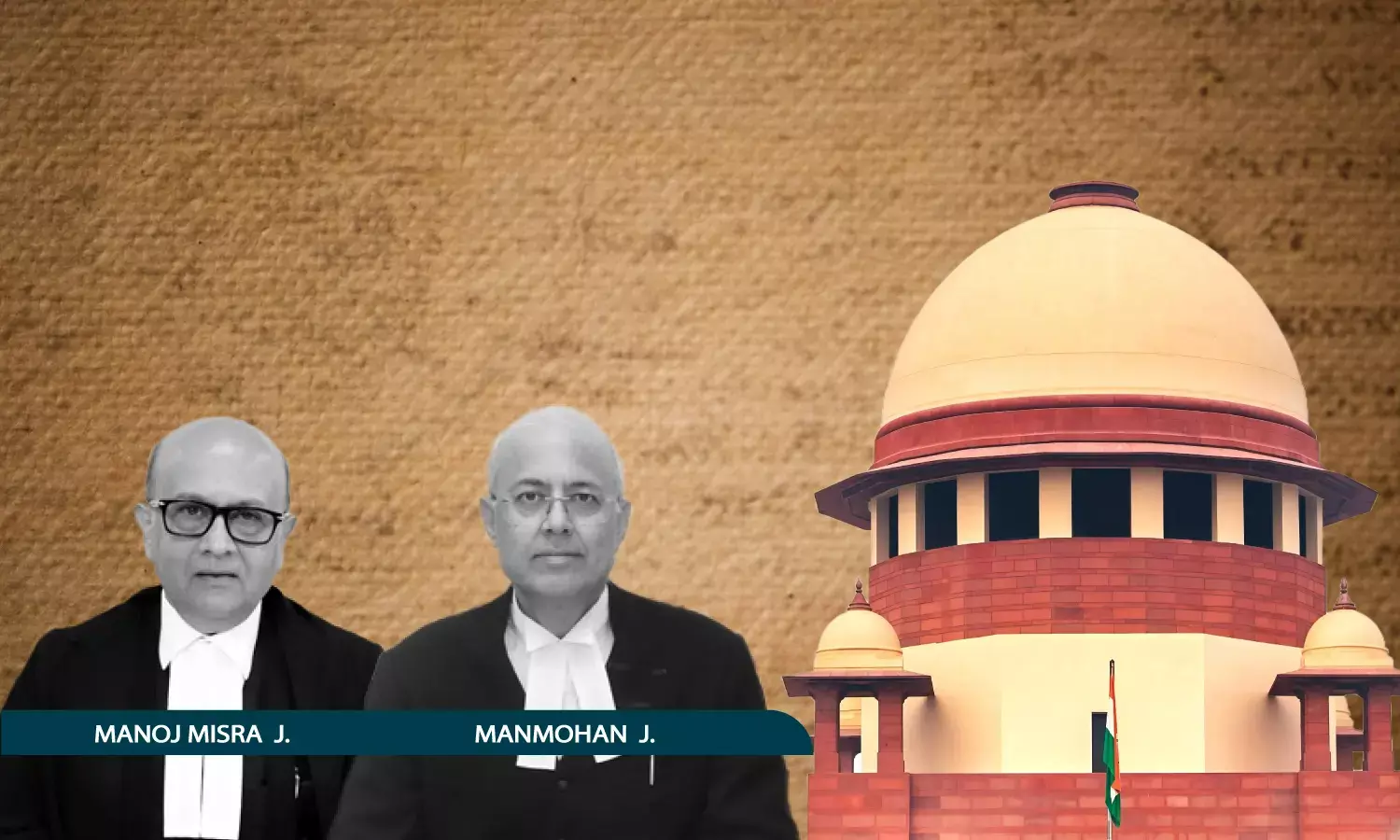
The Supreme Court in a significant judgment, has defined what constitutes a pleading, outlined the strict distinction between pleading and proof, and determined that these legal tests stood fully satisfied in a long-running eviction dispute. It clarified that while a plaint must contain a concise statement of the material facts (facta probanda) establishing the landlord-tenant relationship and the statutory grounds for eviction, it need not include the specific evidence (facta probantia) by which those facts are to be proved.
While setting a Bombay High Court order that had dismissed an eviction decree due to alleged gaps in the initial plaint, the bench held that subsequent developments like an oral family arrangement and technical documents like share certificates are matters of proof at trial, not mandatory contents of a pleading. The Bench clarified that pleadings under Order VI Rule 1 CPC require concise statement of material facts, not evidence. It held that the landlord’s plea as co-landlord and grounds for eviction were sufficiently pleaded, while subsequent evidence of oral family settlement and alternative accommodation merely constituted proof and did not alter the suit’s foundation.
A division bench comprising Justice Manoj Misra and Justice Manmohan dealt with the three grounds elaborately in the judgment. It observed, “…The material facts on which a party relies are called Facta Prabanda, i.e. the facts to be proved and they are required to be stated in the pleadings. The evidence or facts by which Facta Probanda are to be proved are called Facta Probantia and these are not to be included in the pleadings. Facta Probanda are not the facts in issue rather, they are the relevant facts which, when proved at trial, establish the facts in issue…”
“…this Court is of the view that the Appellant, being the co-owner of the suit building was entitled to receive rent and thus fell squarely within the statutory definition of ‘landlord’ under the Act. Also, the Appellant in her cross-examination had deposed that the Appellant is receiving rent on behalf of her mother. Consequently, this Court is of the view that at the time of filing of the suit, the Appellant was a co-landlord as well as co-owner of the suit building and even if there was deficiency in the pleadings, parties knew the case and they proceeded to trial by producing evidence”, the Bench further noted.
Senior Advocate Siddharth Bhatnagar appeared on behalf of the appellant, and Advocate Prashant Shrikant Kenjale appeared for the respondents.
Adverting to Order VI Rules 1 and 2 of the Code of Civil Procedure, the Court observed that a pleading, comprising the plaintiff's statement of claim or the defendant's response, serves as the legal foundation of a case designed to provide fair notice, bring parties to definite issues, and assist the court in dispute adjudication. The bench delineated the four core requisites of a sufficient pleading: it must state facts and not law, encompass only material facts essential to the cause of action or defense, entirely omit the evidence by which those facts are to be proved, and maintain brevity and clarity through a concise, summary form.
The Court further emphasised that these procedural rules are not rigid absolutes but guiding principles meant to ensure clarity, concluding that once the essential material facts are laid out, the subsequent production of supporting documents or internal arrangements at trial satisfies the test of proof without changing the nature of the suit.
For the facts, the dispute arose over a Flat in the Memorare Building, Chembur, Mumbai, which was constructed on leased land by the parents of the appellant, Marietta D'Silva.
In 1962, a sub-tenancy was created in favor of Augustine Lacerda, which later devolved upon his widow, Virginia Lacerda. Following her demise, the appellant and her sister filed an eviction suit in July 1993 against the legal heirs under the Bombay Rents, Hotel and Lodging House Rates Control Act, 1947, citing bona fide requirement and the tenants' acquisition of alternative accommodation.
The appellant asserted her bona fide need based on her family's lack of independent housing in Mumbai, which was later supported by an oral family arrangement earmarking the suit premises for her exclusive use.
Thereafter, the Small Causes Court at Bombay decreed the eviction suit in favor of the appellant on September 14, 2007, finding her need sincere and noting that the tenants had acquired alternative properties.
The Appellate Bench of the Small Causes Court dismissed the tenants' appeal on July 25, 2017. However, navigating a Civil Revision Application, the High Court of Bombay on June 23, 2025, set aside the concurrent findings and directed the restoration of possession to the respondent, prompting the appellant to approach the apex court.
The court affirmed that share certificates covering the land inherently pass interest in the building constructed thereon under Section 8 of the Transfer of Property Act.
Furthermore, the Bench upheld the validity of the unregistered oral family arrangement as a triable subsequent event, concluding that the tenants' ownership of alternative flats in Andheri and Borivali mitigated their hardship, whereas the appellant continued to have no viable accommodation in Mumbai.
“Upon completion of pleadings, Appellant–Plaintiff No.1 filed her affidavit of examination-in-chief, wherein she deposed in detail as to her status as co-landlord and her entitlement to eviction under Section 13(1)(l) and Section 13(1)(g) read with Section 13(2) of the Act. Accordingly, this Court is of the view that the plaint did contain the necessary and material facts essential to the Appellant’s cause of action, asserting both her status as co-landlord and the statutory grounds for eviction”, the Bench noted.
“…the Appellant is entitled to rely upon the oral family arrangement/settlement, as deposed in her affidavit of examination-in-chief even in absence of a decree of partition between herself and her siblings, as it represents a subsequent development”, it further noted.
Accordingly, the Court allowed the appeal and set aside the judgment of the Bombay High Court dated June 23, 2025, and fully restored the eviction decree passed by the Small Causes Court at Bombay dated September 14, 2007, ordering the restoration of possession to the appellant.
“Respondent No.1’s assertion that he might apply for a better job in Mumbai if affordable accommodation were available cannot be accepted. He holds stable employment with L&T Infotech in Pune and owns property there, evidencing his long-term intention to remain in Pune. Consequently, this Court holds that, in light of the tenants’ acquisition of alternative accommodation, greater hardship would be caused to the Appellant if eviction were denied. The Appellant, despite being the landlord and in bona fide need of accommodation for herself and her family, would otherwise be compelled to purchase or rent another premises”, the Bench said.
Cause Title: Marietta D' Silva v. Rudolf Clothan Lacerda & Ors. (Neutral Citation: 2026 INSC 496)
Appearances:
Appellant: Siddharth Bhatnagar, Sr. Adv., Pritha Srikumar Iyer, AOR, Arun Srikumar, Nadeem Afroz, Ritwik Gupta, Advocates.
Respondents: Prashant Shrikant Kenjale, Upendra Mahadik, Damini Vishwakarma, B Dhananjay Balaji, M/s Juristrust Law Offices, AOR, Naveen Hegde, AOR, Bhargavi Bhardwaj, Advocates.