

Denying Regular Appointment To Candidate Despite Being Found Suitable After Regular Selection Process Is Patently Illegal & Unconstitutional: Supreme Court
The civil appeal before the Supreme Court related to the appointment of an Assistant Professor.

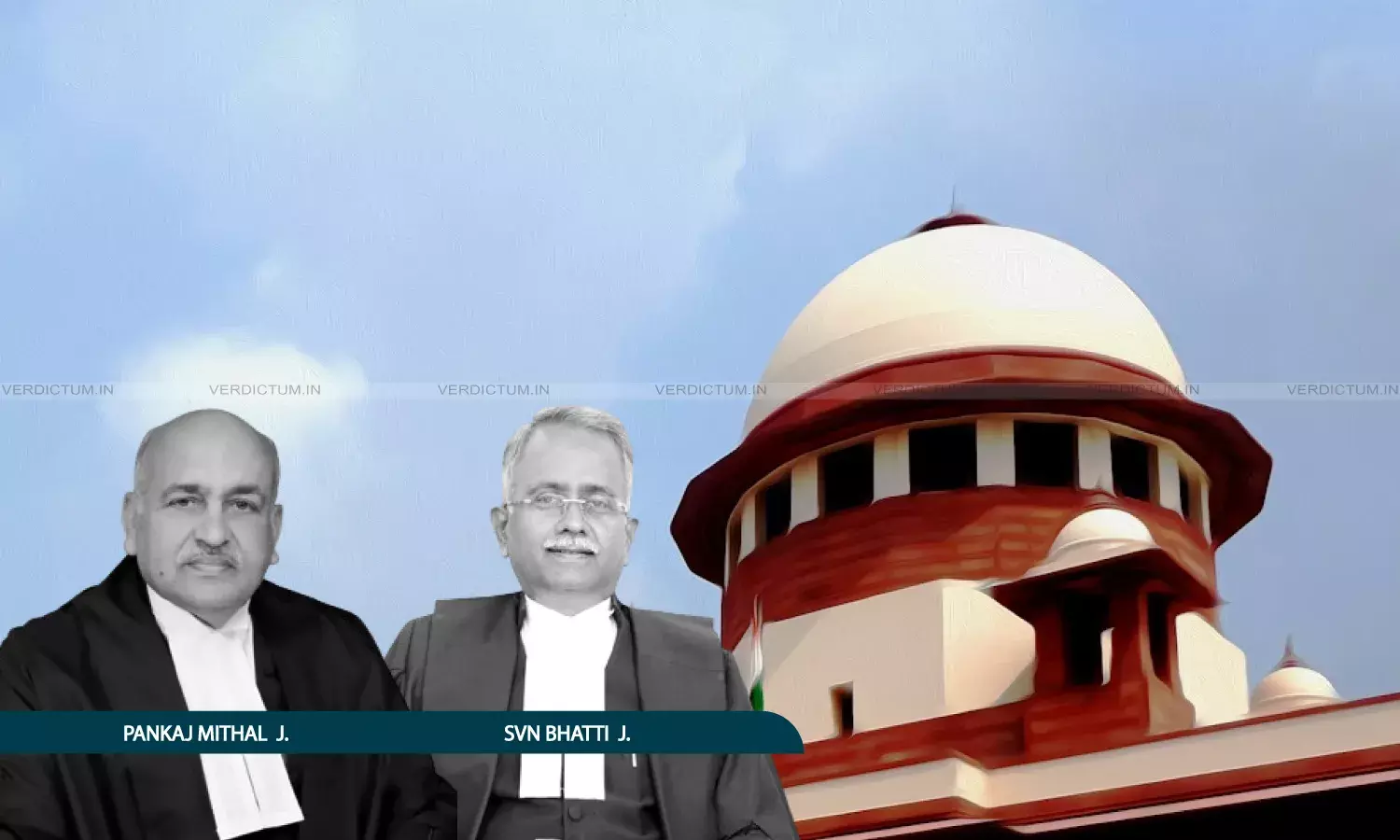
While granting relief to an IIT Allahabad Assistant Professor, the Supreme Court has held that denying a regular appointment to a candidate who is selected through a regular selection process is patently illegal and unconstitutional.
The civil appeal before the Apex Court related to the appointment of an Assistant Professor.
The Division Bench of Justice Pankaj Mithal and Justice S.V.N. Bhatti stated, “However, we note that denying a regular appointment is patently illegal and unconstitutional. Respondent No. 2 places before us the present vacant positions of Assistant Professors in the Institution, with thirty-two vacancies. The total number of vacancies for Assistant Professors is sixty-seven. Having perused the record, we are unable to discern a just and real reason for denying the Appellant a regular appointment. In the facts and circumstances of the case, we hold that the Appellant is entitled to a Regular Appointment in Respondent No. 2/Institution as Assistant Professor.”
Senior Advocate Sudhir Kumar Saxena represented the appellant, while AOR Sanyat Lodha represented the Respondent.
Factual Background
In January 2013, the second Respondent (Indian Institute of Information Technology), Allahabad, issued an Advertisement calling for applications from suitable candidates for the posts of Professor, Associate Professor and Assistant Professor. The appellant was invited for the interview, and a letter of appointment was issued to him as Assistant Professor on a contract basis for a period of 12 months. The appellant accepted the appointment on a contract basis and continued to discharge the duties and functions in the Respondent Institute. In the year 2014, the second Respondent, on a few perceived omissions in the selection process, cancelled all the appointments. The aggrieved appointees, pursuant to the recommendation of the Selection Committee, challenged the cancellation of their appointment by the Respondent by filing a Writ Petition.
The Institute Respondent was directed to reconsider the issue after affording the candidates an opportunity. The Respondent Institute, while reconsidering the matter, decided to reiterate the decision of the Selection Committee, resulting in the re-issuance of the appointment letter to the 13 candidates. The appellant filed the Writ Petition contending that the Advertisement was issued exclusively for regular appointments in Pay Band-IV and Pay Band-III, with no mention of contractual appointment. It was contended that, of all candidates selected, every other candidate was appointed regularly, while the appellant alone, along with another candidate, was arbitrarily placed on a contractual appointment. The Single Judge dismissed the Writ Petition filed by the appellant. The appellant filed an unsuccessful appeal before the Division Bench. It was in such circumstances that the appeal came to be filed before the Apex Court.
Reasoning
On a perusal of the facts of the case, the Bench noted that despite being found suitable and selected through the same process, the Selection Committee recommended the appellant for appointment on a contract basis for a period of one year, while all other thirteen candidates, barring the appellant and one another candidate, were recommended for and given regular appointments. “No reason was recorded for this differential treatment”, it added.
As per the Bench, the procedure initiated was for a regular appointment, and the Selection Committee, after perusing the candidates' applications and credentials, had not given equal or uniform treatment to all candidates invited for an interview.
As per the Bench, the appellant, if unsuitable for appointment, could not have been recommended even on a contract basis for a period of twelve months, and the record did not disclose any reason for denying the post for which the appellant was shortlisted and interviewed. “We are aware that in Judicial Review, the court will not sit as a court of appeal on the views recorded by the Selection Committee. The point in the case at hand is not whether the reasons recorded are right or untenable, but whether, even by the most liberal approach to the primacy of appointment, educational institutions have, in these matters, the denial of regular appointment justified?”,it added.
The Bench was unable to discern a just and real reason for denying the appellant a regular appointment. The Bench thus held that the appellant was entitled to a Regular Appointment in the Respondent Institution as an Assistant Professor.
The Bench moulded the relief by denying other benefits except the appellant’s entitlement to continuity of service without financial benefit. Allowing the appeal, the Bench further ordered, “Respondent No. 2 is directed to issue an order of appointment within four weeks from today, and the Appellant shall be kept, in the seniority of Assistant Professors, as the last candidate against the candidates recommended and appointed by the Selection Committee resolution dated 06.04.2013.”
Cause Title: Lokendra Kumar Tiwari v. Union of India & Ors. (Neutral Citation: 2026 INSC 487)
Appearance
Appellant: Senior Advocate Sudhir Kumar Saxena, AOR Aviral Saxena, Advocates Abhinav Sharma, Paritosh Goyal
Respondent: AOR Sanyat Lodha