

Upon Death Of Alleged Medically Negligent Doctor, His Legal Heirs Can Be Impleaded: Supreme Court Clarifies Survival Of Claims Under Consumer Protection Act
The Bench noted that courts must consider only claims maintainable against the estate, not personal claims that have lapsed with the doctor’s death.

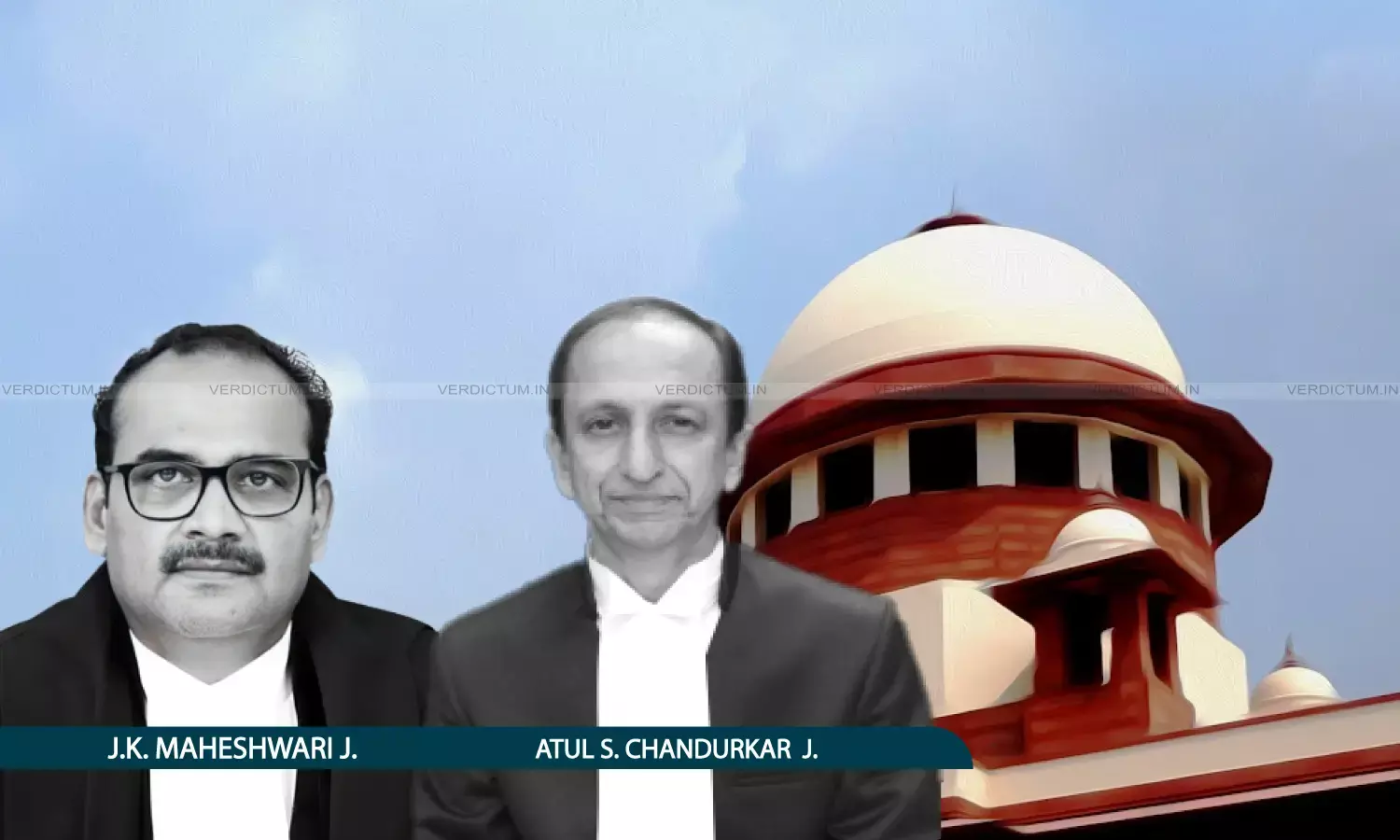
The Supreme Court has held that, in consumer cases, the death of a medical professional during the pendency of consumer proceedings does not automatically result in the abatement of the entire claim. The Court held that upon the death of the alleged medically negligent doctor, his/her legal heirs can be impleaded and brought on record.
The Bench clarified that while purely personal actions may perish, claims targeting the estate of the deceased doctor for pecuniary loss remain maintainable. By interpreting the survival of the 'right to sue', the Court held that the legal heirs of a deceased doctor step into their shoes under Section 2(11) CPC to represent the estate.
Justice J.K. Maheshwari and Justice Atul S. Chandurkar clarifying that the Court has to only look at claims which are maintainable as against the estate, rather than adjudicating personal claims which have elapsed with the death of the doctor, observed, “On a comparative reading of 1986 Act with 2019 Act, it is worthwhile to state that the procedure prescribed under Section 32 13(7) of the 1986 Act has been continued under Section 38(12) of the 2019 Act. Insofar as ‘complainant’ is concerned, as per Section 2(b)(v) of the 1986 Act, a ‘complainant’ means his legal heir or legal representative in case of his death. Similarly, in 2019 Act, the same definition has been carried under Section 2(5)(vi) of complainant. By expressly providing for legal representative for complainant/consumer, the legislative intent is clear, i.e., the claim of the complainant shall not automatically perish upon his death and shall survive through his legal heirs”.
"Upon the death of the alleged medically negligent doctor, his/her legal heirs can be impleaded and brought on record.", the Court added.
Sarvshree, AOR appeared for the appellant, Advocate Umesh Sinha appeared for the respondent, Senior Advocate Shyam Padman appeared for the intervenor while Senior Advocate Raghenth Basant and Advocate Varun Kapoor appeared as amicus curiae.
In the matter, a complaint was filed in the year 1997, alleging medical negligence by Dr. P.B. Lall during an eye surgery performed in 1990, which reportedly led to the patient losing her vision.
The District Forum initially awarded compensation of ₹2,60,000, but this was set aside by the State Commission (SCDRC), which found no expert evidence of negligence. While a revision petition was pending before the NCDRC, Dr. Lall passed away in 2009.
The complainant sought to substitute Dr. Lall’s wife and son as legal heirs, a move they contested on the grounds that personal tortious liability ends with the death of the tortfeasor.
The NCDRC allowed the substitution of legal heirs in 2010 and subsequently dismissed their review applications in 2018, clarifying that the heirs would be liable to the extent of the estate left behind by the doctor.
The legal heirs appealed to the Supreme Court, arguing that under the maxim actio personalis moritur cum persona, the proceedings should have abated since no decree existed against the doctor at the time of his death.
The Supreme Court stayed the proceedings in 2019 and appointed an Amicus Curiae to assist on the complex question of whether the right to sue survives against legal representatives in medical negligence cases.
However, after hearing the parties at length, the Court now, at the outset noted, “It is an exceptional case indeed in the sense that in spite of the best assistance of the amicus, this Court had to indulge in legal research to dredge out older statutory provisions which may seek to answer this issue. However, the law seems to have been lost to the pages of history due to less tort actions being litigated in India. In posterity, this case may be lesson to the students and stakeholders, to have a strong emphasis on legal history and jurisprudence”.
The Court conducted an exhaustive analysis of the maxim actio personalis moritur cum persona and its statutory modifications in India via the Indian Succession Act, 1925, and the Legal Representatives' Suits Act, 1855.
It observed that while Section 306 of the Succession Act excludes "personal injuries" from the survival of actions, this exception must be interpreted strictly. The Bench distinguished between "personal rights" (status and physical integrity) and "proprietary rights" (estate and assets).
The Bench emphasiaed that the "right to sue" survives if the claimant seeks to recover from the doctor's estate. Furthermore, the Court noted that under the Consumer Protection Act, the definition of a "complainant" expressly includes legal heirs, signaling a legislative intent to continue such disputes beyond the death of the original parties.
Pursuant to a detailed discussion, on “whether, upon death of the doctor during pendency of proceedings at appellate stage, the legal heirs can be impleaded and held liable for the alleged act of medical negligence of the deceased doctor? If yes, to what extent?”, the Bench noted the following points:
- The common law maxim ‘actio personalis moritur cum persona’ in India has been statutorily modified by various statutory instruments such as Fatal Accidents’ Act of 1855, Legal representatives’ Suits Act of 1855, Indian Succession Act of 1925, etc.;
- That the legal representative of the deceased can institute a fresh suit or be sued afresh in terms Legal Representatives Suits Act, 1855 or in terms of Section 306 of Indian Succession Act, 1925;
- Continuation of suit by or against the legal representative of the deceased has to be in terms of Section 306 of Indian Succession Act, 1925 (substantive law);
- Procedural prescription under Order XXII of CPC, concerning substitution of legal representative of the deceased party should be harmoniously construed with Section 306 of Indian Succession Act.
- The continuation of ‘right to sue’ under Order XXII Rule 2 read with Rule 4 is to be seen on the date of death. vi. Generally, all rights and liabilities to maintain a suit are carried to the legal representative under Section 306 of Indian Succession Act, 1925. However, when adjudicating claims under 1st exception to Section 306 of the Indian Succession Act, 1925, personal injury claims abate, while claims for or against the estate of the deceased survive.
“…Ultimately, as on the date of the doctor’s demise, only two situations can arise, i.e., either an enforceable decree exists against him, or the consumer complaint against him stands dismissed. Therefore, what becomes essential at the relevant stage is to see, whether any enforceable decree against the doctor existed as on the date of the death of his doctor”, the Bench noted.
Accordingly, the Court set aside the NCDRC's previous orders and restored the revision petition. The matter has been remitted to the NCDRC for adjudication on merits within six months, and the Commission is directed to determine if medical negligence occurred and to distinguish between personal claims (which abate) and claims against the estate (which survive) based on the evidence presented.
Cause Title: Kumud Lall v. Suresh Chandra Roy (Dead) Through LRs and Others (Neutral Citation: 2026 INSC 443)
Appearances:
Appellants: Sarvshree, AOR, Somyashree, Advocate.
Respondents: Umesh Sinha, Gunnam Venkateswara Rao, AOR, Shefali, Anil Kumar Singh, Himani Chhabra, Devyani Mahra, Shyam Padman, Sr. Adv., Jaimon Andrews, Piyo Harold Jaimon, Asitwathi Shyam, Firdousecp, Naresh Kumar, AOR Petitioner-in-person, AOR, Advocates.