

Immediate Blood Relative Of Person Who Initiates Disciplinary Action Is Disqualified From Acting As Adjudicator: Supreme Court
While setting aside the termination of a teacher, the Court said that the reasonable likelihood of bias suffices and no specific instance need be proved.

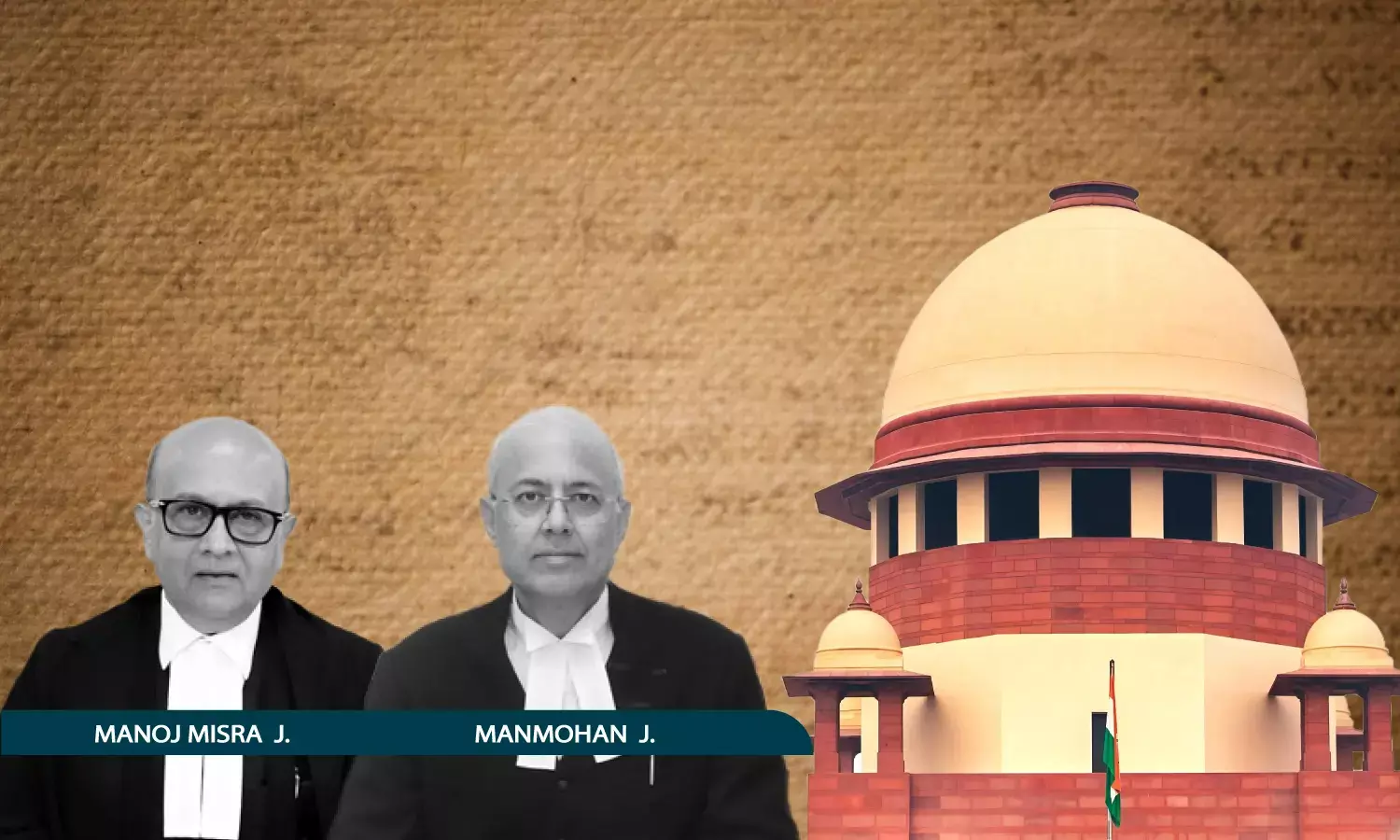
The Supreme Court has held that an immediate blood relative of a person who initiates disciplinary action, or who is directly interested in its outcome, is disqualified from acting as an adjudicator. Allowing the appeal of a private school teacher, it set aside her termination after an inquiry in which the Convenor was the brother of the Secretary, who was complainant, prosecutor and principal witness.
The Court explained that the test is not whether actual bias is proved, but whether there is a “reasonable likelihood of bias” in the mind of a fair-minded person. It held that the respondents’ argument that the teacher had to prove a specific instance of bias was not legally tenable. It also held that bias at the root of the inquiry cannot be cured by compliance with procedural formalities, the doctrine of necessity was not attracted, and there was no waiver.
A Division Bench of Justice Manoj Misra and Justice Manmohan observed, “Permitting immediate family members to simultaneously function as the management, prosecutor, chief witness and adjudicator reduces the inquiry to a pre-arranged farce, rendering the consequential disciplinary action per se arbitrary, capricious and unconstitutional. An immediate blood relative of a person who initiates disciplinary action or who is directly interested in its outcome, is disqualified from acting as an adjudicator…”.
Advocate Sachin Patil appeared for the appellant while Senior Advocate Sudhanshu Choudhari appeared for the respondents.
“…it is today universally accepted that the test is not whether actual bias is proved, but whether there exists a ‘reasonable likelihood of bias’ or ‘real possibility of bias’, in the mind of a reasonable person as distinguished from a merely fanciful apprehension…This Court is of the considered view that where the roles of complainant, prosecutor, witness and adjudicator overlap or intersect, as in the present case, the inquiry suffers from a fundamental vice, as the separation of functions essential to a fair disciplinary proceeding collapses entirely…”, the Bench said.
The appellant, Kiran Bhujade, was appointed an Assistant Teacher in 2009 at a school run by Sudhir Shikshan Sanstha, Nagpur. After the school received 20% grant-in-aid status in 2016, she alleged that the Secretary, Rajesh Masurkar, excluded her name from the grant list. After she complained to the Education Minister in March 2021, the Sanstha issued a show-cause notice and a charge-sheet of 20 charges. Its Inquiry Committee found her guilty by a 2:1 majority, and she was terminated on February 23, 2022.
The School Tribunal, Nagpur set the termination aside on April 25, 2023, while the Bombay High Court remanded the matter, and the Tribunal on March 21, 2024 again quashed the termination and directed reinstatement with continuity of service and full back wages. On April 29, 2025, the High Court’s Nagpur Bench allowed the Sanstha’s writ petition and confirmed the termination.
The Supreme Court found “a total familial capture of the inquiry apparatus”. The Convenor, Prakash Masurkar, is the real brother of Rajesh Masurkar, and the brother-in-law of the President, the uncle of the Vice-President and the husband of a Committee member. Rajesh Masurkar was the sole witness on 11 of the 20 charges and, the Court noted, had secured the Headmaster’s post superseding the appellant’s seniority.
The Court held that where the roles of complainant, prosecutor, witness and adjudicator overlap, “the separation of functions essential to a fair disciplinary proceeding collapses entirely”. It held that the maxim nemo judex in causa sua is a constitutional imperative under Article 14, and that its breach is a jurisdictional defect, not a curable irregularity. The doctrine of necessity was not attracted because two unrelated Executive Committee members were available. A waiver, the Court held, must be voluntary, informed and unequivocal, and the appellant had objected at every stage. It also noted that the High Court had mistaken the Convenor for Rajesh Masurkar.
Accordingly, the Court allowed the appeal, set aside the High Court judgment and restored the Tribunal’s judgment. It directed the Education Officer to consider the feasibility of absorbing her in any 100% grant-in-aid school in his jurisdiction under Rule 26(2)(iii) of the MEPS Rules.
Cause Title: Ku. Kiran d/o Purushottam Bhujade v. Sudhir Shikshan Sanstha & Ors. (Neutral Citation: 2026 INSC 1229)