

Can’t Challenge Regularisation Terms After Accepting Benefits: Supreme Court Rejects Retired NIRD Professor’s Plea For GPF Pension Coverage
The Court followed its earlier ruling in National Institute of Rural Development v. Shyam Sunder Prasad Sharma and Others (2023), where identical regularisation conditions under the same Office Order were held to operate prospectively and not from the date of initial appointment.
The Supreme Court has rejected a retired National Institute of Rural Development Professor’s plea seeking coverage under the GPF-cum-Pension Scheme after he had accepted retiral benefits under the CPF Scheme without challenging the terms on which his contractual services were regularised.
The Court was hearing a Special Leave Petition challenging the Telangana High Court’s judgment which had set aside the Central Administrative Tribunal’s order directing the National Institute of Rural Development to permit the petitioner to come under the GPF Scheme from the date he was eligible.
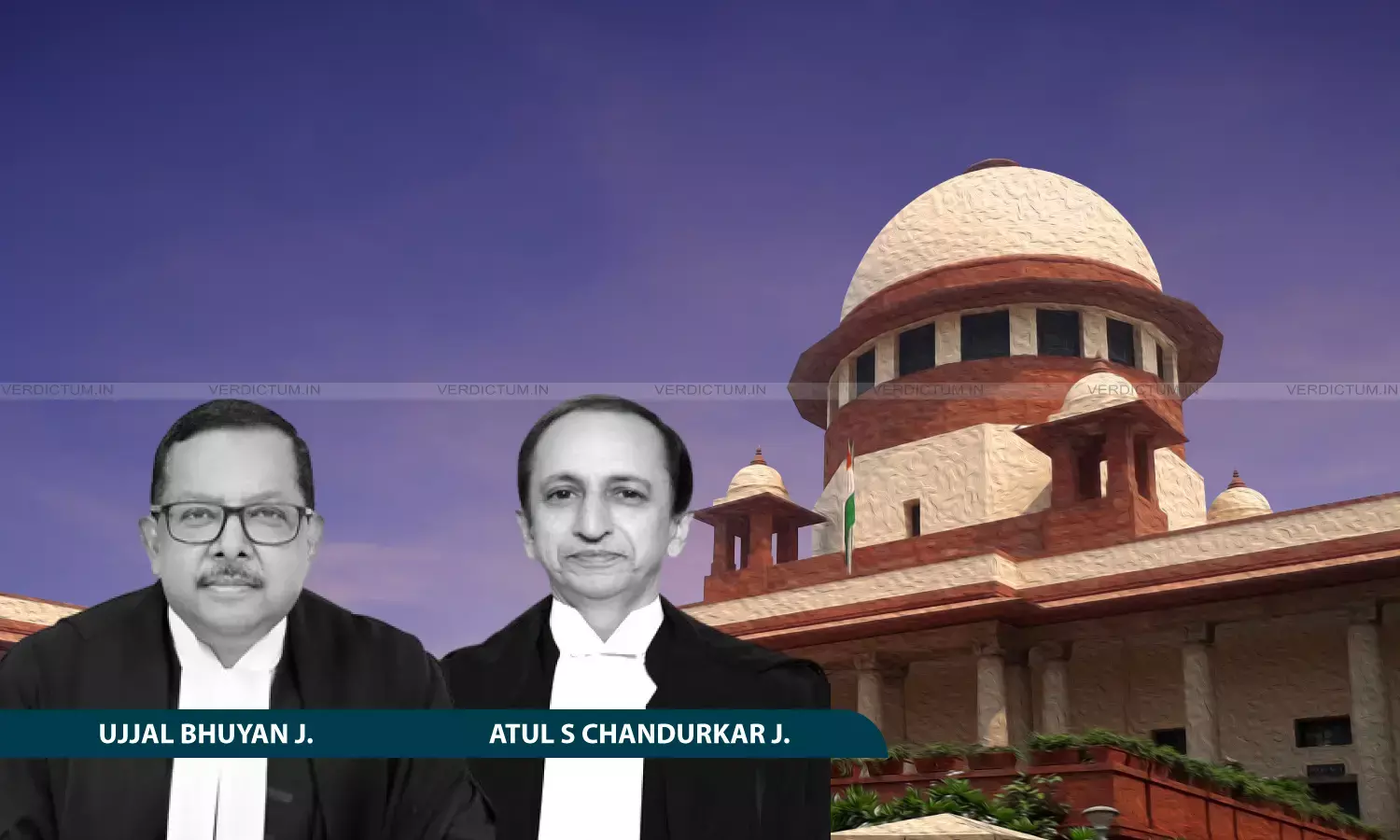
A Bench of Justice Ujjal Bhuyan and Justice Atul S. Chandurkar observed: “By the said Office Order, the services of the petitioner as Professor on contractual basis were regularised subject to various terms and conditions, which included the order of regularisation taking effect from the date of the said order as well as services being continued to be governed by the existing CPF Scheme. As found by this Court in S.S.P. Sharma (supra), the terms and conditions of regularisation stipulated in the Office Order dated 04.05.2012 were not challenged by the petitioner at any point of time, as also in the case of Mr. S.S.P. Sharma. Having accepted the terms and conditions for regularisation of services on the post of Professor and the grievance in this regard having been raised post-retirement after accepting benefits under the CPF Scheme, the petitioner was rightly non-suited by the High Court.”
Advocate Manish Kumar Saran appeared for the petitioner; Senior Advocate Ruchi Kohli appeared for the respondents.
Background
The petitioner sought a declaration that, after service at the National Institute of Rural Development and retirement from the post of Professor, he was entitled to be covered under the General Provident Fund-cum-Pension Scheme, not the CPF Scheme.
He was initially appointed as Research Associate on a contractual basis and was covered under the CPF Scheme. His services were later regularised, and he was subsequently appointed to different academic posts, including Professor on a contractual basis. An Office Order regularised his services on the post of Professor.
After retirement, the petitioner received retiral benefits, including NIRD’s contribution to the CPF amount along with his own contribution. He then approached the CAT seeking a declaration that continuation under the CPF Scheme was illegal and contrary to the NIRD Rules of 2011 and NIRD Service Bye-laws.
The CAT allowed his original application by following its earlier decision in favour of S.S.P. Sharma, whose services had also been regularised as Professor under the same Office Order. During the pendency of the challenge, the Supreme Court set aside the relief granted to S.S.P. Sharma. Relying on that judgment, the High Court allowed NIRD’s writ petition and dismissed the petitioner’s original application.
Court's Observations
The Court noted that the petitioner’s case was based on the same Office Order No. 98 dated 04.05.2012 by which academic staff working on a contractual basis were regularised.
The Court recorded that in National Institute of Rural Development v. Shyam Sunder Prasad Sharma, it had already considered the effect of Bye-law 52, the Rules of 2011 and the regularisation order.
The Court noted: “This Court by its judgment dated 28.02.2023 in National Institute of Rural Development Vs. Shyam Sunder Prasad Sharma and Others held, after considering Bye-law 52 as well as the Rules of 2011, that the regularisation of services of Mr. S.S.P. Sharma pursuant to the order of regularisation dated 04.05.2012 would operate from the date of that order and would not relate back to the date of his initial appointment as was held by the CAT and affirmed by the High Court.”
The Court observed that, in S.S.P. Sharma, the reason for denying retrospective effect was that the regularisation order itself stated that it would operate from the date of issuance.
The Court stated: “This was for the reason that it was specifically stated in the order of regularisation dated 04.05.2012 that it would take effect from the date of issuance of the order, which condition had not been challenged by Mr. S.S.P. Sharma.”
The Court also noted that the same Office Order regularised both the petitioner and S.S.P. Sharma on identical conditions.
The Court found that the High Court had correctly treated the petitioner as similarly situated with S.S.P. Sharma and had therefore set aside the CAT’s order.
The Court noted: “The High Court was of the view that the case of the petitioner was similar as that of Mr. S.S.P. Sharma. The effect of regularisation would, therefore, be from 04.05.2012 and not from the date of his initial appointment.”
It further recorded that the petitioner had approached the CAT only after retirement and after receiving benefits under the CPF Scheme.
The Court rejected the petitioner’s attempt to distinguish S.S.P. Sharma and held that the earlier adjudication applied to him.
The Court observed: “We are in complete agreement with what has been held by this Court in S.S.P. Sharma (supra) and we do not find any reason, whatsoever, to re-open the aforesaid issue at the instance of the petitioner.”
Declining interference under Article 136, the Court held: “In our view, as the petitioner is similarly situated as Mr. S.S.P. Sharma, especially in the backdrop of the fact that the services of Mr. S.S.P. Sharma and the petitioner were regularised by the Office Order dated 04.05.2012 on identical conditions, we do not find any reason, whatsoever, to exercise jurisdiction under Article 136 of the Constitution of India.”
Conclusion
The Supreme Court condoned the delay but dismissed the Special Leave Petition. It upheld the Telangana High Court’s order setting aside the CAT’s direction in favour of the petitioner and held that the petitioner was rightly non-suited. Pending applications were disposed of.
Cause Title: K. Suman Chandra v. Union of India and Others (Neutral Citation: 2026 INSC 893)
Appearances
Petitioner: Manish Kumar Saran, AOR, with Advocates Sidhant Sharma and Aditya Mani Saran
Respondents: Senior Advocate Ruchi Kohli, with Advocates Sharath Nambiar, Abhishek Khanna, Vijay Awana, Gaurang Bhushan, Utkarsh Raj Sahay, Sudarshan Lamba, AOR, Dr N. Visakamurthy, AOR, and Vishakha, AOR
