

No Absolute Requirement Of Unanimity In Every Case U/S 48 Trusts Act; Effect Must Be Given To Governing Instrument: Supreme Court
The Court restored the suits and interlocutory applications to the High Court for fresh consideration.

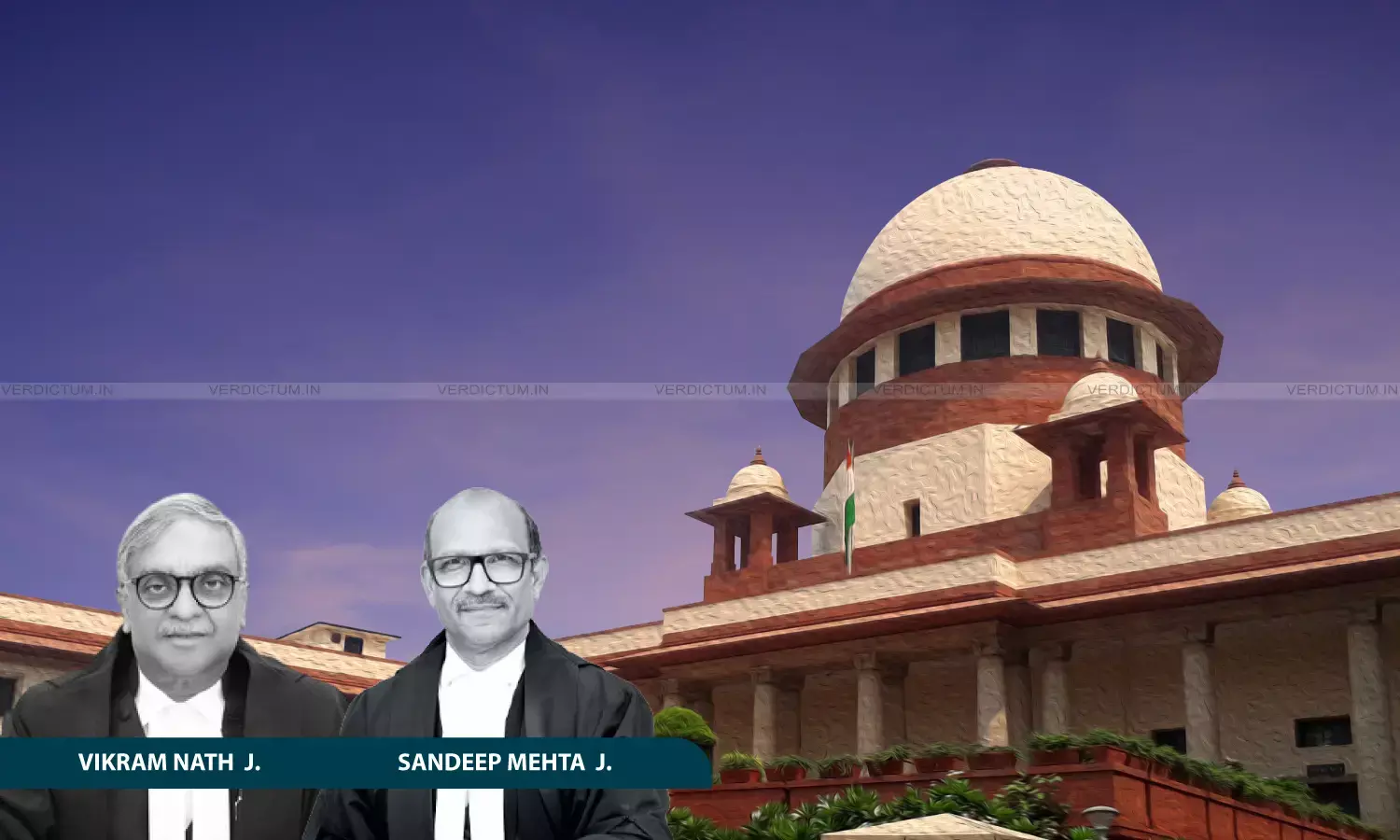
Justice Vikram Nath, Justice Sandeep Mehta, Supreme Court
The Supreme Court while interpreting Section 48 of the Indian Trusts Act, 1882 has held that it does not enact an absolute requirement of unanimity in every case and that the governing instrument may prescribe a different mode. In such a scenario, effect must be given to the governing instrument.
A batch of appeals were filed involving Birla Corporation Limited, three West Bengal-based societies, Hindustan Medical Institution, Eastern India Educational Institution and Belle Vue Clinic, and Anamika Lodha. The dispute concerned competing claims over who was authorised to exercise voting rights attached to the societies’ shareholding in Birla Corporation during annual general meetings. The Court clarified that it had not adjudicated the validity of the disputed 2021 resolutions or rival claims over trusteeship, and restored the suits and interlocutory applications to the High Court for fresh consideration.
A Bench of Justice Vikram Nath and Justice Sandeep Mehta observed, “It is evident that Section 48 of the Trusts Act lays down that when there are more trustees than one, all must join in the execution of the trust, except where the instrument of trust otherwise provides. The exception is not incidental. It is built into the statutory rule itself. The provision therefore does not enact an absolute requirement of unanimity in every case. It recognises that the governing instrument may prescribe a different mode. In such a case, effect must be given to the governing instrument. The statutory text itself thus makes the instrument primary where it provides otherwise”.
“…in the case of the present societies, a decision or delegation evidenced in writing under the hands of the majority of the trustees, in terms of Clause 24 of the by-laws, is capable in law of constituting a valid decision or authorization on behalf of the society. The contrary view taken in the impugned judgment, namely, that the trustees could bind the society only if they acted in consonance and that absence of joinder by even one trustee would defeat the decision, is unsustainable and stands set aside”.
Senior Advocates Madhavi Divan, Abhishek Manu Singhvi appeared for the appellant and Rohini Musa, AOR appeared for the respondent.
Setting aside the Calcutta High Court’s common judgment, the Court held that Clause 24 of the societies’ by-laws expressly permitted trustees to delegate authority through resolutions “evidenced in writing under the hands of the majority of the trustees”. Consequently, the High Court erred in invoking Section 48 of the Indian Trusts Act, 1882 to insist that trustees could bind the societies only if they acted unanimously or “in consonance.”
The Bench emphasised that Section 48 itself contains an exception, “except where the instrument of trust otherwise provides”, and held that the societies’ own governing documents clearly displaced any general rule requiring all trustees to act jointly.
On the issue of corporate voting, the Court also struck down the High Court’s direction that whichever vote was cast first on behalf of the societies should automatically prevail. The Bench clarified that under Section 108 of the Companies Act, 2013 and Rule 20 of the Companies (Management and Administration) Rules, validity turns on lawful authority, not chronology.
“The law protects the first valid vote of the member against duplication or change. It does not validate the first unauthorised act of a rival claimant...The validity of a vote cast on behalf of a society cannot be determined merely by priority in point of time and must rest upon lawful authority traceable to the governing documents of the society and the statutory framework governing voting”, it further observed.
“…the impugned judgment cannot be sustained. The Division Bench erred in construing the by-laws of the societies as requiring trustee action only in consonance, in approaching the question of voting authority without due regard to the governing structure of the societies, and in directing that the vote cast first would prevail irrespective of the source of authority”, it further observed.
Restoring the suits to the High Court, the Supreme Court clarified that it had not adjudicated the factual validity of any specific trustee resolutions, which would be decided independently on merits.
Cause Title: Hindustan Medical Institution v. Birla Corporation Limited & Ors. (Neutral Citation: 2026 INSC 554)
Appearances:
Appellant: Madhavi Divan, Sr. Adv., Kunal Vajani, Kunal Mimani, Shubhang Tandon, Abhishek Manu Singhvi, Sr. Adv., Nalin Kohli, Avishkar Singhvi, Akash Agarwal, Ashish Choudhury, Abhishek Arora, Prachi Grover, Yash Johri, Sakshi Raman, Anshul Malik, Ayuushman Aroraa, Rohit Amit Sthaleka, Advocates.
Respondent: Rohini Musa, Vanita Bhargava, Ajay Bhargava, Phalguni Nigam, Vishal Srivastava, Khaitan & Co., Pallavi Langar, Abhishek Manu Singhvi, Sr. Adv., Akash Agarwal, Ashish Choudhury, Abhishek Arora, Prachi Grover, Yash Johri, Rohit Amit Sthalekar, Ankur Chawla, Aditya Samaddar, R K Mohit Gupta, Darius Khambata, Sr. Adv., Madhavi Divan, Sr. Adv., Debanjan Mandal, Kunal Vajani, Sanjiv Kumar Trivedi, Sanket Sarawgi, Shubhang Tandon, Mahima Cholera, Kunal Mimani, Sumeer Sodhi, Harshit Joshi, Adiraj Bali, Shrey Kapoor, Vikrant Pachnanda, Advocates.